Categories Culture, Fashion
Published March 10, 2026
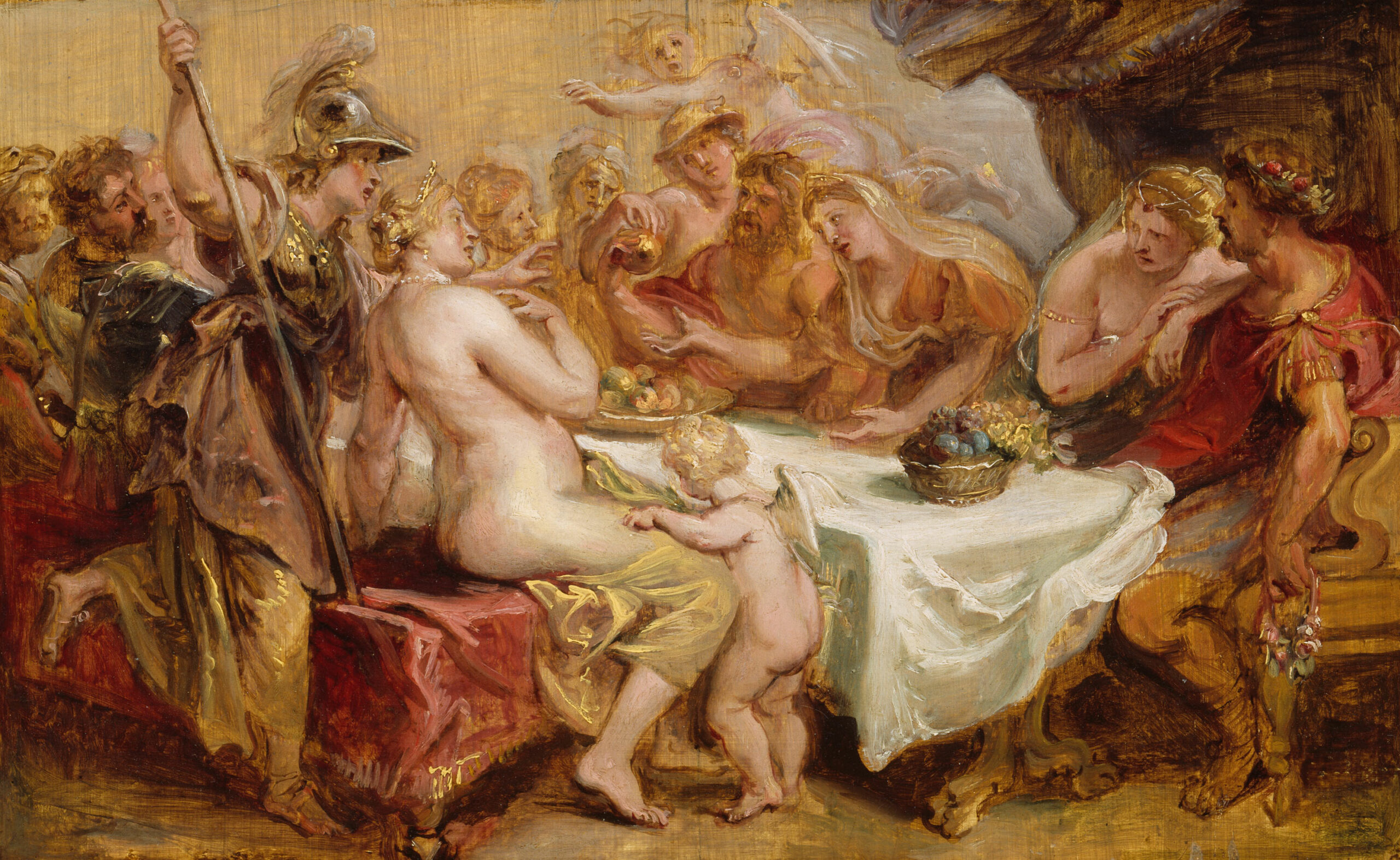
The Wedding of Peleus and Thetis, by Peter Paul Rubens
A little while back, I saw a TikTok where a creator noticed that a lot of the current slang can be related back to food (e.g., ate… and left no crumbs, served, cooked, roasted, etc). Is this just a contemporary cry for help from the underfed community masquerading as modern-day linguistic laziness? Or does it go deeper?
The longer I thought about the role food has taken in the cultural and creative landscape, the more I began to understand that these terms are not accidental. Of course, nothing is. We, as a society, always subconsciously prioritise words that reflect our external environment. This doesn’t necessarily imply a literal reflection, but it often veers close to one. If I say someone’s outfit ate, I obviously do not mean it got up, gained corporeal form and finished a well-deserved meal, but I do imply the presence of the outfit consumed the attention within the space around it.
In the case of these food-related terms, the idea of eating is positive. Which is interesting, considering how many current cultural trends are trying to limit our actual food consumption. With calorie deficits, protein crazes, and girl dinners (all of which I am a guilt-ridden participant in), it seems the only type of eating we are encouraged to do is metaphorical. Yet food is still at the helm of marketing campaigns, mostly for brands that have nothing to do with food.
The ads for actual food are not selling us food at all; they are selling a feeling, an experience. Sharing a meal with friends, going on a girls’ night out to a cute restaurant, and trying out a new recipe on a Sunday night.
Food-centred ads are now reserved for the fashion and beauty industries. A necklace on a bed of fresh grapes, a doughnut frosting mimicking a lip gloss, a monogrammed pack of fries. It all looks aesthetically pleasing, yes, and even mouth-watering. I guess trying to associate the urge for a good snack with an urge for a luxury product is a fine conditioning tactic (Pavlov and his dogs keep coming back to haunt us).
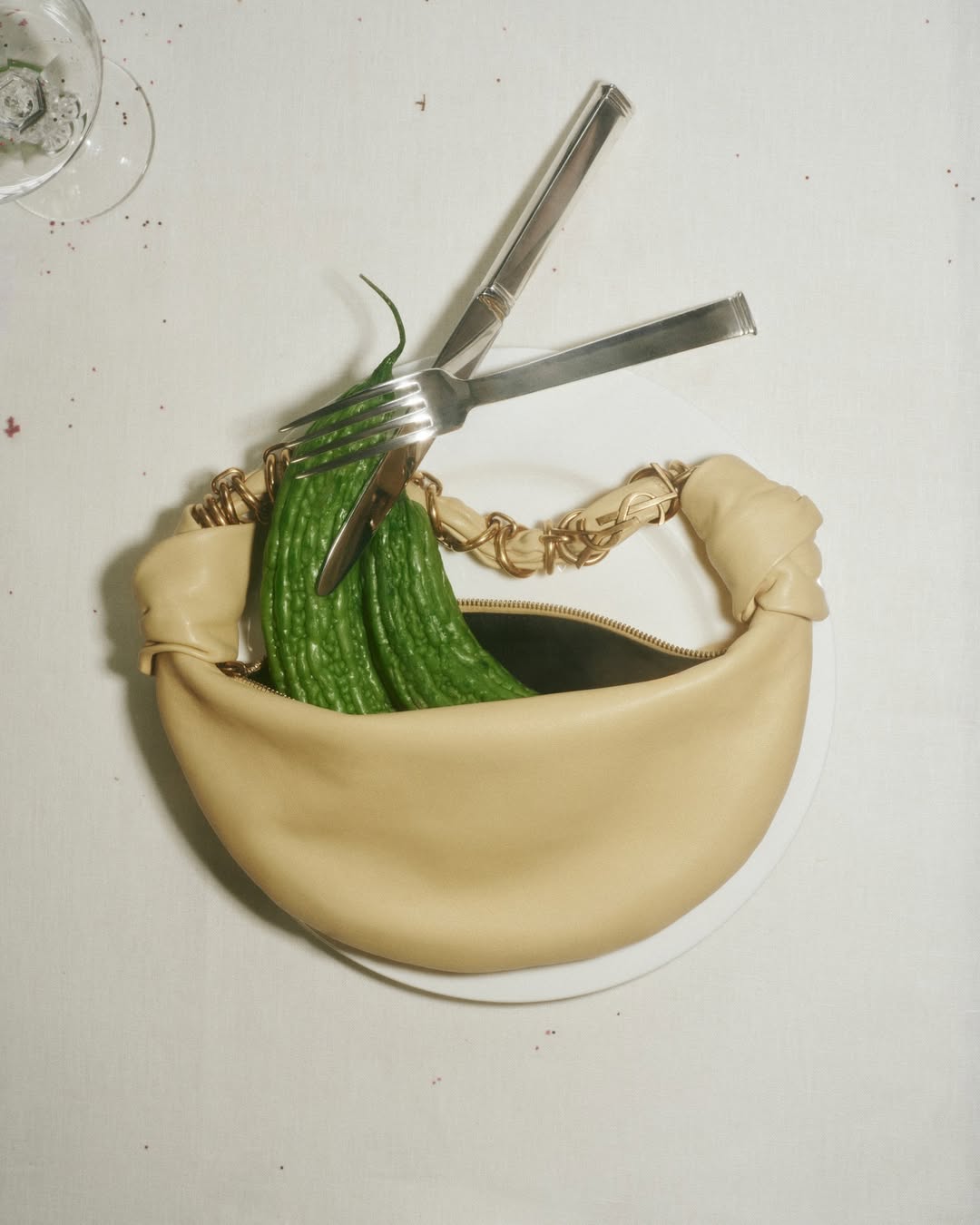
Saint Laurent, "After Dark" by Anthony Vaccarello, The Amalia bag promo post. Image credit: @ysl
But it’s not just about placing a couple of blueberries next to your product and working some Photoshop colour magic to match the fuck out of the whole composition. It’s also luxury brands moving into the food industry through coffee shop collabs, edible pop-up experiences, and limited-edition snacks. They used to try to sell the luxury lifestyle, but now they’ve settled for food.
Is it meant to be a gateway towards a bigger purchase? Because if it is, it’s quite a big jump from a £15 latte (which is crazy) to a £2500 bag (which is also crazy). And if it isn’t? Well, then I guess it’s a way to continue capitalising in this economy. If you can’t sell that £2500 bag, you can sell two hundred £15 lattes, and it all kind of adds up.
I guess marketing teams realised that people will not invest their hard-earned, speedily depleting resources in luxury products, no matter how hard they try to sell the idea that owning a pair of overpriced shoes will solve all our problems. And it’s not just the recession, the consumers also got smarter.
We are beginning to understand that buying a single product from a luxury retailer will not automatically grant us access to the lifestyle the retailer associates itself with. In a conscious debate of buying into luxury products, a bag becomes just a bag. Not to say we still won’t save up for it, buy it and wear it proudly, but we will no longer associate it with an immediate elevation in quality of life, just with a beautiful product we are proud to own.
Since that collective realisation, the luxury industry decided that its marketing strategy should change course from elevated lifestyle associations to more familiar and accessible ones: food.
There is also an added layer of visual presence in the digital space. Every brand event now comes with a fun food collaboration. Logos on little food cartons, monogrammed desserts and limited edition cups. All of it looks good on socials. It’s a way to generate aesthetically pleasing content without actually promoting the product. Inception at its finest. You look at mini burgers, your subconscious sees YSL.
Now that we’re back to the whole 2000s skinny trend, though, is this food actually being eaten? I see a hundred pictures of French fries on silver trays, but not a single image of people actually eating the fries. Were they even good fries?
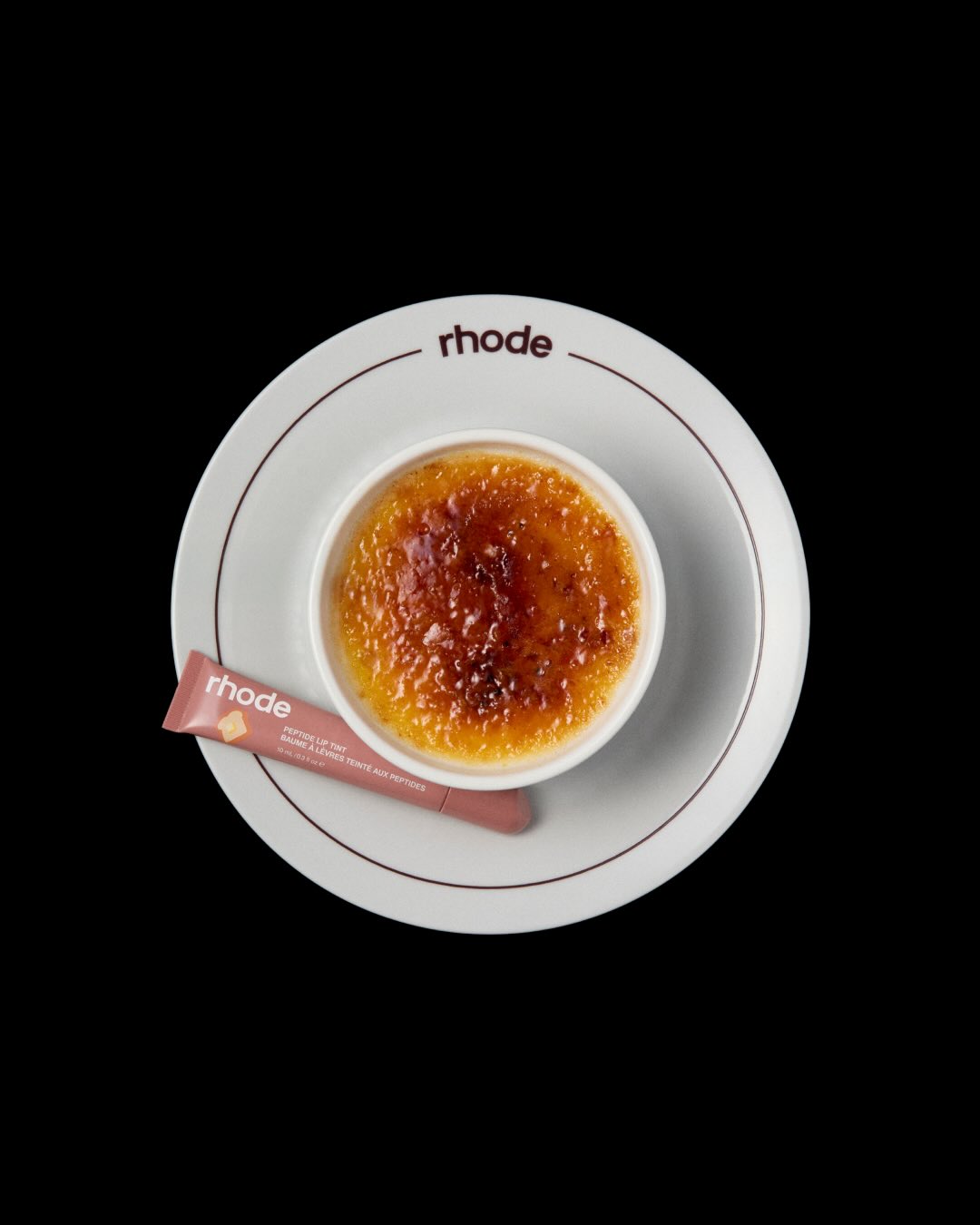
Rhode, scented peptide lip tint in toast promo post. Image credit: @rhode
It’s not like we don’t realise that swapping lifestyle-centred ads to food-centred ones is a strategic move. And it’s not like we don’t understand that £15 for a coffee with a Miu Miu logo on it is too much for a fucking coffee, but the proximity to luxury is still alluring. We’re smart, we’re not impenetrable.
The thing is, for me, looking at designer food does not make me want to buy their product. Sure, it looks good, and the brand will stay on my mind by flavourful association, which I guess is something. But it gives me no indication of the product’s quality, style, or longevity.
In fact, it makes me feel like these brands have so little confidence in their products’ features that they’d rather we focus on food than on the materials and craftsmanship behind the clothes. So I’ll hunger for pastries and thirst for smoothies, but I won’t immediately want to run to the store and buy the bags.
Another thing to note is that the foods presented in collaboration with high-fashion events or campaigns are almost all fast food. French fries, burgers, nuggets, and mac n cheese. Sure, there might be a sprinkle of caviar or a truffle here and there, but for the most part, the food is simple.
Maybe it’s a bit of world-building. We all know how these foods taste, and they’re all considered more or less comfort foods. Maybe it’s about bringing a certain level of simplicity and grounding the brand. Instead of fancy hor d’orves, there’s mini burgers—very casual. The event is in a 5-star hotel, and everyone is wearing cocktail dresses, but yeah, the food is super chill.
On the other side, though, there are TikToks of Nara Smith and the Vogue (ew at this point) videos of celebs cooking their favourite meal dressed in all designer. That food association seems more logical as a promotion.
In these instances, food becomes the byproduct instead of a still image. The wearability of the clothes is demonstrated through the process of cooking, and the idea that you can make a home-cooked meal in your kitchen while dressed like you just stepped off a red carpet becomes appealing.
The glam of making pasta in a Valentino gown makes you want to buy said gown. It exists in that sweet spot between selling a lifestyle and relating fashion to food. The food makes the lifestyle simpler and more accessible. Anyone can buy groceries and make a meal; it’s relatable.
Well, almost relatable. Some of the shit Nara Smith has been brewing in her kitchen is too wild even for the most dedicated self-proclaimed chefs, but still more accessible than the lifestyle pitch that dominated the ads ten years ago (e.g. celebs and models frolicking around the fields in the South of France).
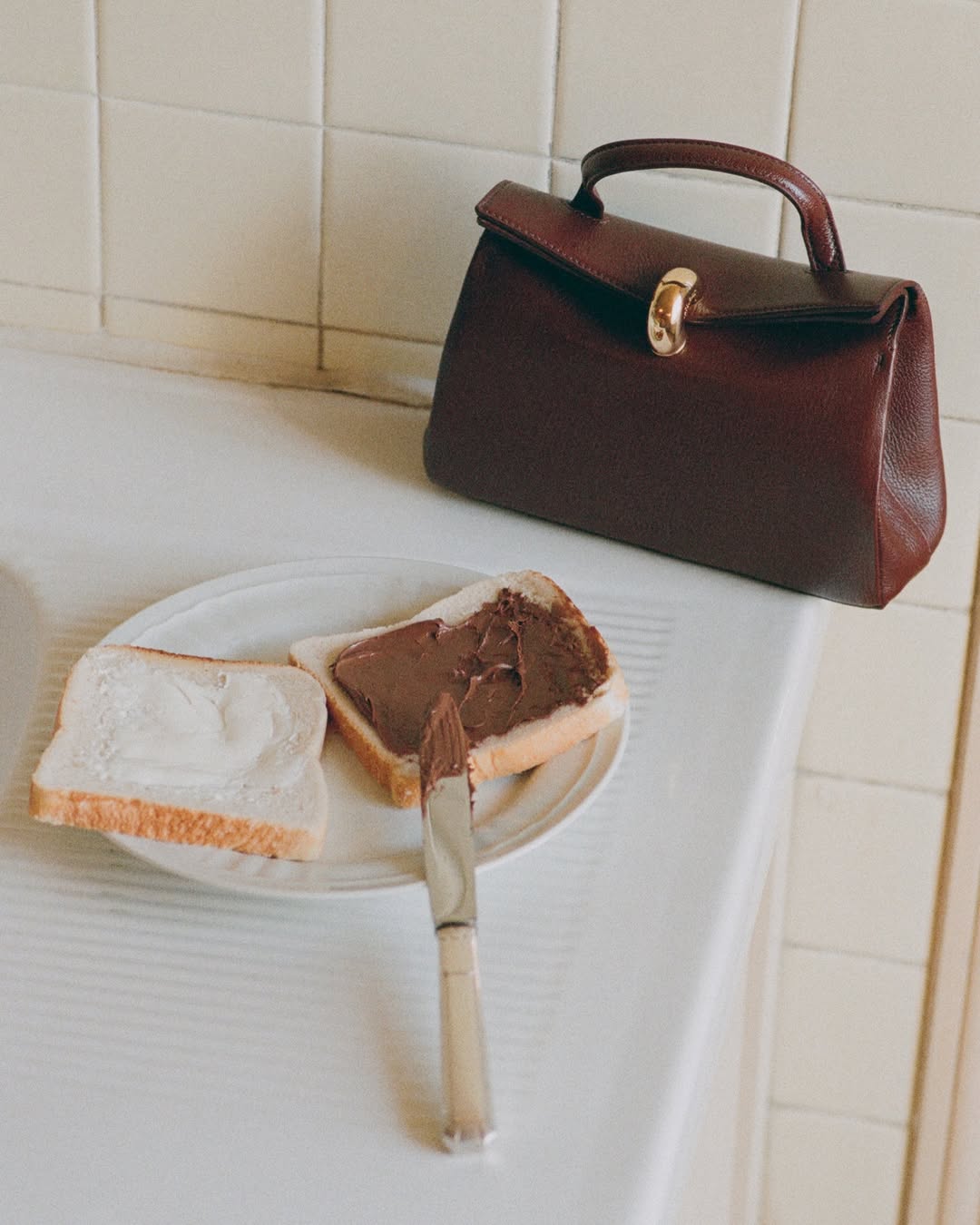
Jacquemus, Le Petit Valérie bag promo post. Image credit: @jacquemus
Okay, let’s move away from fashion advertisement and get back to the weird place food has taken in our lives. Cooking recipes and restaurant reviews are generating crazy numbers, yet what I eat in a day videos are getting more rigorous, and the need to cottage cheesify everything has led us into a weird place where we enjoy the concept of food more than the food itself.
We hunger for more recipes and treat the time spent cooking as a luxury in a world deep in recession. The crazy move towards ultra-skinny, juxtaposed against mouth-watering content, is jarring, to say the least.
My brain, before I analyse and understand what we are actually being sold, just feels overwhelmed. The only acceptable way to consume food seems to be either to find it visually satiating as it sits next to a lip liner or to bite into it the way that weird McDonald’s CEO does. One semi-honest thing about his videos, by the way, is that he refers to food as “product”. Because it has, in fact, become a product in its most natural form.
In the world of marketing, it is no longer a thing we need to survive; it is not even a “small pleasure”; it’s a means to an end, a useful tool; it is marketable hunger. Good plan: spend a year promoting diet culture, and then when we’re at our weakest (from the lack of some simple carbs), reintroduce food in the context of high fashion.
Maybe it’s not about food at all. Maybe food is the only way we know how to articulate our general starvation. Starvation for beauty, thought and discourse. Or simply starvation for a more carefree life where consumption does not come with a set of moral contemplations, and we can spend an hour on something as simple as food without constantly feeling like the world is falling apart (it is).
Either way, our general awareness of the trends, although not enough to end them altogether, at least makes them a bit more transparent. Use this as food for thought, and I’ll go and enjoy some tasty homemade “product”. Or I might become the very thing I swore to destroy once again and have girl dinner. Yeah, it will probably be a girl dinner.