Category Music
Published March 3, 2026

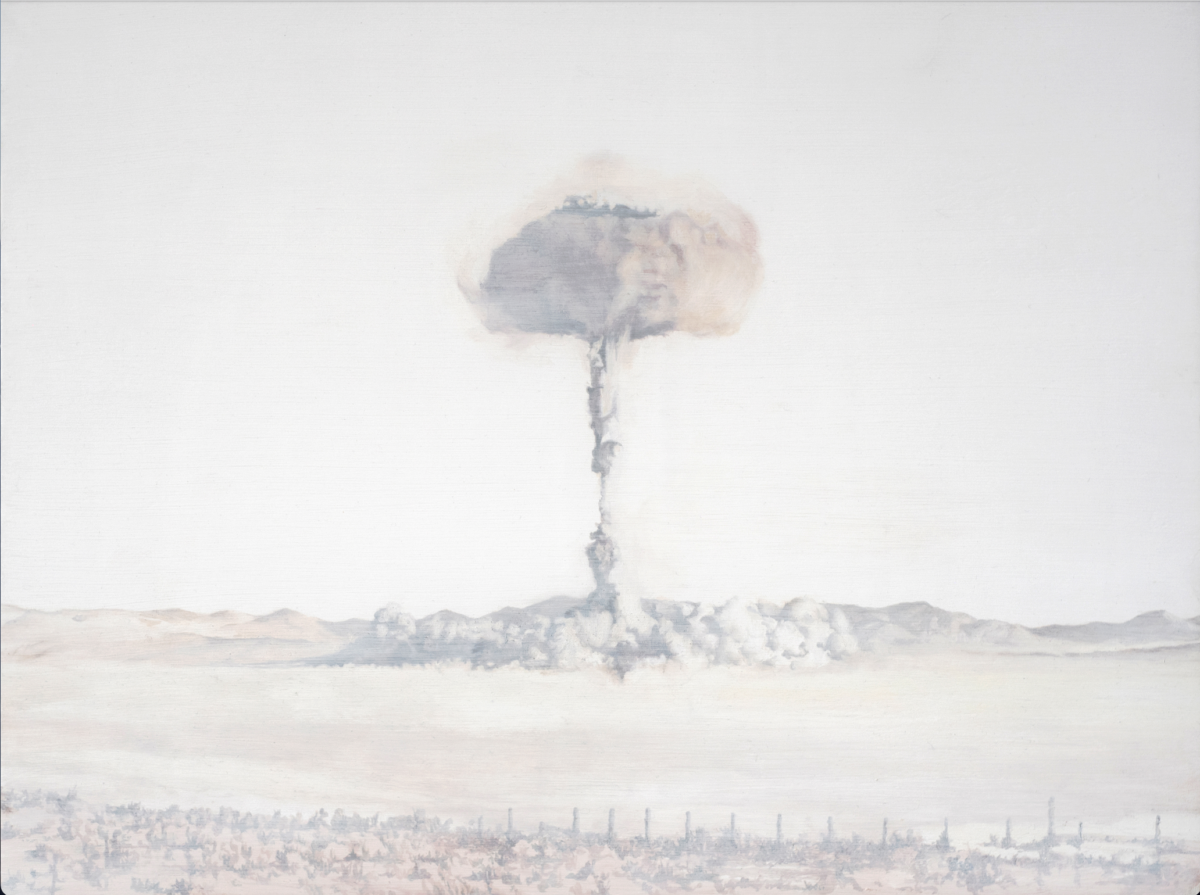
Encore, by Kirsty Harris, oil on linen, 2025
Story scent: sickly strawberry lip gloss
Story taste: 85% cacao dark chocolate
Story sound: Sound Of The Underground, by Girls Aloud
The 2026 BRIT Awards, taking place outside of London for the first time in its 50-year run, painted the backdrop for a different kind of night. From the KPop Demon Hunters’ women performing in a rainy parking-lot outside the venue to Sombr’s mildly confusing on-stage PR stunt, the evening stacked up to be one that was classically British and classically chaotic. But this year’s winners marked a decisive shift in the cultural landscape of British music, one defined by younger (see: Gen Z), self-made artists who outperformed expectations and industry norms.
The breakout narrative of 2026 wasn’t just that women won big (in fact, the last few years at the Brits has been favourable towards female artists), but rather that Gen Z women, many of them handcrafted and platform-native, re-oiled the traditional machinery of British music.
Artists such as Olivia Dean, Lola Young and PinkPantheress have built their careers through hybrid and alternative routes: TikTok virality, SoundCloud self-promotion, grassroots venues and curated online identities. Beyond that (and despite falling more into the ‘Zillenial’ category), Wolf Alice and Rosalía are more established acts that operate with a genre-fluidity and aesthetic autonomy that, arguably, relies almost solely on social-media algorithms to meet their target audience and sustain interest.
The BRITS didn’t so much anoint this cohort as surrender to them. Rather than the traditional top-down dictation of who sinks and who swims, this year’s awards suggests a formalisation to this new era of artist, conceding to momentum generated elsewhere.
Having only been nominated at one previous BRITS ceremony, Oliva Dean took home a spectacular 4 awards (winning 4 out of the 5 she was nominated for), whereas Lola Young won Breakthrough Artists and PinkPantheress stunned as the first woman ever to win Producer of the Year. Watching the winners roll in on Saturday night, I couldn’t help but wonder whether this signified an important departure from the rhetoric of the British music industry, one that swears by ‘who-you-know’ narratives and private-school pipelines.
In three influential young women so obviously claiming this year’s awards as their own, the message seems to be one focused less on traditional routes into music, and more on a different kind of success, one centred on social platforms and virality.
However you feel about the TikTok-ification of the music industry (I’m undecided), it certainly creates a landscape in which to become a self-made artist, and even more than that, puts power in the hands of the audience. This creates the potential for influence to start from the ground up, rooted in the audience for which the art is created, rather than dictated by the powers that be.
Of the three, PinkPantheress is undoubtedly the most self-made. Initially producing on GarageBand before moving to SoundCloud, it was TikTok virality that pushed her music into public-consciousness, but authenticity and determination that kept her there (we all remember the early performances and the purse that would NOT leave her side). While Olivia Dean and Lola Young attended the elusive Brit School and undeniably made connections there, this wasn’t a nepotism route in the traditional sense of the word. Although highly selective, The Brit School is essentially a state-funded tech college. Before and after their time there, both artists were self-starters who relied heavily on grassroots touring to eject them to fame.
This is not to suggest that three, relatively green, young women and their groundbreaking BRIT wins will be the end of nepotism, but to acknowledge this is to appreciate a widening of the net. In the clutch of an industry based on who you know, one finger has been lifted.
So, who defines British music culture?
The importance of these wins is compounded at the intersection of youth and gender. Of course, it’s massively influential to see such a sweepstake by three young women, but it’s also their generational identity as Gen Z that makes this so much more interesting. This veering to platform-reliant success suggests that Gen Z are some of the biggest players in determining cultural capital, long before an awards body validates it. Socials like TikTok and Instagram not only give the everyman an opportunity to pitch themselves, but also create and sustain momentum.
The once-prophetic industry instead becomes reactive. Institutions like the BRITS scramble to keep up with what has already been ordained online, rather than the other way round. In a way befitting only the most devoted marxist, the people have the power to choose.
This of-the-people portrait is one that weaves itself through Gen Z’s inherent distrust of institutions, industry-plants, and over-engineered stardom. Gen Z consumers are more likely to reward the self-starter, the DIY-ness of a TikTok grafter, the perceived authenticity that comes with someone pouring their heart into a one minute clip.
Gen Z wants to be in control of what they find interesting and exciting: we curate artists in the same way we curate our algorithms, scroll by scroll and like by like. We root for the underdog because we’re so tired of the stuffy, wealth-fuelled and prestige sustained industry by which all you have to do for your art to be recognised is to be born into the right family.
Gen Z, in our roundabout and rebellious way, is legitimately re-shaping the landscape of British music. The ceiling is still glass, but the winners of the 2026 BRITs stand to prove that Gen Z is armed with a (digital) hammer, and that this may be the case for only so much longer.