Category Fashion
Published April 6, 2026
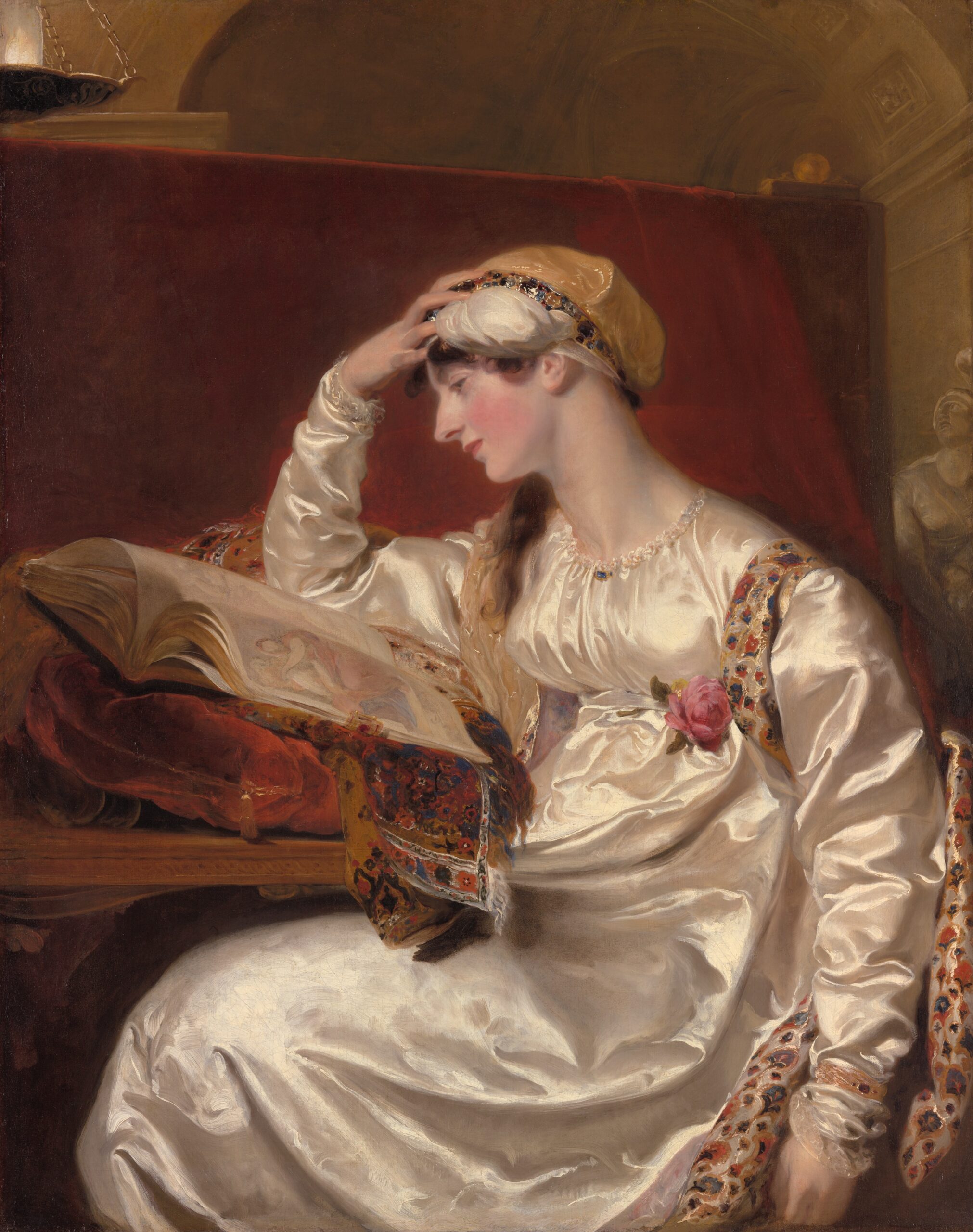
Isabella Wolff, by Sir Thomas Lawrence
Story Taste: chicken nuggets topped with caviar (another member of the “fast” industry trying to level up)
Story Scent: all the weird smells your polyester shirts hold on to after you wear them on a night out (you know the ones)
Story Sound: “Money is Everything”, by Addison Rae
Zara is coming in hot, stealing high fashion’s washed-up boyfriend, John Galliano and gunning for the Prom Queen title.
As always, I am going to preface this by saying that I am not an expert, more of a curious observer. This story should be covered by people with more expertise than I and given a more in-depth analysis. I am just here to chat some shit.
For me, it began like most of my random rabbit holes, by doomscrolling on TikTok. I saw a video by creator Brett Staniland (@twinbrett) discussing the recent rise of Zara’s high-fashion collabs, specifically the media coverage of those collabs. The creator brought up some interesting points. For example, why is all the coverage so press-releasy? Instead of pieces that break down the impact and reasoning behind fashion’s most problematic couple, Galliano and Zara, we get a copy-paste title and bullet points.
Once again, am I the expert media coverage that this creator spoke of? No, probably not. I am, however, a person with a proclivity to hyper-fixate, a phone, a deep disdain for Zara’s countless ethical and humanitarian violations and zero fucks about the ramifications my honest opinion will have on potential future collaborations (plus Zara doesn’t know, nor care, who I am, so that helps).
So, first John Galliano, then Willy Chavarria. It all begs the question, what is actually going on? It’s not a big surprise, for sure. Brands like Zara and H&M have been trying to elevate their position in the fashion world for a couple of years now. First, H&M held a full fashion show, then Zara redesigned their stores to look more like a high-end boutique and less like the ninth circle of eco-terrorist hell, where you suffocate under the weight of polyester and tops with mysterious stains.
And it makes sense. With human rights violators like Shein and Temu duping items faster than Zara can blink, their place in the fast fashion food chain was undoubtedly threatened. They used to be the it-girl of not-so-subtle nods to Chanel blazers, but they have been dethroned.
So what must they do? Change to more ethical practices? Continue to uphold the affordable standard while taking accountability for their large contribution towards the rising waste issue? Naah, they’d rather go for higher fashion, justify raising their prices with “an increase in quality” and pay a shit ton (I’m assuming it’s at least a shit ton) of money to John Galliano to design their “seasonal” collection. Excuse my repeated use of quotation marks, but “seasonal” and “Zara” in the same breath is a bit of a joke.
I have a couple of questions. If they go with the whole elevation strategy, does the quality actually improve? If they are tapping talented designers like Willy Chavarria and releasing collabs with Magda Butrym, are these associations actually beneficial in the long run? And is the public buying into the whole thing?
Let’s start with the quality. Looking at the breakdown of materials for current items on offer within the “higher” collections of brands like Zara and H&M, I see a lot of viscose, actually, mostly viscose. There are a couple of items that are 80% cotton, but mostly viscose. Which is better in the ethical sense, but let’s be honest: after the 10th scandal about the fast fashion industry’s complete disregard for the recyclability of their clothes, they kind of had to pivot. I guess the clothes’ durability does seem to improve; they no longer fall apart as you walk out of the store holding them.
Over the last couple of years, I’ve tried to avoid buying fast fashion and move towards vintage and smaller designers, but I’ve had a couple of slip-ups with basic items. I got a skirt from H&M that has lasted me well over the last year, has had very minimal damage, and was easy to wash, and a couple of T-shirts from Massimo Dutti that have been quite loyal.
While exploring customer reviews, Reddit threads, and unboxing videos, I have definitely noticed fewer overt complaints about quality and durability. So in terms of longevity, maybe they are on the rise. Or maybe it is now so universally accepted that these clothes have a quite short shelf life, it is no longer something even worth mentioning. I can’t count the number of conversations I have had where, after a complaint about a clothing item being damaged or lost, someone would playfully add, “Well, it’s Zara.” Not only does it speak to the brand’s low quality being common knowledge, but also to the disposability of the items, making them, by pure and simple definition, “fast”.
Fast would also be the best way to describe Zara’s production model. Check the latest trends, then dupe them in weeks, not seasons. This begs another question: if they are supposedly elevating their quality and creating a “seasonal” (lol) collection, how will they approach their production model? Will they slow down and finally make their practices more ethical (or just break the law, but more)? How will they cover the costs of slowing down, if any? And will they give up the practice of duping popular items, aka what they do best?
With all that in mind, a typical Zara store, the one located not in bigger cities but in smaller towns and developing countries, still looks the same, and the quality is the same (shit), even though prices are slowly rising. So is the new elevated business model going to be confined to bigger cities (and mostly the Western world), or are they slowly going to turn all their stores into high-fashion?
Side note, I mentioned the whole Zara rebrand to my mother today, and she said: “Shouldn’t they be lowering prices in this economy?” Yes, mother, you’d think so. But corporations will continue corporating.
So, are the associations with high-fashion brands beneficial in the long run? In the fashion world, fast-fashion or ex-fast-fashion brands are still looked down upon by the likes of legacy houses. Although some of these legacy houses have lost their shit to the point of using the same materials as Zara and charging an extra £1000 for the name, so I am not sure how much I trust their judgement.
These collaborations are nothing new, though. There have been collaborations with high street and maybe even high fashion brands here and there in the last ten years, but the frequency with which they have begun putting them out has definitely increased. H&M was the first to sniff out this strategy, with Magda Butrym, Mugler, Glenn Martens, and now Stella McCartney, just to name a few.
For H&M, though, it doesn’t seem as jarring. I am not sure why. Maybe because they have been quietly collaborating with guest designers for the last twenty years and have turned what seems an odd pairing into a sustainable business model. Or maybe because when you think of fast fashion, you still think of Zara first. Maybe Zara’s rollout is a bit more disturbing. Hiring John Galliano for two years, not as a part-time or limited-edition collaborator but as a contracted designer, is a lot.
I do understand the appeal of these collabs from both sides. The high-fashion brand taps into a new audience, showcasing their signature designs at an unprecedented price, getting their name out there, and maybe giving customers a taste of what they would get if they invested in the brand. For fast-fashion chains, well, they get to do what they love most, sell shit, instantaneously.
But until now, these collabs were just that, limited collaborations. The designer does their part, the chain brand does theirs, and then they go their separate ways, each returning to their pre-established place in the fashion pyramid. Maybe that’s why it seems so different this time. By allocating a space on their websites for specific “studios” or “collections”, slowly elevating their stores and hiring John Galliano (so weird), they are loudly refusing to return to fast-fashion and are instead climbing up the ladder all the way to Chanel and Dior, with prices to match.
And if Zara’s prices are rising, what will happen to the prices of their sister brands like Massimo Dutti and COS, which have long been marketed as more high-street, elevated members of the “family”? Will the prices on them skyrocket as well, or will they become suspended in time, retaining their niche? After all, they have not gotten a rebrand or any of the fancy designer collaborations. I guess their slightly elevated quality model is working out well, so why mess with that? But hey, who knows? Massimo Dutti is doing a great job at duping The Row, and COS is one sweater away from reaching Totem prices anyway.
Now, are people actually buying into the whole rebrand? Well, according to Inditex’s 2025 Results Annex, they literally are. In 3Q2025, sales increased 4.9% to €9.8 billion (the only decent report on their earnings I could find without going deeper into the rabbit hole, never to return again). Of course, those are the company’s numbers, not Zara’s specifically, but they are a very strong indicator that the public is welcoming the new strategy. There are countless studies and articles exploring Zara’s rise to the high street and its subtle transition into the higher tax bracket, and most, if not all, describe it as a success.
And I’m sure it is. After all, even with the recent increase, there is still quite a large gap between their prices and those of high street and high fashion brands. As Zara is clawing her way to the top, legacy houses are raising their prices even more, so we’re sort of fucked regardless.
What is there to do? Shop smaller independent brands? But their price tags are also quite high, not out of greed, but because of the cost of labour and materials (which is also rising). Buy second-hand? Have you been to a thrift store lately? You have to scramble to find a top under £50. Buy into Zara, H&M and their elevation? No idea. Once again, this story should be explored by someone with way more expertise than me, and I would gladly read it.
As for my own personal opinion on Zara, her new boyfriend and all the store re-designs. Well, I’ll buy into it when I see them take on a less inhumane approach to production and pay in full for the damage already done. Maybe that’s what they can use their €9.8 billion in sales for.