Category Culture
Published March 26, 2026

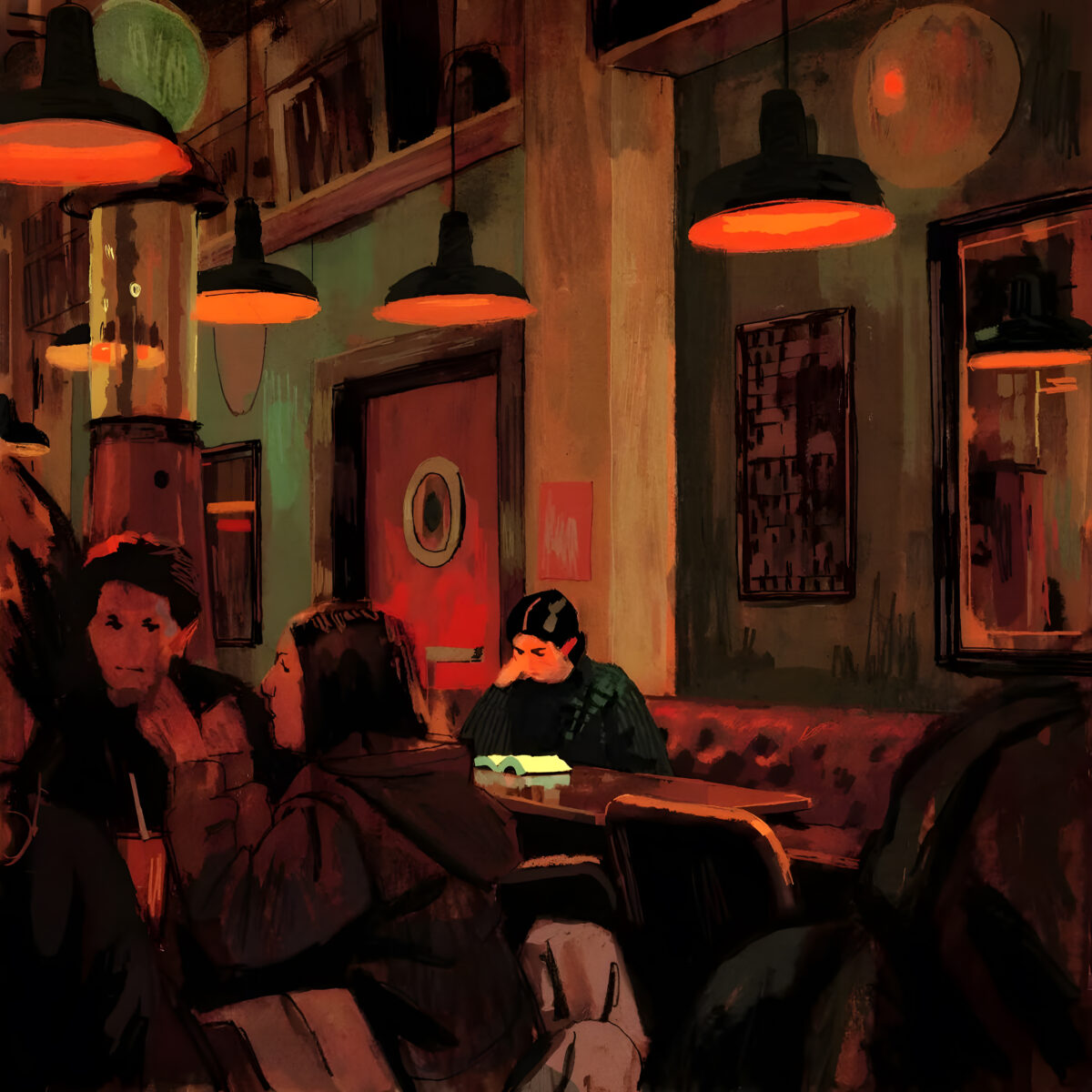
Negative bloom, by Raquel (@6pills), 2022 (curated by Evarte)
Story scent: the combination of a fog machine and drinks spilt on a sticky dance floor
Play on repeat while reading: “Taste”, by Sophia Stel
In the endless pursuit of transgression, we find ourselves weaving in and out of eroticism and sexuality within the cultural canon. Religion, having been the dominant form of moral rule for the majority of the modern period, of course, has influenced the way that we view taboos and sexuality. In that, we understand the two concepts, sexuality and religion, as largely existing in opposition to one another. So if the erotic is almost indistinguishably tied to religion, what is left when the world goes secular?
To properly understand this, it is important to clarify how the erotic and the taboo stand apart from ‘bog-standard’ sexuality. The concept of eroticism finds its roots in a psychological quest within sexual activity that is independent of the natural goal of reproduction. The taboo finds its roots in the desire for the forbidden, and that desire coming directly from the fact that it is forbidden. Because sexuality was for so long tied to the ultimate goal of reproduction, eroticism itself was a taboo.
Catholic pervert, Georges Bataille, makes the link between sexuality and religion in his 1957 work Eroticism:
It goes without saying that the development of eroticism is in no respect foreign to the domain of religion.
He references pre-Judeo religions and belief systems and the positive relationship with sexuality and eroticism (e.g. Greek phallic monument in the temple of Dionysos, Delos), meanwhile Christianity sets its face against eroticism. From this opposition is where I believe the idea of the taboo is rooted. As a concept, the taboo is rooted in fear and immorality, which gives it the substance to grow. Christianity, then, is a fertile ground for the development of the taboo, due to its approach to sin, guilt, and salvation, in that it provides people with a framework of immorality that then leads to rising fears of transgression and failure to adhere. Bataille argues that unless the Taboo is observed with fear, it lacks the counterpoise of desire, which gives it its deepest significance. Which, if we think about theological notions of sin and immorality being presented as devilish intervention playing into our weakness in the face of desire, the theory begins to take a much clearer shape. For example, in traditional Catholic belief, homosexuality is viewed as sinful – against the will of God – so the homosexual desire is presented as the work of the devil attempting to tempt a person away from God’s light. This then diverts them from their path to heaven. The fear of rejecting God then poses the homosexual desire as not only sinful, but now also a taboo – because the feeling is in itself something to fear. The same can be said for extramarital relationships. In fact, for much of history, the taboo existed within the engagement in sexual relationships that did not have the sole aim of procreation. Which is why sexual pleasure is instilled in the general population as a Taboo topic that should avoid discussion.
The sexual revolution, which came about in the latter half of the 20th century, saw a rise in a libertarian view of sex and eroticism; being just as much a woman’s game as it was a man’s. Beliefs about desire and love were saturated with this new idea of sexual liberation – a free woman knew what her body wanted just as much as her intellect. This is a messy and complex issue that has split the feminist movement into multiple opposing sects. On the one hand, a woman choosing to be sexual was deemed free because she, herself, was making a choice regarding the expression and use of her sexual body. On the other hand, many feminists argued that it was merely an illusion of desire due to the expression being mostly geared toward male pleasure. There are arguments within this sphere that have opposed one another since the theory’s development; however, you cannot approach this debate without first acknowledging that the sexual structure is intrinsically linked to patriarchal power dynamics. To enjoy heterosexual sex is to fulfil the position of woman, whether that be the submissive woman, or the dominant woman – both are equally male-centred. Margaret Atwood approached this false dichotomy in her 1993 novel The Robber Bride:
“Male fantasies, male fantasies, is everything run by male fantasies? Up on a pedestal or down on your knees, it’s all a male fantasy: that you’re strong enough to take what they dish out, or else too weak to do anything about it. Even pretending you aren’t catering to male fantasies is a male fantasy: pretending you’re unseen, pretending you have a life of your own, that you can wash your feet and comb your hair unconscious of the ever-present watcher peering through the keyhole, peering through the keyhole in your own head, if nowhere else. You are a woman with a man inside watching a woman. You are your own voyeur.”
We arrive then at acknowledging that sexual transgression is not so transgressive after all, that to subvert something is to keep its true structure in the back of your mind.
Along with the debates around sexual liberation came the entrance of sexuality as an acceptable topic in the mainstream. Advertising, novels, films, and public figures suddenly switched to accommodate this new public interest. And while the topic remained untouched in its most vital aspects, a watered-down version of sexual liberation graced the public consciousness. This version does not deal with the problematic dynamic that underpins sexuality, and rather uses one side of the debate (liberation) as a tool of publicity. This, and the fact that the material conditions for women had not really changed much, led many women – notably, Carolyn Bronstein – to believe that this had just really been a male revolution that had left sexism largely intact.
When it comes to the concept of taboo, we return then to the desire of the forbidden, an ache for transgression and differentiation – but as previously mentioned, there is no taboo without a nod to the status quo. Historically, to transgress sexual morality was to subvert religious morality that provided personal and legal frameworks for behaviour. However, now that religious frameworks no longer (technically) govern moral action – where and how is transgression approached? If anything, in this ‘post-sex’ world where liberation has apparently occurred, transgression can perhaps be achieved through reverting back to the old structure of relationships. We see this with the rise of trad-wife media and the way it permeates much more than personal expression. It is controversial to say that you enjoy submitting to your husband, giving ‘trad’ women the same rush that women in the 80s and 90s got from saying they enjoyed being sexually liberated. If anything, these two forms of expression are technically two sides of the same coin – both promoting the role of women as needing to fulfil a subservient position within the gendered dynamic.
I think the micro-sexual liberation of my lifetime happened around 2016. Hustle culture was reaching the feminist sphere, and Rihanna’s album Anti had just hit the world. The echoes of ‘Bitch Better Have My Money’ ran through women’s spaces. The attitude to men followed concepts of deception and domination – a desire to be ‘the man’ was at the centre (think, Do It Like A Dude by Jessie J). Unfortunately, hustle culture is inherently anti-feminist because it is inherently capitalist, and eventually, it transformed into a newer version of itself, like every other internet trend. From this, though, came the popularisation of cyber sex-work: only-fans, influencers, and the like. It is interesting to look at this now and realise how the two worlds were always going to come hand in hand. You cannot have an attitude of wanting to act like a man and not accidentally delve into problems of harmful sexuality. So often, the requirements of acceptance in a male space include the vehement rejection of femininity – both in the self and in others. Actions that often disguise themselves as ‘reclamation’ actually work to put down or insult women and feminine traits. A woman who has decided to enter a masculine space, for example, a high-paying, corporate job, will often find herself having to conduct herself in a certain way. This conduct may include rejection of motherhood and disdain toward women who choose motherhood over a career. Not only does this feed into the patriarchal idea that one must choose maternal success or a career, it also views motherhood as the ‘feminine’ option, that requires only a leaning into one’s instinctual nature. Dichotomies, like this one, exist because of the misconception that gendered roles are separated into ‘emotional’ and ‘logical’ realms. So, for a woman to cross into the ‘logical’ realm, she must prove herself by putting down those who remain within the ‘emotional’ sphere. Another form of feminine rejection comes about in the sexual sphere; that being, the separation of sex and emotion to the point of viewing the sexual self as a commodity. To elaborate on this, we must return to the previous idea of subversion. Sexual liberation, in this lens, aims to subvert the idea that sex requires love or emotional connection and instead treats it as a wholly transactional thing that can be used in exchange for monetary or social recognition. We see this now with examples like the trailer for season 3 of Euphoria. The show is undoubtedly a little behind the times, however, having ⅗ of the female leads now involved in sex work of some kind drives this point of the ‘Boss Bitch’ to sex-work pipeline. (If you are interested in this topic specifically, listen to this Nymphet Alumni episode). This goes to prove what I mentioned before, that even those who live to subvert, only end up honouring the original form through that subversion…(male fantasies, male fantasies).
However, in the age of the internet, transgressions and taboos take on a new and unexplored structure that depends wholly on the artificiality of the image. When an image of sexuality or taboo is posted online, it becomes an altered form of itself – taking on a new identity that splits from the original act that is being depicted in the image. It is what Jean Baudrillard, in 1981, labelled Simulacra. Simulacra are depictions of copies that no longer have, or never had, an original. AI images are simulacra; they never had an original form. So when the image of female transgression, sexuality, or empowerment is posted on the internet or appears in a TV show – it undergoes so many simulations that it is around 3 or 4 times removed from the original form. For example, imagine a selfie; the original form is me in real life holding the phone and smiling, the first simulation is the image that appears on my phone (the pixels that make up the image), the next simulation is how it appears on your screen, then it is altered again through your interpretation of that image into your mind. So my selfie has lost its original form and now exists as an empty Simulacra in cyberspace.
So, when it comes to transgression, taboo, and sexuality, when it is expressed online, it immediately loses whatever original meaning it had, and becomes 3 or 4 times simulated, and placed into the understanding of whoever views it. This is particularly far removed from the sexuality that Bataille discussed, which we assume was defined by the physical and mutual interaction between two or more people who were present in the same room. Which leaves us with the question of, can you claim empowered transgression when you relinquish control of the very actions you claim are your own? To be a ‘Boss Bitch’ on the internet is not so empowering. When you become a sexy girl on thousands of phone screens, your intention loses all meaning because you have allowed it to become a simulacra, a lifeless mass of pixels that belongs to anyone who views them. I wonder what George Bataille might say about eroticism in this age, perhaps that the internet allows a degree of separation (through Simulacra) that exposes many to transgression that they would not seek out in the physical world. It is always easier to see violence on a screen than it is in real life – and that goes for patriarchal violence just as much.
But what is taboo without religion? What is transgression in the age of simulation? It is difficult to believe that anything retains meaning within these conditions of existence – especially meanings of empowerment. Unfortunately, the structure of the world around us leaves very little space for the true emancipation of women (or any objectified group), and the artificiality of the internet does no favours. So often, we see women turning to sexuality for financial stability, as if it takes up the same space as any traditional job and has no effect on a person’s emotional or psychological state. To rid sexuality and its taboos from its moral restraints is a dangerous path to go down, and often leaves groups of people dehumanised and taken advantage of. Without the strict moral guidelines in place that religion used to provide, it is difficult to identify a single rule of thumb to govern within this sphere. However, it is important to note that this is not an argument for the reinstating of religion as having widespread moral jurisdiction, but instead an exploration into where the secularity of the world leaves us in the case of sexuality. In all, it remains a murky and confusing place that prides itself on taking on infinite forms at any given moment. The space within the pixels on my screen manipulates my experience of the world and feeds me a version that I can reorder for my own comfortability or satisfaction. I trust myself with this act, but do not feel that I can say the same for many others.