Category Fashion
Published February 12, 2026
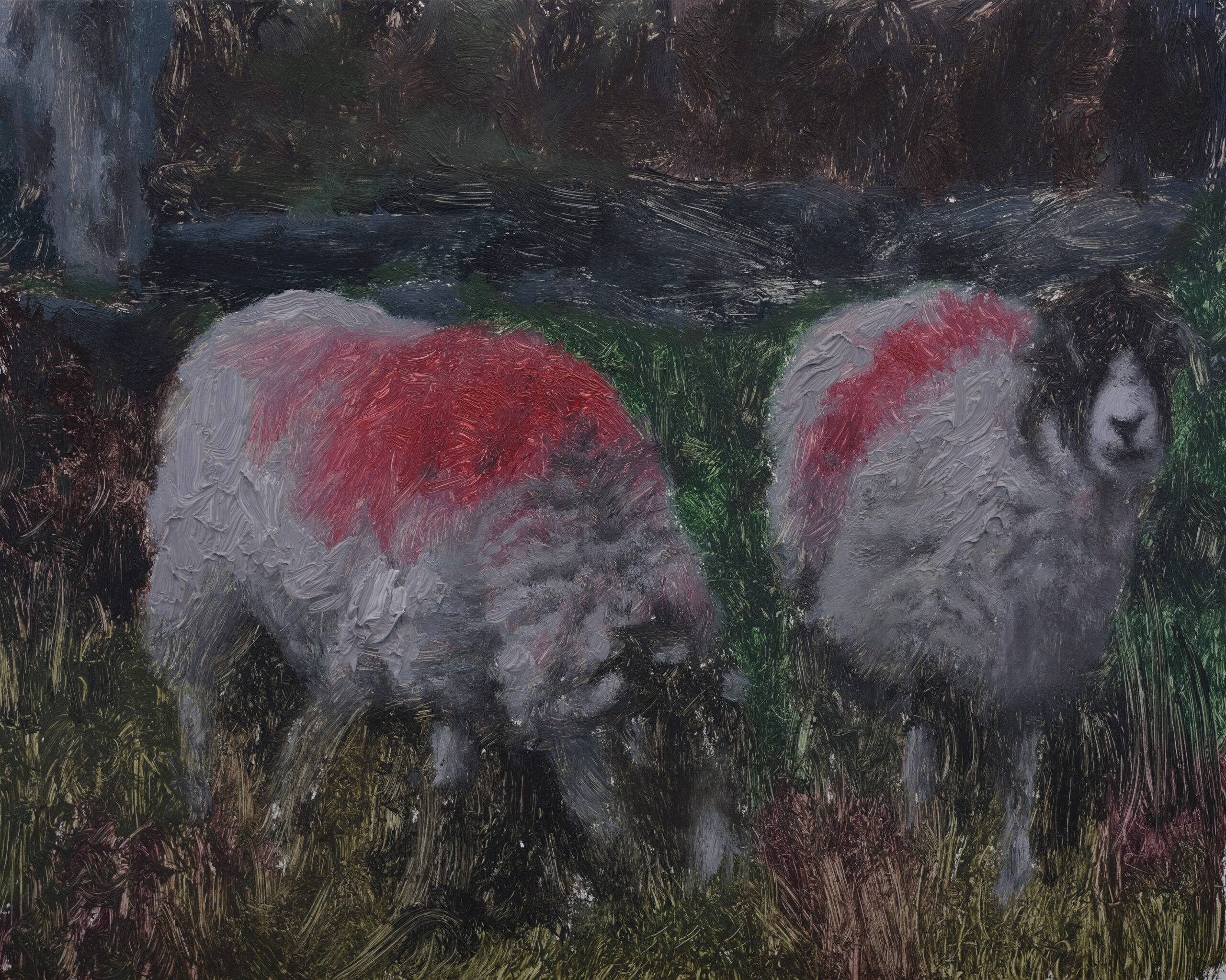
Naked Island 70, by Will Reinsch
Story scent: smoke
Story flavour: the darkest chocolate to ever exist
Play on repeat while reading: mei lan angel chants
—Are you free tonight?
—Nobody’s free under capitalism.
I’ll spare you the (very real) sob story about buying my first Vogue next to a metro station on the outskirts of Moscow and knowing my life would never be the same. Nigel already did that for me in The Devil Wears Prada. A movie we all owe for successfully romanticising the soul-crushing hostility of working in fashion. Every girlie walking this godforsaken earth in her tabis has seen it and thought: I’ll survive. I’ll make it. I’ll be her.
The very uncomfortable truth is that behind every design worth noticing, there’s a girl crying in the bathroom. An intern running on espresso and disassociation. And emotional warfare with a side of performance-enhancing substances to stay awake. The devil works hard, but fashion’s power structures work harder. Enduring abuse from leadership that makes the scariest dictators of the past century seem like cute hamsters has become a mandatory rite of passage. A blood oath. The price you pay for your dream. Yes, to survive. To succeed. To be her.
The mistreatment of interns, and often highly skilled, long-devoted employees, has become fashion folklore whispered over glasses of after-work wine. And when those stories do surface? Cue the cancellation frenzy. The hot takes. The Substack essays. The carousel explainer graphics. But then, the next collection inevitably drops. The voices of those who spoke up lost in the cacophony of critics’ reviews. Because in the industry based on the spectacle, show must always go on. And yes, social media has changed some things, but mostly just made the NDAs tighter.
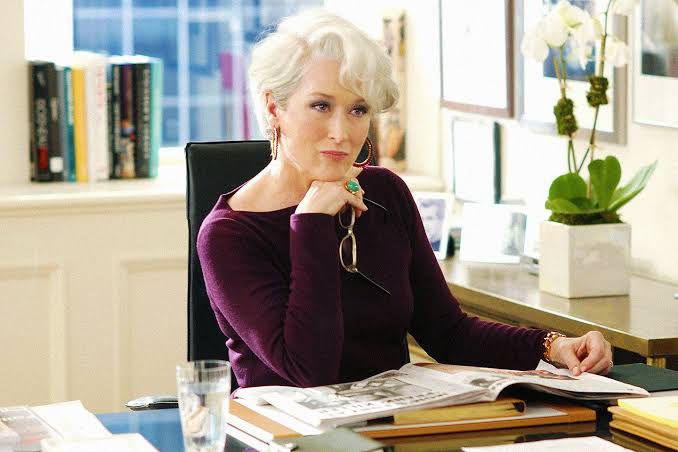
The Devil Wears Prada (2006)
Fashion Girl, Interrupted
“You have to admit that most women who do something with their lives have been disliked by almost everyone.”
— Francoise Gilot
Nothing new here, unfortunately. But lately, I’ve noticed a new layer of odd. The most appalling employee abuse stories? Almost always came from… women in power. Matilda Djerf’s PR team sure had their hands full. Dilara Findikoglu’s cherry-stained dress now reads more like a grim allegory for the blood she sucked out of her team. And do we even need to unpack the Phoebe Philo lore? Please. Even the girlboss era girlies weren’t exempt. Tyler Haney of Outdoor Voices, Emily Weiss of Glossier, Emily Oberg of Sporty & Rich, Sophia Amoruso of Nasty Gal — all faced serious criticism around toxic workplace culture and chaotic leadership. Which hit twice as hard because, once upon a time, I genuinely believed these women would build something better. Kinder. Different. All this isn’t just media gossip. It’s a systemic issue. So why is it that the cruelest stories we hear of all are about female leadership? Is it because we still believe that being a woman automatically makes you a more compassionate leader? Or is it the patriarchy’s defamation campaign against women to put us back into kitchens, not board rooms?
If you know me, you know I bring the two woos together. To make a very solid woo-woo. Sadly, looking elsewhere for answers was not successful. And when logic fails, I turn to the mystics. So bear with me, because for once, the dots started to connect.
Most spiritual and philosophical traditions agree on one universal truth: feminine and masculine energies are not opposites in value, but they are radically different in impact. Masculine energy is directional, penetrative, external. Feminine energy is generative, absorptive, relational. It creates worlds. It holds systems. And not to get too deep in the witch hunt history extravaganza, this is exactly why femininity has been feared, controlled, mythologized, and demonised across history. And before you come at me, this is not about women needing to be trad wife loveandlighty goddesses who sit at home and burn sage. Spare me. One of the greatest misconceptions is that femininity is inherently gentle. It can be. But it’s also feral. Chaotic. Devastatingly powerful. Hence, when feminine power is distorted and misplaced, it can not just harm individuals, it can destabilize entire ecosystems. Terrifying? Yes. Very.
In Sikh philosophy, women are said to possess seven times the spiritual power of men. And power, my loves, multiplies consequence. The same hands that create can also destroy. Ruthlessly at that. Let that sink in for a second. Take a deep breath. And now put all of the above into the context of the cut throat patriarchal capitalistic meatgrinder we live in, a world where the only path to success is to perform like a man, dominate like a man, lead like a man. Strip away the softness. Renounce compassion. Dissociate from your body. Sell your soul. Win. The more I try to build something of my own, the more I realise: we are still wearing corsets. Only now they are invisible. Quietly suffocating us without us even noticing. We are told we can become anyone. But at what cost?
Here’s the thing: a woman who is misaligned, exhausted, traumatised, forced into masculine modes of domination to survive becomes exponentially more destructive than her male counterpart. And that’s not a moral failure. That’s physics. The uncomfortable truth is that what happened to Dilaras, Matildas and Phoebes of the world would very likely happen to all of us. Because there are rules to the game. And eventually, every ambitious woman has to face the same impossible choice: Be the good girl on the sidelines. Or finally, at last, become her. And, dear ladies, let’s be brutally honest with ourselves. How often have we felt gut-wrenching envy towards those who had the audacity to be disliked and ruthlessly abused their way up to the top?
Good girls go to heaven.
Bad girls go everywhere.
— Song by Meat Loaf
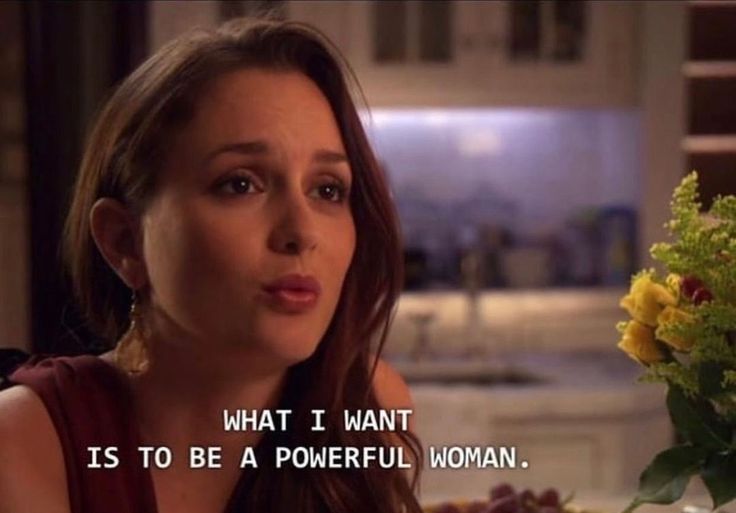
Going back to The Devil Wears Prada, it not only romanticized fashion’s toxic work culture, but the cold and stern, emotionless ruthless archetype of female leadership in fashion, Miranda Pristley. The sequel is on the way and there is a lot of talk about how the original cast has not changed at all. Ironically, same goes for the fashion industry. All while Blair Waldorf declared that you need to be cold to be queen. If you think about it, we never got an example of what healthy female leadership looks like in fashion. Not even in fiction.
Let me be clear: I am in no way condoning the very real abuse that the women in question have incurred. But I’m also not interested in lazy finger-pointing. Because the world is so quick to say “fucking bitches” and dismiss the system that forced them to become such. The system that punishes softness, empathy, and care. The system that consists of the ruthlessness of the fashion industry (that is still, by the way, very much male dominated, which is ironic since it’s supposed to serve women) + patriarchy + capitalism. A deadly formula that leaves very little room for anything other than evil. If any. It doesn’t just break women. It weaponises their power against others. And then acts shocked when the fallout is biblical. Because if a man is an asshole to everyone in the office? Nothing new here. A woman says anything out of line? Report this on the news and pronto. So maybe the answer here is to, yes, acknowledge the abuse, but not to just blame the women and women alone, but ask what kind of world makes this the only way to win? And while we are at it, maybe, just maybe, talk about how men abuse their power in the industry as well. Or are we asking for too much here?
She Posts, Therefore She Is
I briefly mentioned how social media helped expose fashion’s ugliest shadows, but the truth is, the industry has the memory of Dory from Finding Nemo. It forgets scandals faster than you can say “boycott.” So I won’t waste too much breath on it. The real restructuring is happening elsewhere: the influencer economy. Fame has become more accessible. You may not have generational wealth to start a business, but you can film a video with your phone. And for many women, that became the gateway. Not just into the fashion industry, but into power. Autonomy. Visibility. Control. A space to call the shots for once. Patriarchy hates that shit. I genuinely believe this is the reason female influencers are so widely disliked. How many times have we rolled our eyes at “ugh, another influencer girl”? How many jokes have we heard at their expense? The very existence of accounts like Influencers in the Wild is telling. We’re not just mocking the cringe per se. We’re mocking the feminine taking up space.
Everybody supports women until a woman’s doing better than you
Everybody wants you to love yourself until you actually do
It was something about her hair, so perfectly fallen
She was nice, and smart, and funny, and got everything she wanted
And she does charity, isn’t that the most obnoxious thing you’ve heard?
Her popularity, she’s too pretty for her own good
She’s probably self-centered, we hate her and she’s nothing
If everybody leaves her, then she had it coming
— Sofia Isella “Everybody Supports Women”
A great example is influencer with the capital I Morgan Riddle, the girlfriend of Taylor Fritz, the queen of tennis WAGs. She shamelessly capitalized on her boyfriend’s fame, and now her personal brand generates more cashflow than Fritz’s tennis. And, you guessed it, the amount of hate she gets is wild. We see a woman doing better than us, audaciously claiming her piece of the pie, getting Miu Miu level brand deals, and at some point we decide that she’s had enough. And take her down. All of us are guilty of that. Men and women alike. Again, nothing new here either. Again, unfortunately. If you think about it, even being a girls girl is a relatively new concept at this moment in time. But let’s not get too side tracked. Let’s just agree that this internal and external civil war has to stop. Period.
Fashion resisted bloggers and influencers for as long as it could, until it had no choice but to hand over the mic. If you can’t stop the riot, lead it. What we’re seeing now is a move toward the power of the individual. How many times have you heard the term personal brand in the last three years? And yes, it has its own shadows, just like everything in this strange, spinning simulation we live in. But this shift is undeniably good news for women who refuse to dance to the patriarchy’s flute and are building new, less extractive, more aligned ways of doing business. Or trying to at least.
There is a lot of talk on how the fashion industry has to change as a system.
But let’s be realistic here — will it?
Let’s not hold our breath.
So once we’re done processing our anger at patriarchy, at fashion, at the women who misused their power, it’s time to ask: how do we build something better with what we do have? There is a lot of talk on how bad AI and social media are for humanity. Yet we have to understand it’s not going anywhere. Technology is neutral. What we do with it is not. It’s up to us to direct it for the good. The more of us do so, the more of us refuse to play by the rules and create different ways of engaging with fashion not as an industry, but as a form of art, the faster the industry will be forced to follow.
If we stop feeding the monster it will inevitably starve. So let’s.