Category Art
Published December 24, 2025
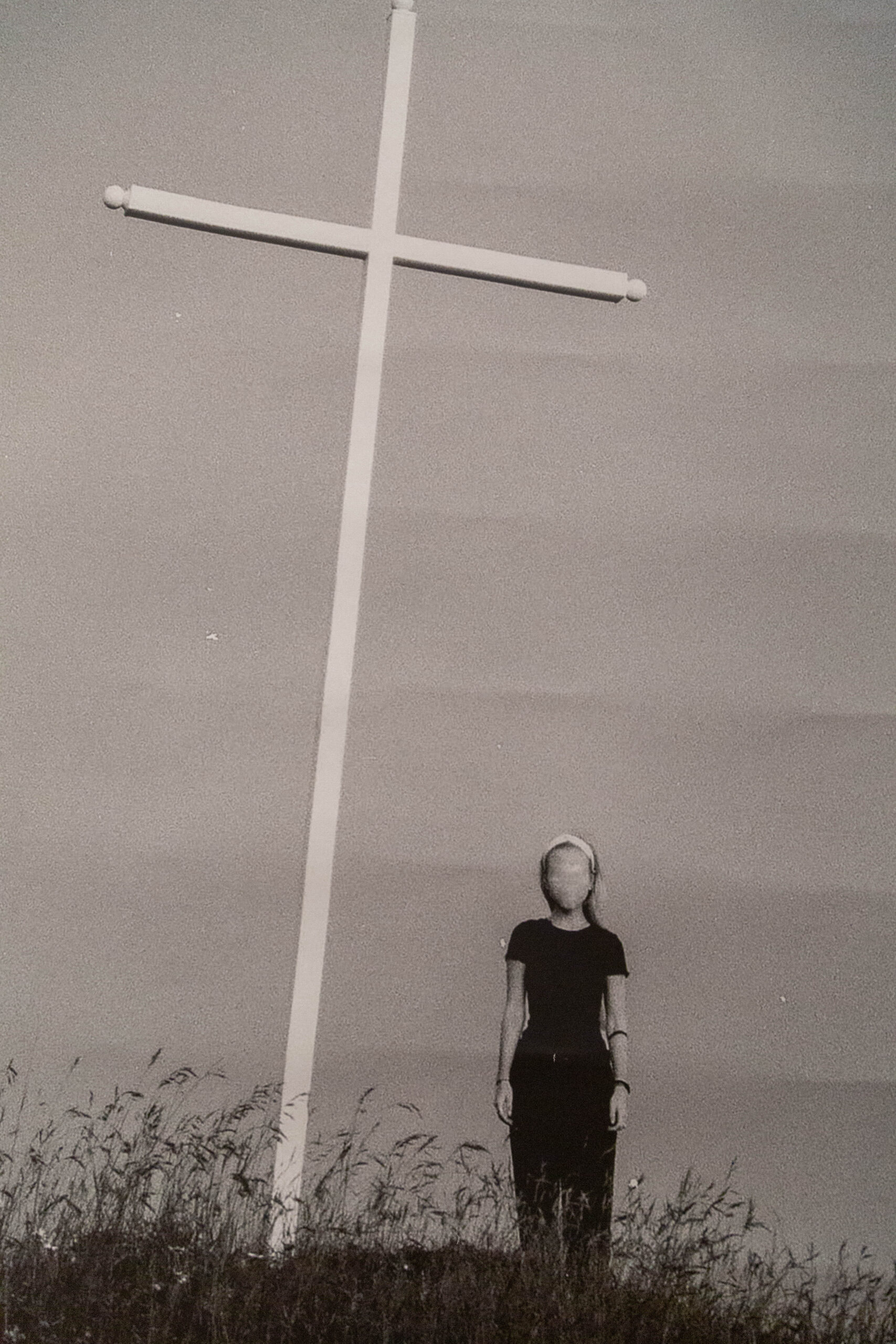
Untitled, 2019, by Arlau, Memories in Mist, B/W Analog photo
Story scent: Coniferous forest after rain
Play on repeat while reading: Wind Sounds: Blustering Wind on Open Fields
The photographs carefully placed on the white walls of a small chapel disarm with their familiarity. The haunting comfort of memories, turned fantasies, brings you back to a place you seem to have never visited, yet you remember and recognise. This is Arlau’s Memories in Mist, curated by Margarita Makhanova of the Waltham Collective.
In the artist’s own words, it gives you: “the feeling of being somewhere you’ve never been before”, “a familiar landscape seen through fog.” At the same time, it doesn’t just draw inspiration from memories. It embodies them.
Everything, from the mist-covered photographs lining the wall to the Untitled centrepiece, follows memories as metaphysical constructs, tracking their journey from conception to the day they feel like they’re slowly fading away, only to pop back into your head months later, uninvited and unprompted.
“Memory, for me, acts as a quiet myth. It has no clear beginning or conclusion and appears as a soft field of images that feel once known, though their origin remains untraceable.”
As you travel through the exhibition, your eyes wander. Arlau’s photographs come alive. Each one tells its own story, though a link is maintained through curatorial continuity; they are not chronological, but connected.
“Anxiety and captivation, similar to memories that appear randomly during the week,” Arlau comments on one of her self-portraits.
The Triptych, made up of ‘Peephole’, ‘Ink Wax’ and ‘Self-Portrait’, stands proudly atop a wooden piano, displaying the artist blending with the patterns of a tree, looking out at the viewer from within its cracks. This portrait is not the only instance where nature inspires the artist’s storytelling. The presence of trees, flowers, and animals lends a mystical quality to the black-and-white photos.
“They feel like vessels of unnamed meaning. When I photograph outdoors, I sense a different form of memory present in nature, one that does not speak in words and instead resonates through texture, movement and breath,” Arlau says.
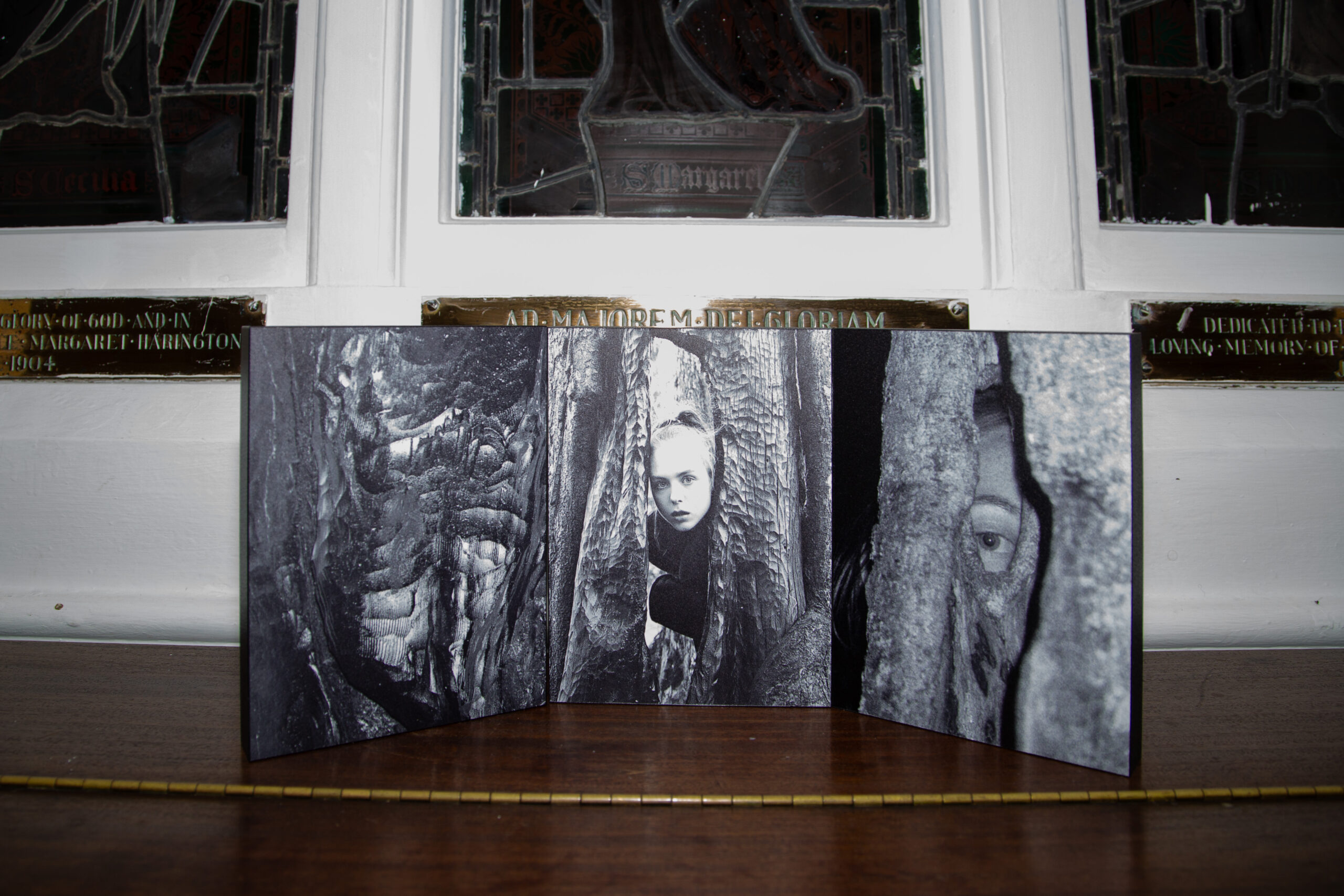
The Triptych, 2020, by Arlau, Memories in Mist, B/W Analog photo
Nature in Memories in Mist is turned sensual, almost visceral. The curved branches of Spindly Limbs creep into the heart. They discourage, unsettling your mind to the point where, like electric wires, they begin sending signals to your brain, reminding you of a place both familiar and unfamiliar.
In the Giant’s Lace, the artist’s personal favourite, you can similarly spot the disarming use of nature; this time, though, it’s more introspective. It tells a story of the artist herself, reckoning with the place her surroundings play in her life.
“The self-portrait was made in my country house in 2020 during COVID. At some point, I’ve realised that the plants have grown to such an enormous shape that I weirdly felt frightened by them, but they also look so cute.”
“I felt fascination and anxiety coming together, and that gave me an idea to reconnect with something that brings me those very ambiguous emotions.”
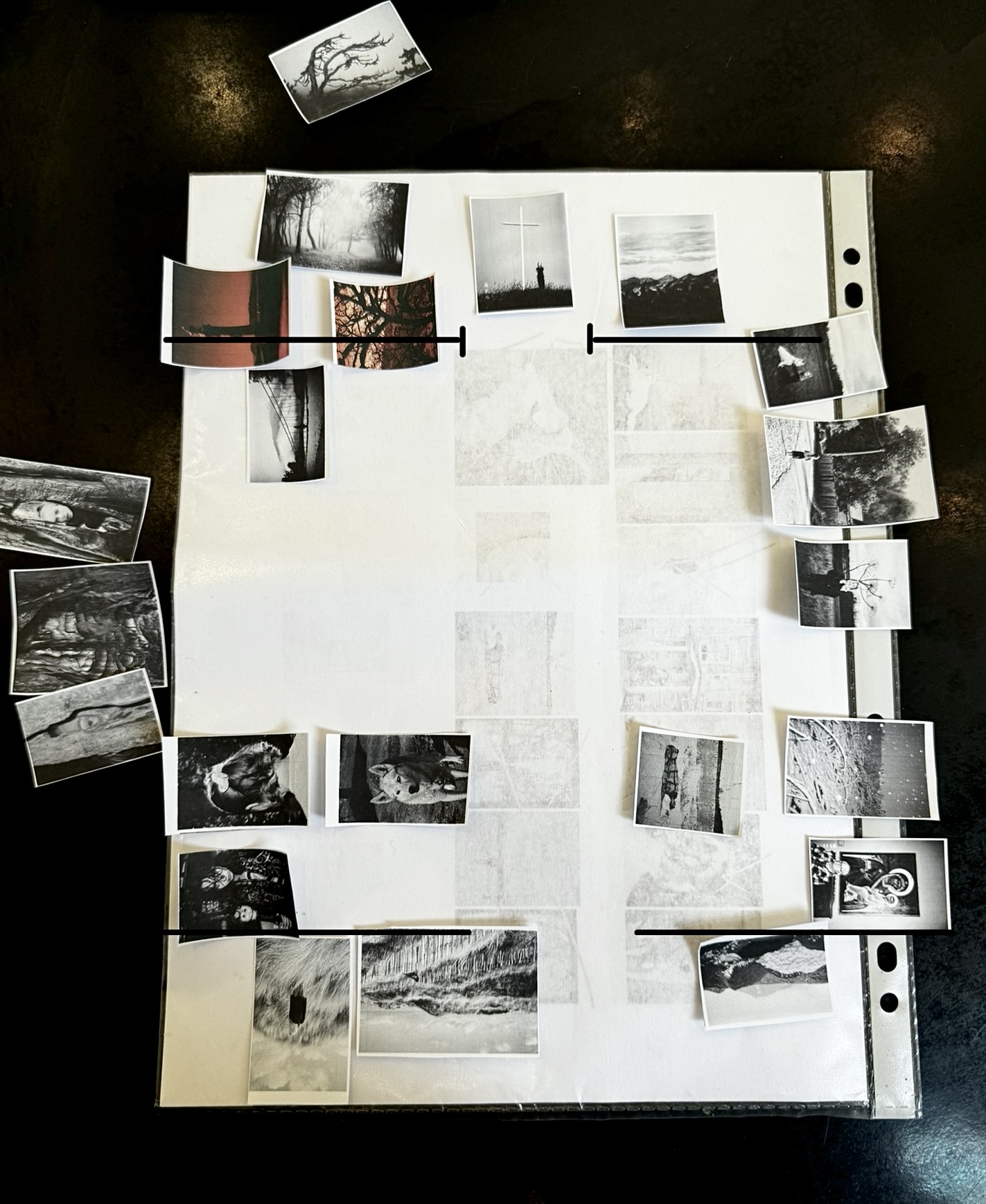
Memories in Mist, exhibition outline
Like the photograph’s earthly inspirations, the space they occupy in the chapel-turned-venue is anything but random. Every corner, every detail is in accordance with Margarita’s curation plan.
“The ‘Triptych’ was deliberately placed next to the existing stained glass panels. Three wooden blocks mirrored the panels in the space, creating a dialogue between different media and times,” she shares.
There is a lot to be said about the curation process executed to perfection by Margarita and the Waltham Collective. After viewing 60 photos, Margarita carefully selected them into four main themes: nature, religion, fairy-tale references, and self-portraits.
While the photographer undoubtedly serves as the key storyteller, that story risks being lost entirely if not tended to by the curator. Memories in Mist shows this process not just as collaborative but symbiotic.
An understanding is achieved between the artist and the curator. A balance where both roles are played so seamlessly that they blend into one in the eyes of the unassuming observer. Look deeper, and you will see how Margarita’s simple, yet elaborately interactive approach pairs perfectly with Arlau’s visual ambiguity.
“I saw that quite a lot of the pictures look familiar, yet you cannot grasp a specific location or a person featured, you cannot see the faces in most of them, some photographs are even partly covered in mist — all of this is exactly how you interact with memories,” Margarita shares.
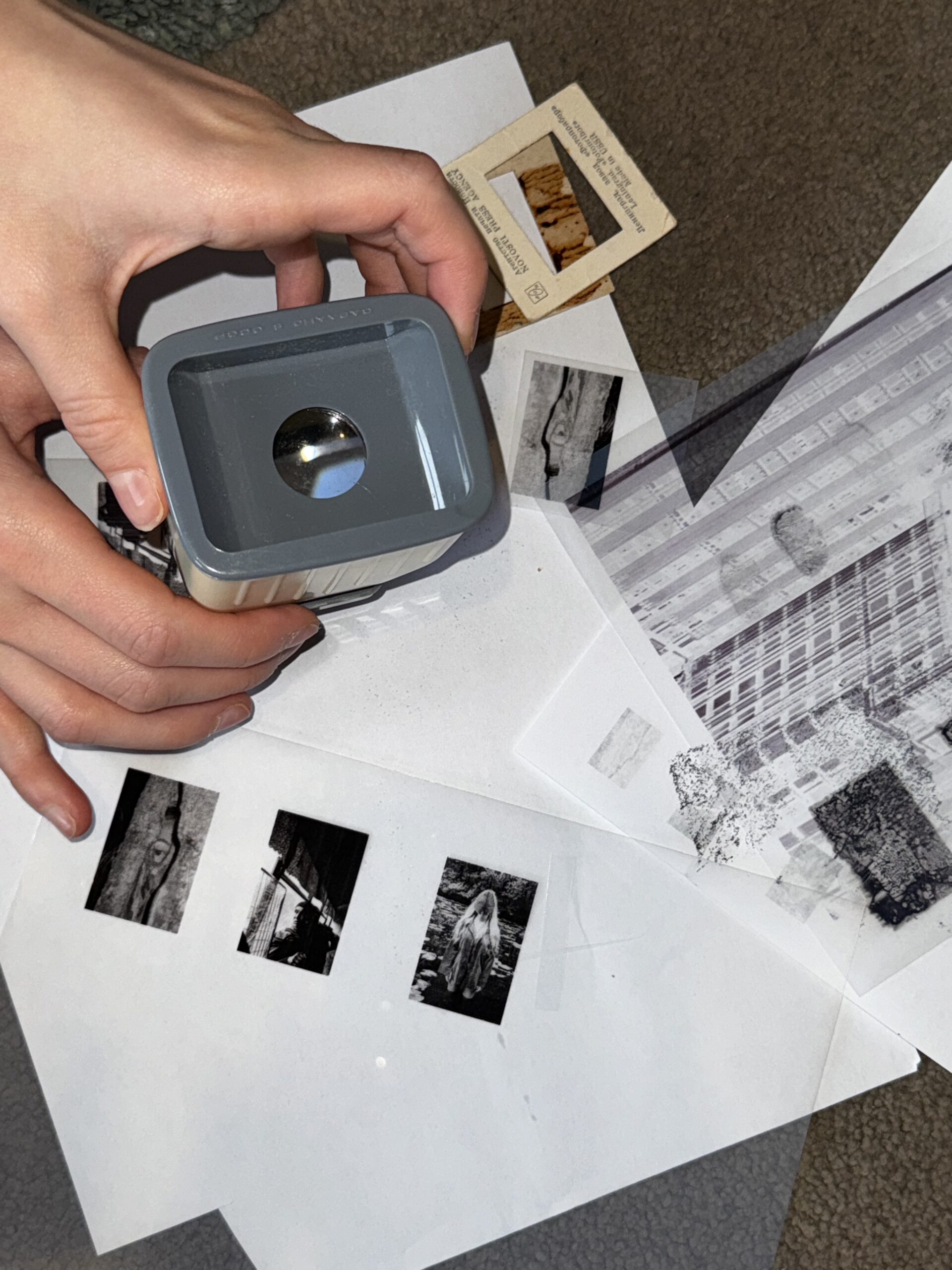
Creating the Diapositive Memory, Memories in Mist
Margarita found a perfect way to both realise the artist’s vision and utilise the space, making it a home for the memories, not just a house for the art. Inspired by Arlau’s foggy vision of future past memories, the exhibition is brought to life using the subconscious messages within the space.
“By interacting with existing spaces in the Chapel, like the stained glass, altar, wooden cross, and seats, the exhibition felt more grounded and site-specific.”
Perhaps the understanding between Arlau and Margarita is deepened by their shared background. Both come from post-Soviet countries, both came to London to explore their connection to art in a foreign country, and both hold memories of objects unique to their shared upbringing.
Nowhere is this shared connection more apparent than in the exhibition’s interactive corner. An old diascope is placed on the side, by a photo-covered wall, inviting guests to take a peek inside and explore Arlau’s work through a new lens.
“We remembered the diascope that we both had as children growing up in a post-Soviet environment. I also worked with a digital transfer film before, so I could easily imitate a positive of a photograph using a regular printer.”
“With the photograph exhibitions, it is hard to physically interact with such pieces. An interactive object allows one to get closer to such an incredible medium. That is how the ‘Diapositive Memory’ interactive object was created,” Margarita shares.
In pursuit of simple exhibition design, Margarita transformed the space with details that were effortless yet effective.
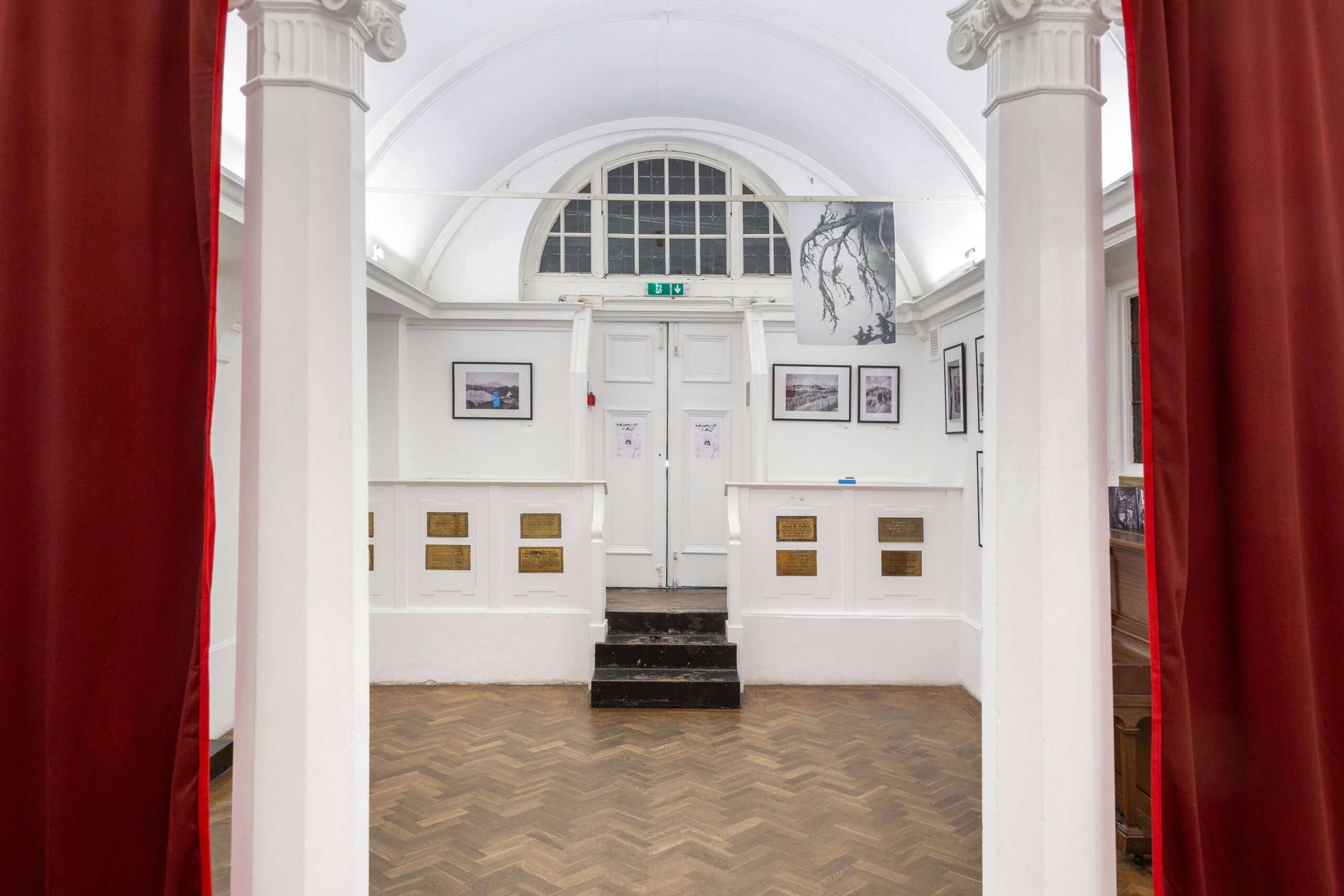
Memories in Mist, exhibition by Arlau, curated by Margarita Makhanova (Waltham Collective)
Unbeknownst to visitors entering the space, the red curtain on either side of the altar at the very end of the room instils a sense of visual curiosity. Suddenly, an inexplicable need to walk through the curtains takes over. The need to seek comfort in seclusion is awakened.
“Red curtains mirrored the only red photographs exhibited, separated the venue into two spaces, giving a more secluded and intimate feel to the altar bit.”
Once in the space, Untitled, the exhibition’s centrepiece is on full display. It calls to visitors as they enter the room, yet it is not until you walk to the altar that you experience it fully.
“By placing the ‘Untitled’ (centrepiece with a cross) in the middle of the altar, I wanted to create a striking feeling when the visitor just enters the space and sees a poetic mirroring of the altar structure itself.”
Matching the religious subtext of the space with the centrepiece creates an interesting juxtaposition. The two seem to match, yet there is still a sense of their otherness, emphasising their distinctly different origins. Just as the memories the exhibition embodies, images and spaces twist and blend, leaving only the inexplicable need to question the nature of their dissimilarity.
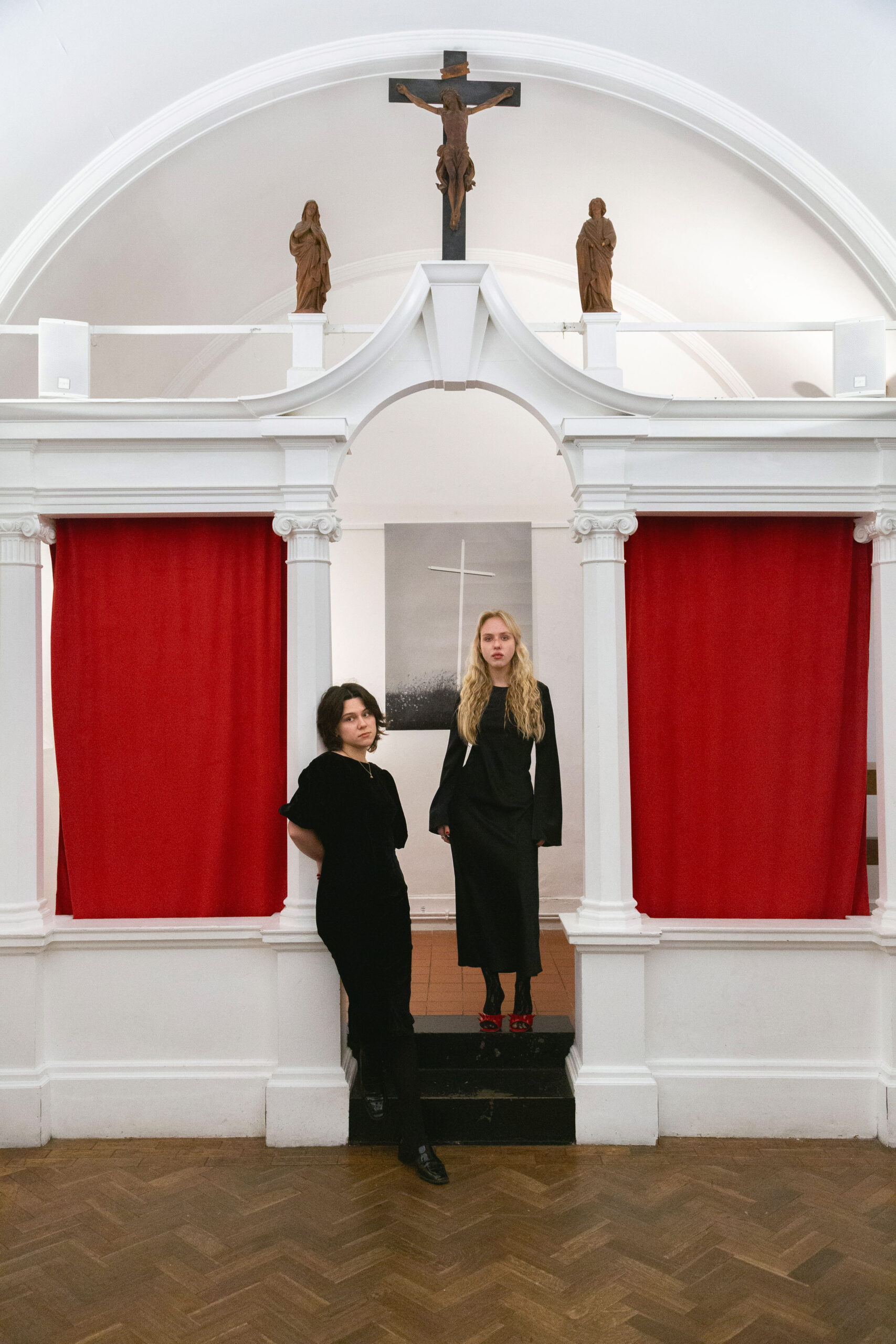
Arlau and Margarita at Memories in Mist, exhibition by Arlau, curated by Margarita Makhanova (Waltham Collective)
The role religion plays in Memories in Mist is an interesting one. The exhibition itself is held in the chapel, but it reframes religion into a memory. “Religion here is important, but more important is that feeling that I remember,” Arlau says.
The centrepiece mirrors that sentiment, creating a feeling of divine ambiguity. The face in the photo is blurred; all that remains is a figure and a cross surrounded by long grass, that, just like in the artist’s previous works, mixes nature and thought.
The person standing in the field across the room, their faceless facade asking to be explored closer, is both a reflection and a memory. It brings you back to your own connection to the spiritual while solemnly contemplating: Is spirituality just memories that burn a little brighter?
Arlau’s own connection to religion comes from growing up in a Russian Orthodox household. She recalls icons standing in the corner of her childhood room, creating a presence that “protected and unsettled at the same time.”
“They watched quietly, suspended in their own time, neither fully alive nor entirely still. Their faces carried a solemn calm I could not comprehend as a child, and inside this calmness lived a slight tremor, as if something invisible hovered nearby, preparing to reveal itself. This mixture of holiness and unease stayed with me.”
Memories in Mist is thought-provoking, even thought-inducing. Anyone lucky enough to catch this pop-up exhibition walked out with new memories unlocked and a confusion of visiting places they seem to recall but have never occupied. The balance of Arlau’s striking ability to capture the essence of remembering and Margarita’s curatorial excellence in blending the space with the art makes this a truly unique experience.