Location London, Barcelona
Published September 16, 2026
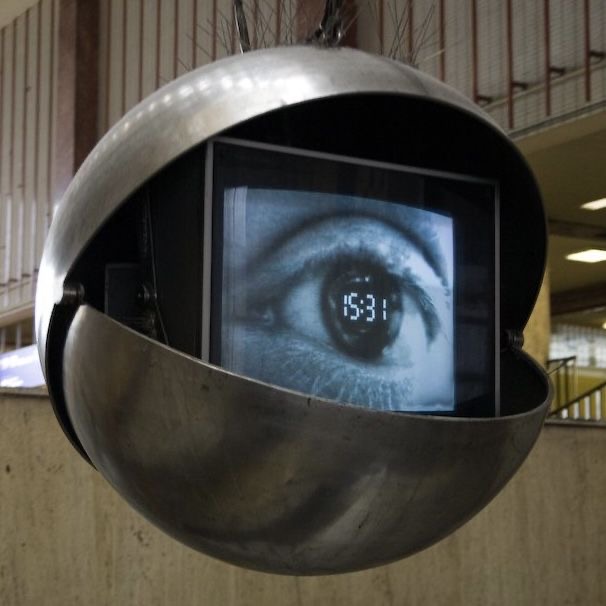
episode 3 - visual inspiration (Asya)
About Culture Confessional:
The chaos of contemporary culture jumps between deeply spiritual and comically ridiculous like a deranged tree frog. We are simultaneously anxiously attached to the digital and completely overwhelmed by the material.
Culture Confessional is born out of discussion, dissatisfaction, contemplation and sometimes, sheer fucking confusion. Read: midnight DM rants fests. We needed a space to process, and here we are.
Intro:
Time flies.
Well, unless you’re at your nine-to-five, in which case it apparently moves at the speed of continental drift.
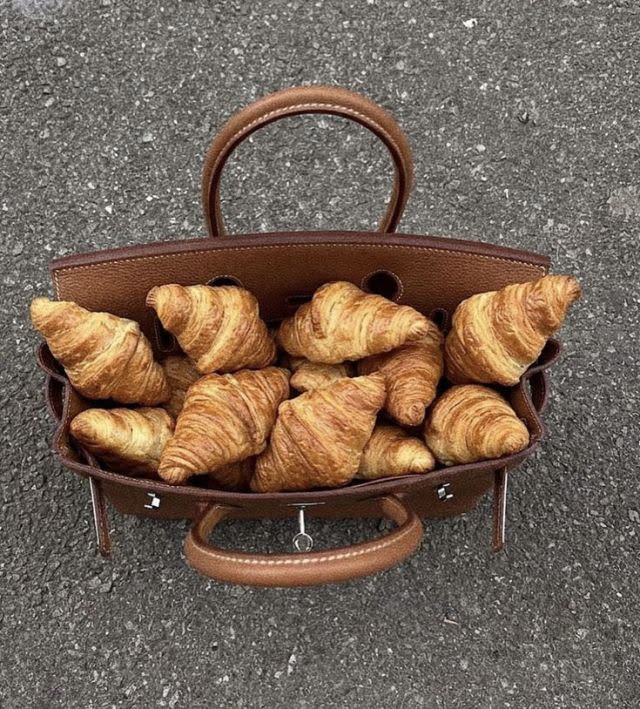
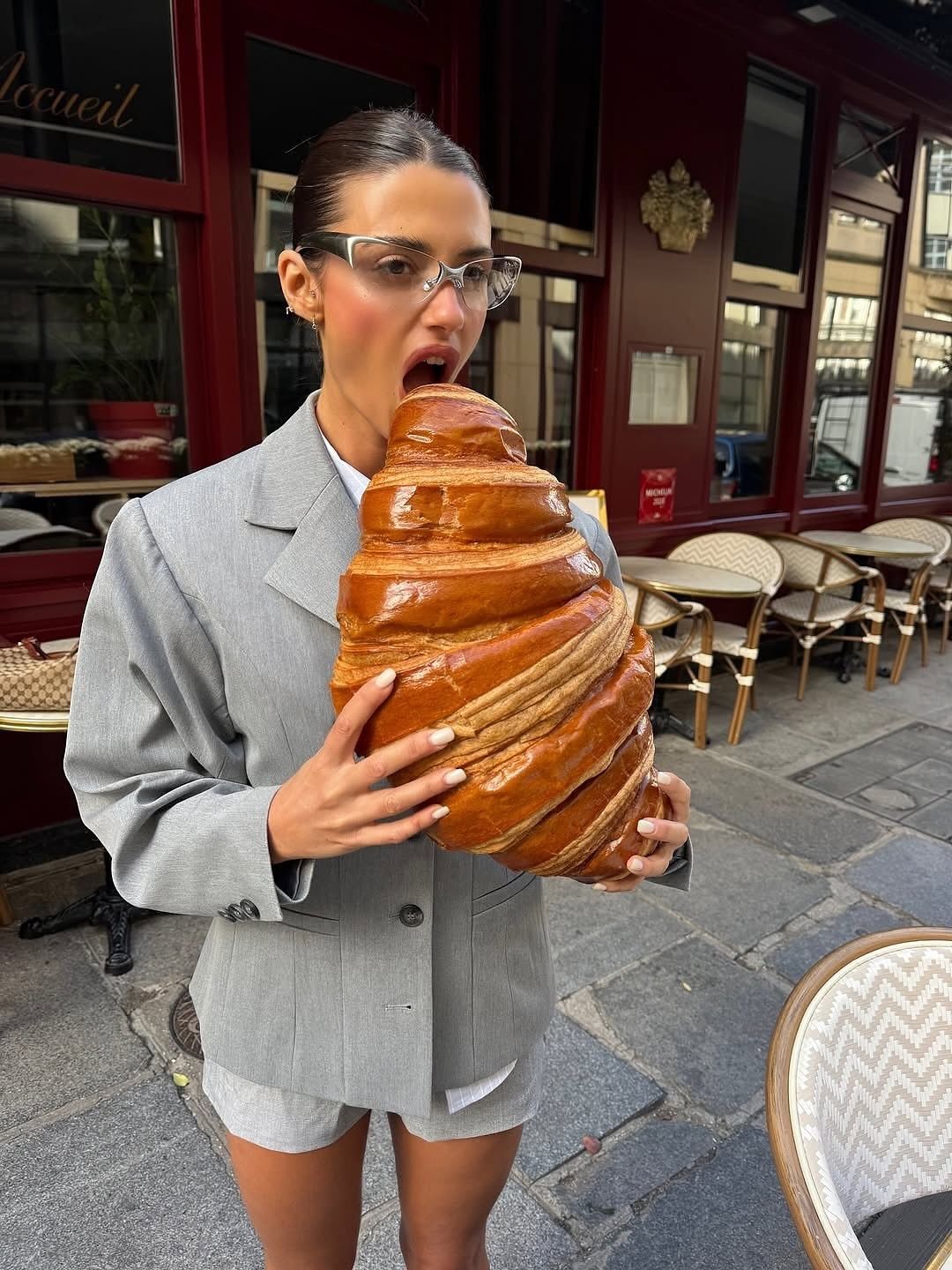
In Episode 3 of Culture Confessional, we’re once again crawling out of our spiritual closets to talk about time, perception and the very questionable idea that it is supposed to move in a straight line. From the way we experience our own lives to the strange little loops happening in fashion, nostalgia, pop culture and the trends that resurrect themselves with strange cyclicality. We’re asking whether time might be less of a line and more of a… croissant.
Yes, you read that correctly.
Travelling through time as you remember moments instead of dates, feel deja vu tickling your reality and question why we are constantly being pushed into a weird race with the clock- have you ever stopped and thought, this does not feel natural. Perhaps that’s because it’s not.
Come yap with us about why we are so obsessed with going back, rushing forward, and what might happen if we simply stopped treating time like a race from point A to some made-up point B.
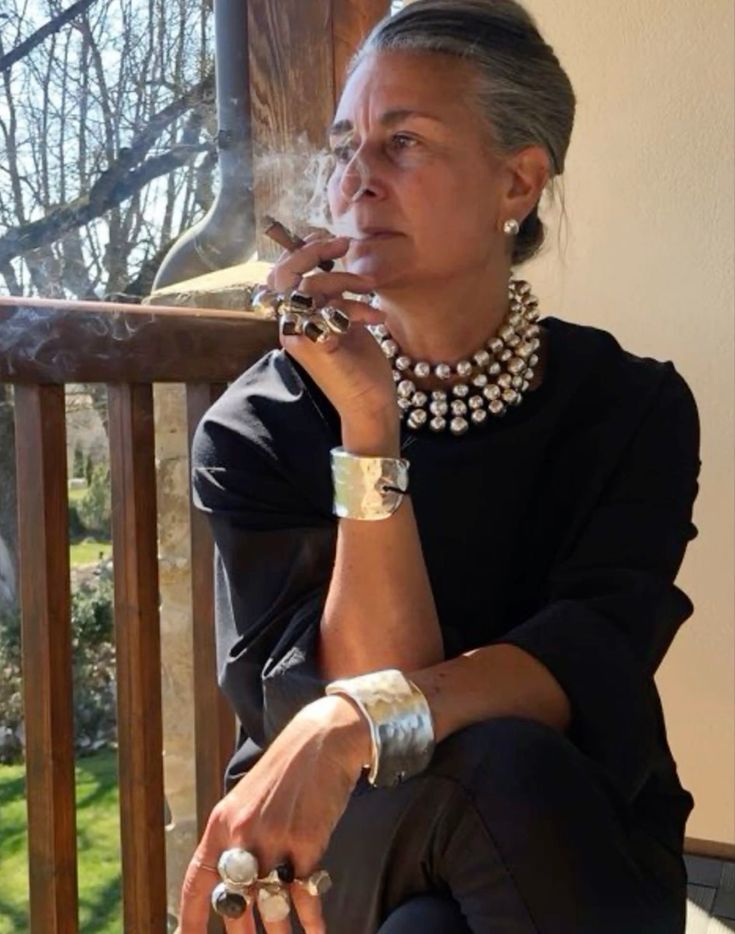
episode 3 - visual inspiration (Anastasia)
Transcript:
Asya: Let’s start. Okay, hi.
Anastasia: Episode three, here we go.
Asya: Yes, we keep getting deeper and deeper into the culture rabbit hole.
Anastasia: Yes, we are. And today’s topic, you guys, is, you know, we’re not holding back with the woo-woo anymore, especially since the last episode already catapulted us out of the closets of spirituality.
So we thought, why the hell not? So do you want to introduce the theme?
Asya: Today’s episode is Time Is a Lie. Because time is a lie. Basically, what if time isn’t what you think it is? And it’s not; I think it’s not. I think we all know that it’s not.
Whether it’s us experiencing something that just happened yesterday, but it feels like it happened a year ago, or something that happened like three years ago, but it still feels fresh. And I think you mentioned it as well, that the brain doesn’t see the difference between it. Because time is…
Anastasia: A lie.
Asya: Time is a lie. Time is not what we think it is.
We don’t remember things a lot of the time with timestamps. If someone tells us, ” Oh, remember that dinner that we had? We remember emotions, we remember sensations, we remember events and activities, but we need to check when it happened. We don’t actually remember the dates and times, probably because we don’t have to take it numerically. So yeah, time is a lie. Do you want to elaborate on which time is a lie?
Anastasia: Well, as you said, first of all, of course, everyone has experienced the difference in the feeling of time. We’ve all experienced time flying by whenever you are with someone you truly love, and you’re having the best time. Yet somehow, when you’re at work, working your nine-to-five, time seems to go on forever.
And I feel like it’s really real. But actually, I feel like we should drop the thesis right away, because it was a neuroscientist, British neuroscientist. A woman. We love. A bad bitch neuroscientist, Dr Tara Swart. And I highly recommend everyone get familiar with her work and her books; we will definitely link them down below.
But one of her phrases that she keeps saying in a lot of her podcasts is that there is absolutely no scientific evidence that time is linear; we just chose to accept it. And this is something that another day goes by that I don’t think about.
And speaking of the whole woo-woo sentiment of what we are talking about, and what a lot of podcasters and creators are talking about right now, it’s just really funny how a lot of things that have been considered woo-woo for such a long time are now proven by science. And we will definitely link the study down below that, you know, the quantum physics scientists have finally proven that time does not go in a straight line; it sort of falls in on itself.
And in this episode, stay tuned; we’re definitely going to be talking about how culture is a huge reflection of that, since we’re, you know, we’re still in a culture confessional. We’re not quantum physicists over here.
So yeah, this is definitely a really, really beautiful topic. And do you want to slowly transition into the cultural bit of what we’re talking about over here?
episode 3 - visual inspiration (Anastasia)
Asya: Yeah, I mean, honestly, anything from fashion to pop culture is experiencing time in different ways. I think we’re going to get into fashion in a bit. But I think culturally, and especially in the sense of movies, the way that we appreciate nonlinear storytelling is such a big sign of the fact that we don’t see time in a linear perspective. And we desperately want the stories that represent that.
Because first of all, why do we take these stories in and process them so easily? If our brains are not aware of the nonlinearity of time, if they’re just like, we’re moving in a straight line? Why are we processing this so easily? Why are we so drawn to it? Why are we so desperate for it? There are movies like Arrival, Mr Nobody, literally any Christopher Nolan film that we are all like, frothing at the mouth for; every film bro is going crazy.
And it’s all about nonlinear storytelling. It’s all about the nonlinearity of our experiences of things. And we’re so obsessed with it because that’s how we want to experience time.
And I think also a lot of the time the pop culture nonlinearity, whether it’s a book that is written nonlinearly, whether it’s even, honestly, down to like a TikTok, where you get the ending in the beginning, and that hooks us right away, because we just want to experience it not in a completely linear way. I think it also removes a big fear that comes with experiencing time linearly, which is the fear of the unknown, which is our biggest fear as humans.
Anastasia: Basically, fear of death.
Asya: Basically, fear of death, but also fear of anything that will happen that we don’t know, because we see our life as a straight line. We are here. The future is here. We can’t see beyond here. So we are just terrified.
I think if we stop viewing it at this line and start experiencing and thinking of it as something that just exists, whether it folds, whether it circles around, that it just is, that there’s no direct number, no direct line, we will remove this fear a little bit, because we will start to exist in time instead of dreading it and being scared of it.
But I think a lot of the nostalgia bits as well are really interesting in fashion, and maybe you want to get into the fashion bits of it as well.
Anastasia: Yeah, completely. And especially since the story of mine came out on MKH that I am super proud of, because…
Asya: Go read it. We love it.
Anastasia: We once again fished out the trend right before everybody else did. And I think it’s no surprise everyone’s talking about nostalgia right now. The resurgence of the 90s happened a couple of years ago. Everyone was completely crazy.
Then, obviously, logically came the Y2K, the zeros, and now we’re experiencing the 10s, which was, if I’m honest, my prime era. I mean, there are many primes, because time is a lie, and it’s not linear, by the way. But that was one of the primes of my youth, and we have definitely seen the digital cameras from those years, like the Canon PowerShot resurging. Finally, out of nowhere, everyone is taking these nostalgic Tumblr-vibe pictures.
But the story that I’m referring to is about the resurgence of new romanticism, basically. How, if you look closely at every single collection that’s been designed for the past couple of years, every single collection has some sort of element of a Regency era or a Marie Antoinette reference of some sort. And lately it’s been going crazy and crazy and crazy, especially in the last couple of seasons, because even Runways that would never be caught dead referencing anything past the 90s, like earlier than that, are now, you know, doing corsets and Regency silhouettes. I’m talking about Alaïa; that one was shocking to me, and you know, it’s pretty crazy.
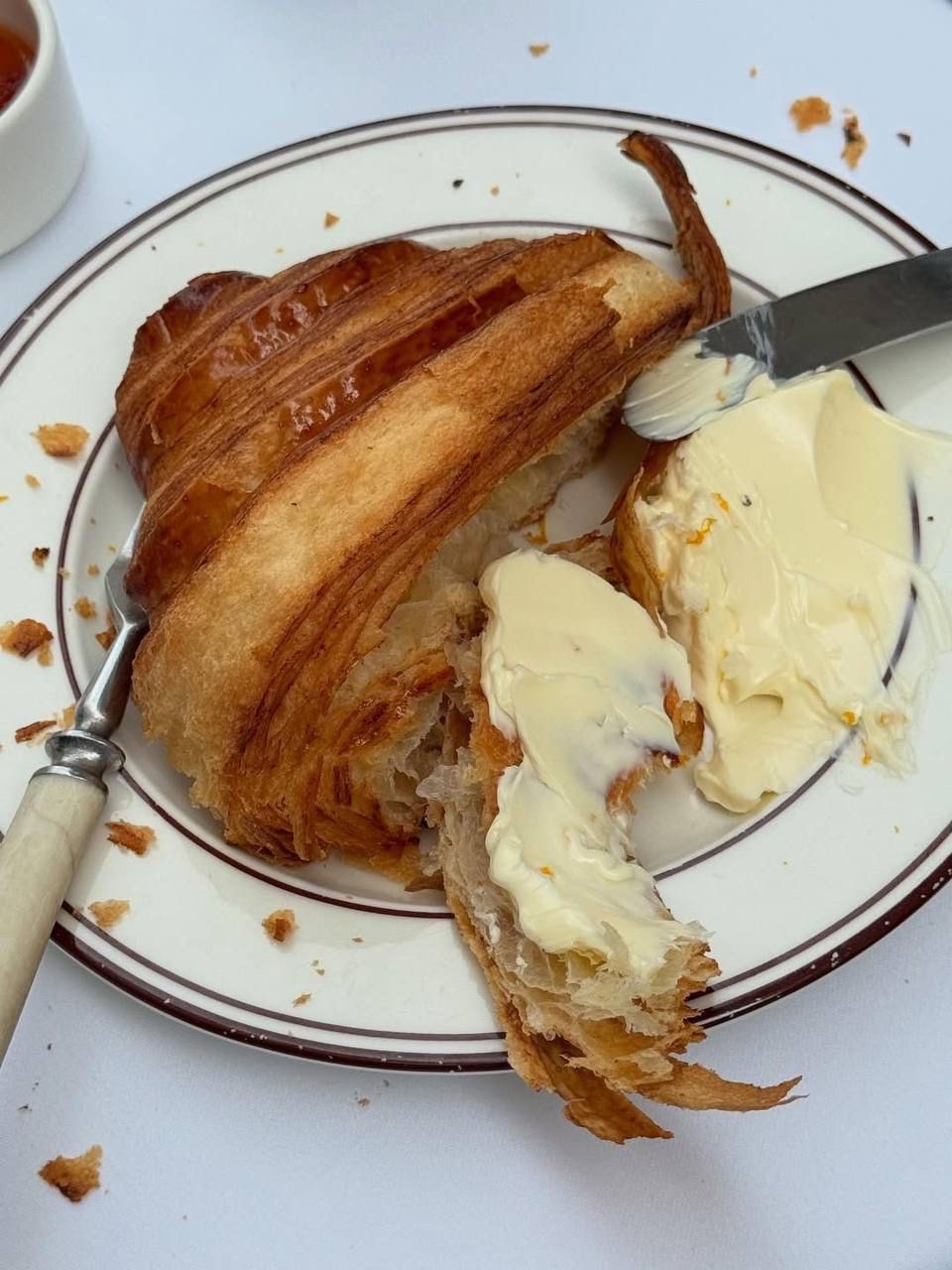
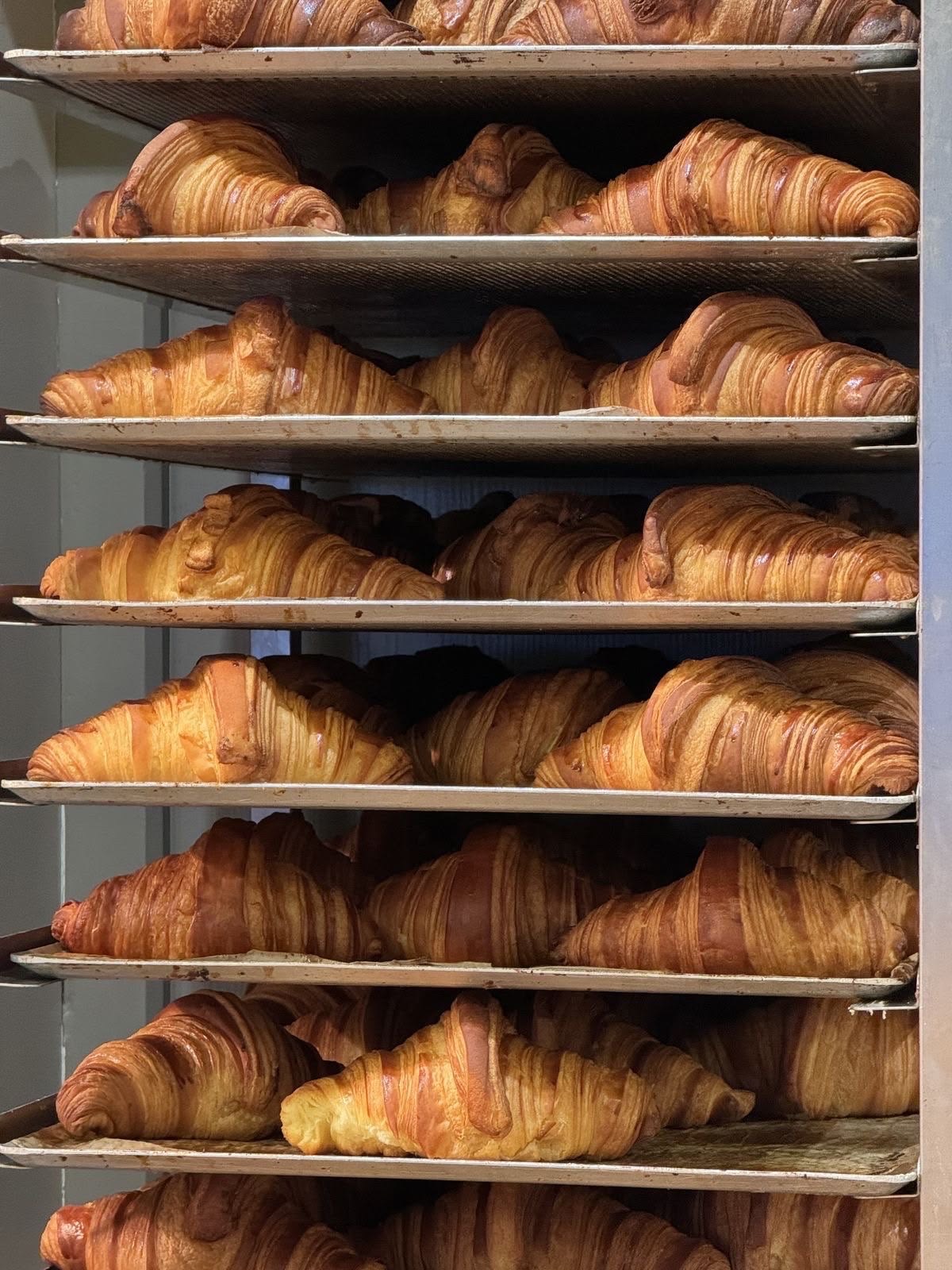
But with regards to the concept of non-linear time, I feel like it’s important to talk about how the trends keep coming back. And I feel like everyone knows that the resurgence is happening, so I feel like we experience time through trends, through culture, not in a straight line, but more as a spiral, or as that study showed, it’s kind of folding into itself like a puff pastry.
Asya: Time as a puff pastry is awesome.
Anastasia: Everybody loves it. Yeah.
Asya: Time as a croissant, actually.
Anastasia: I think that should be the title. We were brainstorming about the title, and we’re like, kind of stuck, but you know, we’re like, okay, time as a croissant.
Asya: Time is a lie; it’s actually a croissant.
Anastasia: Love that, but it’s true. If you think about it, trends come back, but none of us are the same anymore. The world is not the same anymore. Culture is not the same anymore. And this trend of new romanticism has taken everything by storm. If you think about it, it’s everywhere. Everybody is so obsessed with the, like, Baroque references. If you look closely, trust me, you will not be able to unsee it. It’s everywhere.
And you, of course, you absolutely must read it, because I definitely talk about how it’s, you know, in our minimalist apocalypse AI world, we’re just striving for more natural forms and natural shapes, and something more elaborate than just a white cube. But also, there’s just an element of nostalgia for the times that were, for the good things that happened within those areas. Beauty, it’s things that were created by hand, by people, not algorithms for people, not markets.
And this is the nostalgic part, I feel, because we take the good things, which is also a scientifically proven feature of the brain, because we don’t remember the bad things. That’s why nostalgia exists in the first place. And we just yearn for them. And then we kind of decide to bring them back and experience them from a different perspective. And it’s just, it’s such a fascinating realm to live in, don’t you think?
And yeah, I wanted to ask you about the Nicole Richie references, the ones that you were talking about with this exact same, like, experiencing different trends and different times.
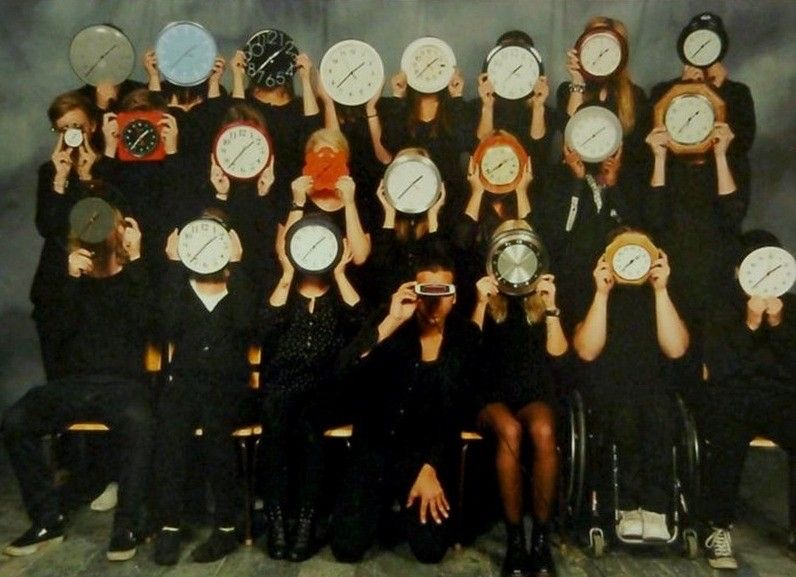
episode 3 - visual inspiration (Asya)
Asya: First of all, Nicole Richie. Love her, love her down. She’s incredible. She’s like, oh, just amazing. One of like, the people who survived the chaos of the 2000s with like, impeccable style throughout.
But basically, she was on Harper’s Bazaar, I think it was The Good Buy podcast. And they were asking her about the resurgence of the 2000s and how she feels about it. And she actually said that she doesn’t connect with the 2000s right now, because it’s not what she remembers the Y2K era to be. And then one of the podcast hosts said that maybe that’s what people today think it was.
So I think that’s interesting, because once again, we can’t really relive things, because we can’t recreate all the other conditions that are there in order for it to kind of exist. But we keep looping around, and we keep like, kind of recreating these things, I think, because of nostalgia.
And nostalgia is also like one of these, I guess, side effects of the linear experience, even though nostalgia itself and experiencing nostalgia is so nonlinear. It is us going back and remembering and recreating and looping our lives around. But when we think of nostalgia, we think, oh, I want to go back to this point. I want to go back to this experience specifically. So let me loop it back, so I can recreate that same time.
So it’s almost like we’re experiencing the side effect of our fear of the unknown, like fear of new things, and this linearity. But that has also proved that time isn’t linear, because we keep looping it.
So it’s kind of like this thing where it already proves itself, but for some reason, we refuse to experience it as it is. We refuse to experience these resurges of trends as time folding and twirling and being a croissant, because I’m obsessed with that now. We, for some reason, just give in to this nostalgia bit of it.
But I also think that you mentioned it, and it was a really interesting thing that now the trends are coming back, but we get to pick whether we participate in them or not. Because right now, we are experiencing the Y2K, the 90s, 2016, and the romanticism all at the same time.
We are almost existing in this kind of little porridge and little cloud of trends and of fashion that are all existing and unfolding on themselves. And we have a little alien-looking futuristic outfit girly riding the train next to a Bridgerton character, and it’s just completely normal. And if you look at it from just a basic looking at this perspective, just with your eyes, not even attaching any other concepts to it, this is time travel that we are having. This is just us experiencing all the times at the same time, fashion-wise.
So I think fashion has already decided and realised as a concept that time is not linear; let’s just experience all of it at once. It’s just that our brains have not really caught up yet, nor have the cultural world and experiences.
But I also did read this one theory that is a bit depressing as it is, but I think it does explain a bit of the loops, and it’s called the Spheric Time Hypothesis. We’re going to link the story and the article about it below.
It basically talks about us perceiving time in a loop and how all of these cyclical things are just points, and there’s one big loop that just keeps recreating itself and recreating itself. Which, I think, you disagreed with. I also disagree with it in a way because that means that none of our decisions really matter. We are just kind of looping. But I do think that looking at the fashion through that lens, looking at different things through that lens, and the linear lens, and the folding it on itself lens, the more time theories we allow ourselves to experience, the more open we are to just experiencing time and borrowing from different ones without actually committing our life to one.
So I think it’s just an interesting one to explore. But I think you also had some thoughts about the loop theory, which you can tell me.
Anastasia: Yeah, absolutely. With that theory, I think it does hold up in some ways, but I feel like it eliminates the free will element, and I strongly believe that humans have free will. Because I myself have definitely felt myself being stuck in a few loops, but I did break out of a few of them, and I’m really proud of that. And I was like, after you do, you’re like, oh my god, humans really can’t do anything. I’m risking starting to sound like Tony Robbins, like a motivational TED speaker of some sort. But it is really, really true.
But what I really, really want to talk about with regards to the way that we are limited in our perception, because one of the biggest elephants that this podcast and all of our yaps are standing on is capitalism. And we talked about this: initially, the whole calendar is just completely linked to consumerism, because how else are you going to sell people anything if they just exist somewhere else?
And it’s definitely true. And I also want to talk about the fact that the other elephant is patriarchy, because women do not experience time in the way that the system is teaching us. We operate on a 30-day cycle, we’re linked to the moon, and I cannot wait for science to catch up with that one.
And also, I cannot wait for science to catch up with astrology just to prove everyone wrong once and for all, just so that people don’t roll their eyes when I ask them for their time of birth.
But it’s completely true. And women have been systematically taught to neglect that part of them, because we, as a species right now, as a world, as a system, operate on circadian rhythms, which are male rhythms. And we, as women, are low-key jealous of men who wake up every single day and feel pretty much, more or less, with maybe a 5% difference, they feel the same.
We do not. We absolutely do not. And it’s really difficult to live in a world that really does not create any space for you to..
episode 3 - visual inspiration (Asya)
Asya: To feel, literally.
Anastasia: To feel like yourself.
I do have to say that some of the countries are already catching up. Italy now has- correct me if I’m wrong- but they did introduce in corporate settings two to three days of monthly leave that you can take if you’re experiencing difficult periods.
Asya: I did not know that. That’s incredible.
Anastasia: That’s incredible. And I feel like this is beautiful. And this is one small step for humankind. One small step for a country, a huge leap for humankind. I really hope that other countries take notes.
Yeah. And this is insane because we, as women, do not experience time linearly. And if you think about it, a lot of arts and culture is very linked to feminine energies. And the way that it’s been suppressed lately- not lately; it’s been suppressed throughout, always. And it’s really beautiful to watch that a lot of women are waking up right now, ourselves included. This is one of the reasons we’re doing this, because we, in our own little ways, however many people this podcast reaches, we want people to know this because it’s just so important.
So yeah, this is definitely something that we always have to think about as women, as a species.
Asya: Honestly, I agree with everything you just said. I think the fact that the calendars and even the nine-to-fives are all based on…
Actually, the nine-to-five, I think, was originally based on manual labour and farms and fields and stuff like this. And it made sense then because it’s like, when the sun is out, you work, you have a certain whatever. But now it’s like, sometimes it’s even work from home. I’m in my pyjamas. I’m just going to get up with my laptop in my pyjamas. And why do you care what time I work best? Because that’s exactly…
The way that we work, I think a lot of women- I don’t know if I actually know a lot of men who work better on certain days or at night, but a lot of girls that I know- they’re like, actually, my most creative, my most amazing time is at a certain part of the night. Why not? Why not? You just perceive it as your schedule. You just exist in it. And then if you work all night and then you wake up later in the morning, for some reason you’re considered lazy, or your schedule is fucked, even though if this is how you work, this is how you work and it’s fine.
Also, I think it was- I don’t remember her name. It’s the girl that you sent me on Instagram. We’re going to link her below. But she made a video about the fact that the current calendar was actually created to remind people to pay taxes, which I think is like…
Anastasia: Iconic.
Asya: Yeah, capitalism at its finest. Because obviously it’s all about labour. It’s all about the reminder that you exist to work and that you have to exist in this work timeline, the nine-to-five, the weekends off, because it’s ingrained in our brain. That’s, I think, why it’s also hard to remove ourselves from this experience of time, because we are not the first ones to discover that time is not linear. The studies have been coming out. People have been screaming it from the rooftops. Some scientists have been writing pages and pages of dissertations on it. And people, for the most part, I think in the past were like, you’re crazy, but now people are waking up and understanding it.
And we can have conversations with other people, saying, time is not linear; time is a lie; let’s stop experiencing time linearly. But then we get up and go to our nine-to-five job. And then we get excited for the weekend, because it’s time off, because it’s so hard to experience this time non-linearly, when everything in our lives is so linear. And we’ve been conditioned from the start to build these associations with September is autumn. I don’t know, March is spring.
But yeah, I think it’s just so tough to transition from this experience of time, because we’ve been living it. And I think that’s kind of like taking us to our final thesis: do you want to elaborate on it?
episode 3 - visual inspiration (Anastasia)
Anastasia: The final thesis is: if time is not linear, why do we live like it is? Why?
But yeah, I feel like if anyone takes anything away from this podcast, it’s not, you know, to neglect any kind of system that, you know, we still exist in, because we were joking with you. It’s like that meme. But you said you were gonna come over. I said, inshallah, I’ll come over. It’s just like, God willing, I will do this. God willing, I will do that.
We still, unfortunately, have to live within this system. And it’s not about neglecting this. But I feel like what we want to invite you to do is to feel more. Because time is not necessarily something you just endure. It’s something you feel. It’s something you don’t necessarily understand with your mind, because our brains really love to make sense of everything. But we have to come back a little bit to hear and feel things.
And one little thing that, actually, a pretty big thing that I also forgot to mention while you were talking, and it’s really important, especially, again, with regards to women, is that chronology as a concept has been weaponised against women so viciously that I honestly still just want to scream. So I am personally chronologically 33 years old. And for some reason, I’m starting to get these messages hit on me, even though, once again, so many memes are circulating the internet right now. I’m just like a 25-year-old trapped in a 33-year-old body.
But it’s true, because I do not understand why we, as women, have been taught that we have some sort of expiry date. And, girls, I have to tell you, with all honesty, it gets better every year. It really does. You start giving less fucks. You just generally enjoy life more. It doesn’t always necessarily get easier, because, you know, life is life. But it does get better. So this whole concept of time and chronology being weaponised against all of us is just so sad.
Because one of the things that I also want to reference, and we definitely have to link that account below- I think I sent you pictures from that so many times- is an account that is dedicated to Milanese grandmothers who just walk around drinking their Aperols, dressing like goddesses, furs, diamonds, designer everything. And they just sit and yap and smoke cigarettes with their besties. And I’m like, damn, this is amazing.
Why are we taught that… I mean, the Madonna sentiment is coming up. And obviously, you can have your own opinion about that. But those are basically two polar opposite ways that a woman can go right now. You can either be like Madonna: you can try to defy chronology, you try to defy age, shoot yourself with everything, do every single procedure on your body that you can even think of. And, you know, capitalism is really great at making new ones and making them really expensive for you to go through. But also, you can just fucking enjoy your life.
Asya: Yeah. And I also think if anyone needs more proof that age also is a fucking construct, same as time and that we don’t… whatever our bodies age, that’s a natural physical thing. Our minds, however, don’t have to age with our bodies. Like they really don’t.
I think it’s, once again, for some reason, we decided that if our body moves throughout time and changes, our minds also have to be like, “Oh, I’m 60. So I guess it’s time to get my little sandals and get really, really into crosswords and move into the farm”.
Your mind does not need to follow the construct trajectory. And if you need more proof that age is not that scary, and you’re going to be fucking okay, look at the runway of the recent shows and how the most gravitas and beauty and charm and this like erotic sexiness, like spark is carried by older models. The recent Tom Ford show, oh my god, these models.
Anastasia: And Matthieu Blazy Chanel Resort.
Asya: Yes, Matthieu Blazy Resort. I don’t think you are able to get that level of charm. That’s the only thing that age actually gives you: this, I guess, like wisdom that comes with lived experiences that manifests in this, like, beautiful charm. That’s amazing. And time is not scary. It’s you on a runway in 30 years, walking the Chanel Cruise Collection and looking fucking chic.
episode 3 - visual inspiration (Asya)
Anastasia: Exactly. Or just having an Aperol with your besties in Milan. Why the hell not?
And yes, I’m definitely happy that a few more runways are broadening their casting horizons, because we all remember the first wave of the woke era, when every single runway had to have, like, a plus-size model. The representation was questioned so drastically. And I remember that. And then, just like fashion usually does, it’s like, no, we’re doing heroine chic right now. Everyone needs to be on Ozempic and skinny and very young and very much covered in all sorts of like Botox or whatever.
But yeah, I’m just definitely happy that maybe right now things are moving in a more adequate direction. And I’m just, I straight up wept, by the way, when I watched the Matthieu Blazy Cruise Collection show, because the women just looked so different. Every woman, like, there were weird girls, there were older women, there were Asian girls, there were black girls, there were like chubby girls, there were like more full-breasted blonde girls, everyone. I just felt so seen. And I just felt like it was just such a beautiful representation.
And this is also a really great way to build off of our previous episode, when we already said that there are designers who understand women and ask important questions to women. And how beautiful is that?
Asya: Yeah. I also think, first of all, the representation is incredible. I love that it’s done naturally. And I also just love the experience of it. It shows you that, once again, you can experience your life in any way you can.
And I think the Botox conversation, which, by the way, I do sometimes; a lot of people do it, have nothing against it- vibes if you need it. But I think that the craze of plastic surgery is a big constant, is a big proof of how we’re just trying to fight time. Especially as women, we are forced for some reason right now, well, for some reason, for capitalist and money reasons, to fight time. To be like, no, I see this time running out, and I need to do something, do something to fight it, do something to just go against it, go against the grain. I want to be frozen in time, instead of just existing in it.
It also doesn’t mean that you don’t have to do Botox and be completely natural. Do Botox, but also don’t go into psychosis when you see a wrinkle.
Anastasia: Don’t let Botox do you.
Asya: Don’t let Botox do you, literally. Man, we are so full of quotes this episode. I love that. These are some solid promo clips right here. We are doing it.
Anastasia: Do Botox, but don’t let Botox do you.
Asya: But yeah, just don’t go into plastic surgery and do psychosis that you’re like, oh my God, no, I have to fight time, I have to be frozen in it. Just exist in time. If you want to look younger in that time, sure, whatever. If you want to be yourself, be yourself, but don’t try to fight with time, first of all. It’s not fighting you; it’s just there.
Just like in the previous episode, we spoke about energetic forces just being there in our lives, no matter whether we want them or not. Time is also just going to be there, whether we want it or not. It’s just going to be there.
Anastasia: And it’s the law of nature.
Asya: Yeah, and it’s not our enemy, and it’s not this perceived concept, and that’s also something that I kind of wanted to mention: the fact that this is still a linear world, but we can find ways to exist non-linearly. Of course, we need to have rules to navigate through life, because as you said, like, Inshallah, I’ll be there. We can’t just say, oh, let’s meet tomorrow. We have to say, let’s meet tomorrow at six. We can’t just say, let’s cross paths on a day in a bubble, in an ether or whatever, and just kind of exist in the same sphere until we coexist in one space.
That’s ridiculous. That’s just a bit insane. Unfortunately, we are not bubbles in nothingness. We are still humans walking this earth and living in constructs that are built for us. We can’t reject everything and just kind of float away, which could be sick sometimes, but not now.
But we can exist within those time frames without fully giving in to them. We can take what we need from linearity while still understanding that this is a construct and use it like we use our search tools or like ChatGPT.
I mean, I don’t know, some people use ChatGPT in a very crazy way- not how it’s meant to be used.
Anastasia: But people do use time in a crazy way. You know, too much of anything is…
Asya: Yeah, so it’s like you can use it like you use a search engine or like you use like a fork and a spoon when you eat or something, you know. Like it is a tool that’s going to help you in your life, and you can see it as a tool, but it’s not going to define it; it shouldn’t define your life. It shouldn’t define your perception of everything around you. Yeah.
episode 3 - visual inspiration (Asya)
Anastasia: But honestly, I kind of feel like I want to talk more about the fact that our brains as well are just so on… The fact that our brains are not experiencing time linearly, because I do want to bring this example that I think a lot of people can relate to. Have you ever told a story that was deeply sad and/or traumatic for you that happened a long, long time ago, but you tell it, and then you start crying, and then you start feeling emotions? I think some of us have, and most of us have.
And it’s actually… And I will link as well the, you know, the study that proves it. But basically, your brain does not know the time difference. So when you tell the story from your past that was sad or traumatic to you, your brain and hence your body are experiencing it in real time. Like it’s happening right now, which is why you can be, you know, over everything that happened. You may have processed all of the emotions, all of the trauma, but when you tell it, still your brain and body experience this in real time.
Our brains don’t have the concept of time as we constructed it in this weird capitalistic realm.
Then why do we keep living like this?
And I was wondering- I actually really wanted to ask you- how do you embody the concept of non-linear time in your day-to-day life? Like how do you… If you were to advise anyone with your own example of more feeling of time in your day-to-day life, how would you go about this
Asya: Girl, honestly, that’s such a great question.
Anastasia: Mm-hmm. We’re so on it this episode.
Asya: Oh my gosh. Wow. Okay. How do I experience it in my daily life?
I think, honestly, like I try to practise what I preach a lot, a lot of the time with most of the things that I talk about. It’s also, I think, a very aware process as well. I can’t just be existing in a non-linear way because I’ve also grown up in this capitalist kind of like mathematical almost world where these things are very much put in their boxes, and you have to learn them when you’re a child because you have a school and you can’t be late for school, but then supper is at six, but then like homework at nine. So obviously everything is so scheduled.
Anastasia: Also, we come from post-Soviet countries.
Asya: Yeah. So it’s like organisation is crazy. And my family, it’s like very… Also, everything is very sped up, which is, I think, something that, like, my family and especially my dad tries to do: people walk down a line, and he will sprint. He is, I don’t know, like some people are like they’re in nostalgia. He’s like, I don’t know what the fuck he’s running towards. No idea. But in my family, it’s always like running, running schedule, running fast.
So I do tend to practise just existing in something and slowing down because I think, because we see time so linearly, it’s always such a fear of not making it in time, not doing something in time. Like we don’t have much time. We’re running out of time.
We’re almost like gasping for air and trying to get, like, more time, more time. There aren’t enough hours in a day, or sometimes there are too many hours in a day. So you keep trying to either rush or go back. I just try to kind of exist and tell myself that things are still going to be there. Just chill. Things are still going to be there. Everything is still going to be there. Just kind of exist in it.
And I think also another thing would be just like the way that I work and my sleep schedule. Because I’ve noticed that even though I work for myself and I technically can work at any point, any time, whenever I want. When I just started kind of freelancing and working for myself, I would still adhere to the nine-to-five, five-days-a-week timeline. Because I was like, okay.
Anastasia: It’s a habit, though.
Asya: Yeah, it’s such a habit that I’m like, okay, I’m no longer in the office, though. And I don’t answer to anyone but myself. I create my own schedule. So why don’t I work at night more if that’s what I’m comfortable with? Why don’t I spend three days locked in and working and then spend five days resting? If my work gets done for myself, who cares? If I get this done, it’s fine.
And I still kind of try to work on it. The fact that I’m not lazy if I’m not working today. That just means that I can work. I’m just existing in this time. It shouldn’t control me in the sense because my work is not going to change its quality, whether I do it at 9am or 9pm. So that’s another one. What about you? Same question to you.
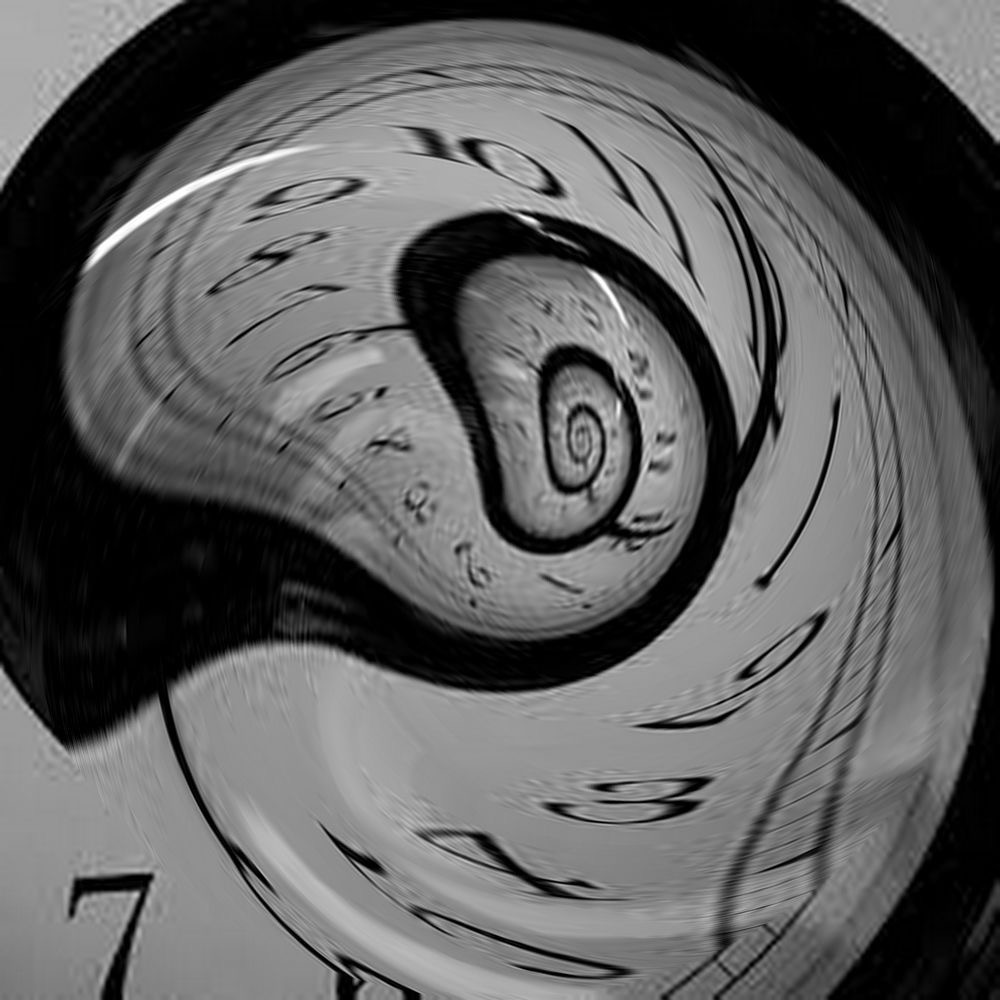
episode 3 - visual inspiration (Asya)
Anastasia: Actually, yeah. And this is, I completely agree because I myself am trying to slow down a lot because I am probably, I can relate to your father a lot. I tend to be like, I have to be like fast. Okay, we’re doing this, doing that, doing this. It takes quite an effort for me to just be like, okay, we’re slowing down.
And there are definitely practises that I have talked about in the previous episodes as well. Journaling definitely helps to kind of get into the present moment because, once again, the concept of, you know, just living in the past and being in the future, just to bring yourself back into the present moment, I feel like, is key in experiencing time in a nonlinear way. Because then you’re not on any kind of made-up timeline. You’re just on your own timeline when you’re in the present moment.
And this phrase has been so abused in the media and in the spiritual community. Like, be here now, be in the present moment. But like, what the fuck does that actually mean? And to me, honestly, just, it’s a feeling. It’s a grounded feeling. It’s taking a few deep breaths throughout a chaotic day. And you’re just kind of coming back into yourself and feeling yourself a little bit more.
It’s really not that deep, you guys. You don’t have to go sit on a mountain and meditate for however long to achieve some sort of, like, also capitalised concept of enlightenment that’s been sold to us. It can actually just mean taking a deep breath throughout a really fast-paced day to bring you back into the present moment.
But also, I just had a thought that I remembered that I really wanted to talk about, especially with regard to experiencing time differently. It’s also, like, the success timelines that we have been sold as women, as people. But I think women and men alike are experiencing the same thing. Because we’re always taught, like, okay, you know, you turn 21. Like, you graduate college. You, I don’t know, like, you get married. You have kids.
And right now, we’re experiencing, you know, especially with the change of generations, with, you know, Gen Z completely rejecting everything. And honestly, more power to them. But we are reimagining what the timelines are.
But still, still, I feel most of us sometimes catch this really, really annoying feeling that feels like a tiny little annoying mosquito that is, like, beeping in your ear. Like, oh, you should probably be a little bit more ahead in life than you are right now. You’re like, shit, shit, shit. You’re comparing your life to people on Instagram, which, you know, I would largely advise against. Because social media is a lie. That’s coming from a person who works in social media. I spent a lot of years cultivating those lies.
So yeah, I feel like, with my own personal experience, I have definitely- I’m still actively trying to break out of that. Because once again, you know, as a woman past, like, 33, and, you know, there have been things that happened in life that kind of, you know, maybe swayed me a little bit off the timeline where I would potentially be in a more conventional position of making it, quote-unquote. But I have to actively bring myself back to remembering that, once again, time is a lie. And a lot of things can happen so fast, once again, because you never know.
This is the beautiful and very annoying part of life, because things can drag on for however long you really, really want them. And then once you let go, they just happen like this.
Have you experienced a similar thing of any kind, like with regard to, you know, making it, you know, getting ahead in life?
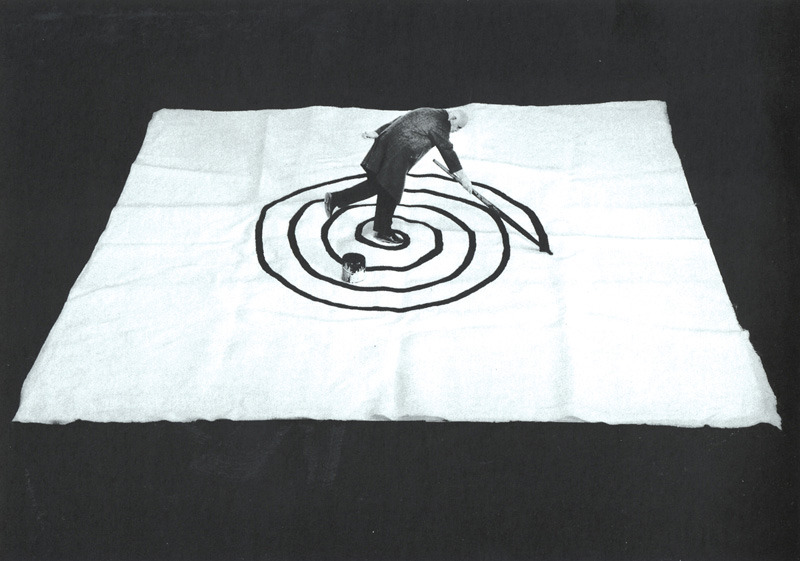
episode 3 - visual inspiration (Asya)
Asya: For sure. Oh my god. I think that’s like every single person. Also, I think it’s that everyone has such unique timelines for themselves, but also for other people. So it’s like, sometimes you compare yourself to others. Sometimes there are conversations that I have with my parents, who are like, I can be on top of the world and on the cover of every single magazine and get a Pulitzer Prize and three Oscars. They’ll still be like, where’s our grandchild?
So it’s very interesting also how the perception of time and timelines is different for other people, because it’s like, for me, tomorrow is time to get more groceries and make myself a chicken and rice dish that I’ve been looking at in my cookbook. For them, it’s time to make children always. So it’s very interesting how different perceptions of time work for different people and how they affect your life.
But I’ve definitely also experienced the, like, you have to make it; you have to rush. Sometimes it’s like, when you start talking to people who are in a similar field as you, or maybe even at a similar stage of their work trajectory as you, and they’re like five years younger than you, and that kind of throws you, because you’re like, oh, they’re doing this at this age. I have to do this at that age.
And it’s so dumb. It’s just almost like it’s another way to punish ourselves instead of rewarding ourselves or just being with ourselves, because we can’t just, like, exist in our own timeline. We can’t just be, because, like, why not? This is another piece of evidence that experiencing time linearly and finding points, because it’s like, we don’t just exist, like, or, sorry, experience time in this line. We also, for some reason, attach these stop points on this line, where you have to, by the time you’re 30, you have to do this. By the time you’re 40, you have to do this. By the time you’re 50, you have to do this. By the time you’re 60, I guess, as a woman, they, like, I don’t know, sign you off and lock you up or something. I don’t know what capitalism wants to do with you when you turn 60. God knows.
But it’s, like, all these little stop points. And it’s so bad. We just, like, more and more, even for us talking and through every experience that we have daily with our work, with our life, with our relationships, even stuff like people falling in love and saying that, like, no, if you’re together for seven years, you have to get married. Or, oh, if you’re together for a month and then you get married, that’s, like, too short or something. Or, like, oh, I don’t know, like, when you’re 25, and you’re dating, you have to get married in five years. Or, like, oh, like, if you, for example, even, like, meet a new friend, you have to, like, go and, like, be friends with them for at least two years until you fully trust them, because you never know; like, people can betray you.
It’s like we’re overcomplicating our own lives with all these stops and timelines. And that’s more and more evidence of how it fucks with our brains and how much harder it just makes our lives, because we constantly have to, like, keep track of all these stop points on this line. Like, isn’t that exhausting? Isn’t it so much easier to just exist in it? That way, we don’t have to be nostalgic for the past or be scared of the future, because we are just, like, past, future, me, present, fine. We’re just all here. They’re there. I’m there. We’re all here in this one time bubble. We’re all good.
We don’t have to be scared. We’re just going to exist, and things are going to exist around us. And I don’t mean let things happen to you. Obviously, still, like, regain some sort of control of your life. But if you don’t think of life as stop points and this, like, marathon or, like, whatever, it’s going to be fine. That’s going to be so much easier. Like, just stop. It’s like, aren’t we all just fucking exhausted of having these experiences?
Anastasia: We are.
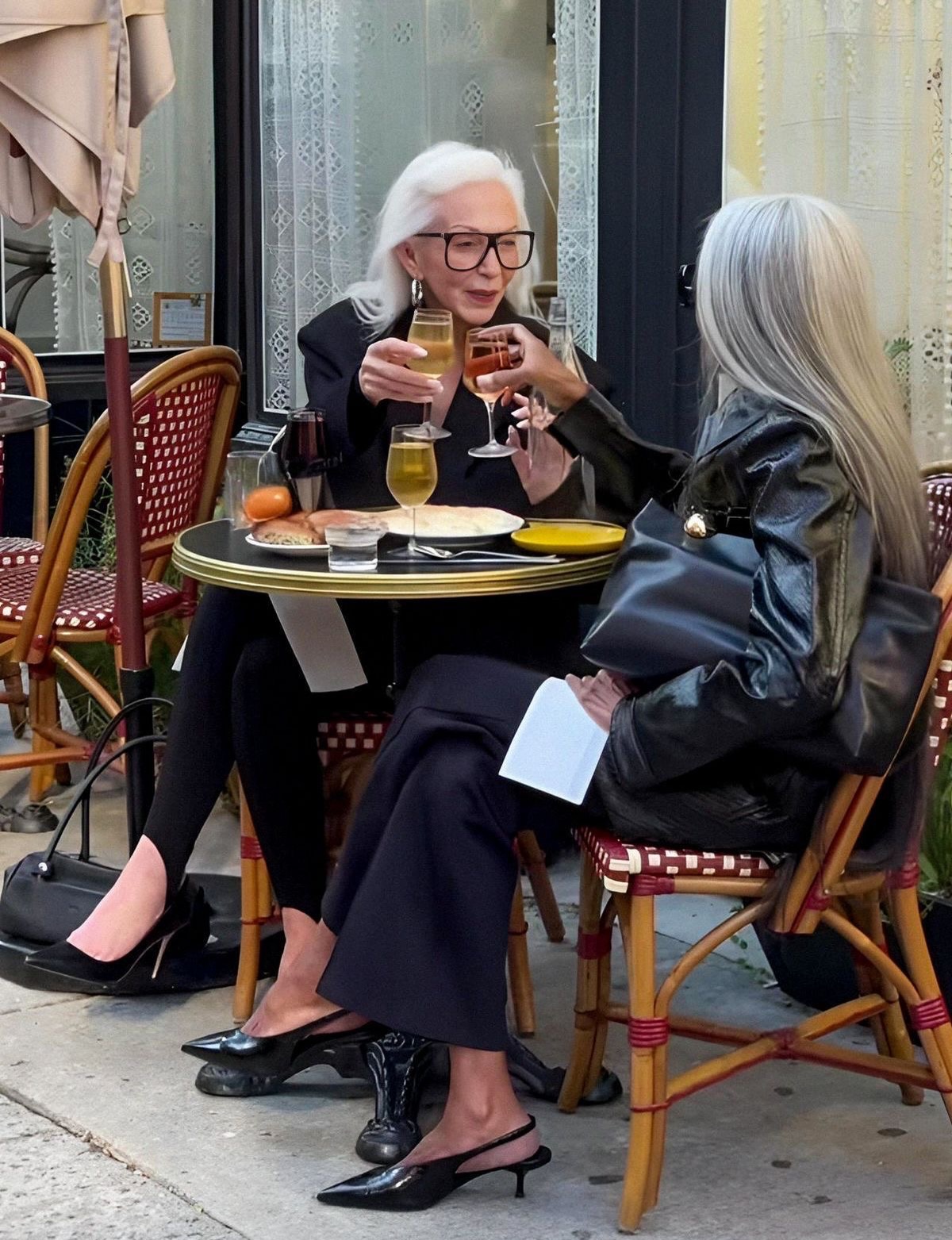
episode 3 - visual inspiration (Asya)
Asya: Like, isn’t it so much easier to just be like, I don’t want to do this. I don’t want to experience it like that. It’s tougher in the beginning, obviously, to reteach ourselves. But then after that, you just can take a breath for once in your life and not have that breath come with obligations and expectations and fears and all these things and comparisons. Like, we can just chill.
I think that, like, every episode of this podcast that we talk about at the end, we just want to chill.
Anastasia: We just want to chill.
Asya: We just want to chill outside of all these systems. We just want to chill. We don’t want to, once again, like, the monk who sold his Ferrari or whatever that book was. Like, we don’t want to breach enlightenment, or we don’t want to, like, de-matrix ourselves out of the timeline. We just want to chill.
Anastasia: We just want to chill.
And, you know, we are definitely still existing in different environments, I feel like, with regard to time and speed. A really great example is just cities. You know, there is New York, a city that never sleeps. There is London; you go into Oxford Circus, and there are people rushing everywhere. But there are places in the world where you just, especially, I don’t know, like on the beach, where there is just pure nature and it just feels like time is slow. It’s completely different.
And that is just, like, that is a really great example because cities are man-made environments, and in man-made environments, we are rushing because, you know, everyone’s rushing to their nine-to-fives, to their families, to achieve God knows what. But when you are in the natural setting, time just completely slows down, and it brings you back into yourself.
So definitely, if we were talking about the ways you can slow down time and come back into the present moment, and, you know, that annoying concept that everyone seems to be talking about lately, it’s definitely time and nature. And just take a few deep breaths throughout the day and just really be mindful about, not even mindful, I want to invite people to be more curious in the way they engage with culture and nostalgia because, you know, life is a game in the end of the day and you can just kind of pick and choose the kind of trends you want to play around with. You can choose and see what those trends represent to you and how you engage with them. And yeah, just kind of play around with this concept.
You don’t have to always be somewhere else. You don’t have to always be in the past or in the future. Play around with the timeline and create your own timeline too. Be really, really mindful of how you, at the end of the day, co-create with the realm that we live in. You basically treat it as kind of a game, and it really changes your life, I have to say. Have you experienced anything like that when you just kind of, like, consciously are, like, playing around with the matrix?
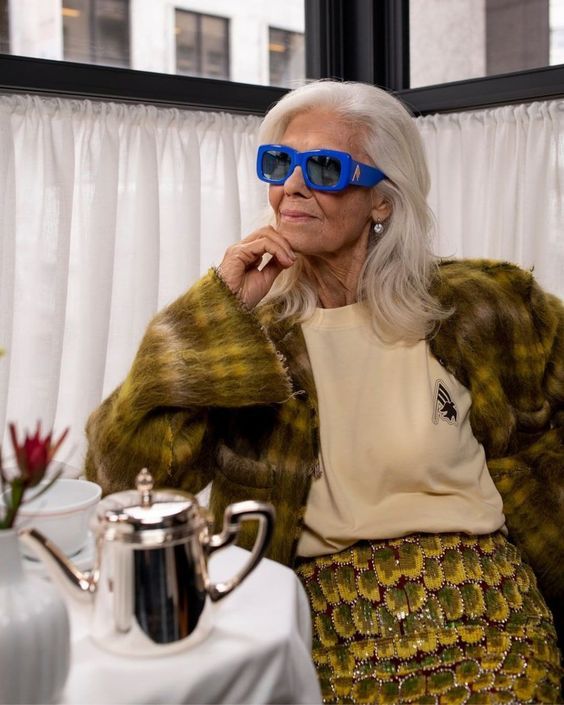
episode 3 - visual inspiration (Anastasia)
Asya: Yeah, definitely. Like, the gamification of life in general is so much fun. Taking everything, like, not even like levels on a game or something, but just being like, oh, this, like, time or this experience of time, let me just treat it as something that I’m just gonna, like, dip my toe in and play around with. And in the end, I’m just gonna, I can log off, and I can just go and, like, live my life and experience it.
And when you start to kind of bring in the sense of play to things, especially when it comes to experiencing time and timelines and everything, it’s like, it’s so much fun. And also, like, I get to say crazy things like, oh, I’m just vibrating at a frequency of this dimension. So I exist here, but there’s a different version of me vibrating in a different dimension. And she might be doing a different thing. That’s so curious.
Anastasia: That’s quantum physics, by the way. And I cannot wait for the scientists to actually prove that it’s not particles; it’s people.
Asya: I get to say shit like that and fully believe it. That’s so fun for me. And I don’t get to be like super serious about a lot of things, especially when it comes to, like, I don’t know, jobs, times and people being like, ” We have to wake up at 6.30 and cold plunge, and then do a sauna and then cold plunge again. Because we are the master of our time. No, babe, like you’re- I don’t know what the fuck you’re the master of. But if you’re like, I’m gonna, like, listen to my moon and Gaia and whatever and, like, wake up and just chill.
And then if I need to wake up at six, I’m gonna treat it like a game that I play where I’m like, oh, today I need to wake up at six. And I just treat it as something fun. I think that’s also something that I’ve learned to do: I’m like, I’m just gonna treat it as not an obligation, but as an experience. And I’m not gonna let it control my whole day since then.
Anastasia: And I love the phrase that you said: you have to treat time not as an obligation, but as an experience. And it’s so tea. And I think this is a really great time to sign off and do our traditional confessional.
Asya: Yes, okay, you go first.
Anastasia: Okay, so forgive me, gods of time, for I have sinned. I have been; I am in London right now. And honestly, this is the said prime era that I mentioned before. It happened here; it was like my favourite time at Central Saint Martins. But I also have been caught up in nostalgia a little too much, I have to say. And it’s been a bit of a trap in the sense that I sometimes feel like I cannot, like, have this time again for some reason. Your brain finds them really easily. So I’m actively trying to break out of that.
This is how I’m doing better. I’m teaching myself that time is not linear. And if I want to make something happen, I can make it happen. And there are more good times ahead.
And that was beautiful. But a lot of even more beautiful things are coming my way. So yeah, this is where I am. What about you?
Asya: Okay, bless me, gods of time, space, and the quantum mechanics of the structures of our universe. I have sinned. I think when you talked about nostalgia and living in the past, I’m on the opposite side of the spectrum. I keep living three steps in the future, which is something I think I didn’t even know how to define until very recently, when I’m like, oh yeah, I’m not actually- this is not a sense of urgency. This is not a sense of sadness or something. This is me literally, my brain trying to live in the future.
Because it’s like, for example, if I’m going on a trip somewhere, I’m not enjoying the trip. I’m already on the plane back, really feeling sad that the trip is over. But then, as I’m on the plane back from that trip, I’m already at home unpacking my stuff and readjusting. And I keep, like, my brain almost keeps existing in these future moments. Maybe it has a bit to do with control of, like, my environment, where I’m like, if I exist in the future, I know what’s going to happen there. So, therefore, I am not scared.
Maybe it has something to do with just me being my father’s daughter and, like, rushing through shit so much. I don’t know, but it’s always just me existing in the future. And actually, a fun fact that I remembered as I was, like, prepping for this episode is there’s this one time where my phone just randomly changed the clock to four minutes ahead. I don’t know how that happened. It just did. I think my phone just got to know me and was like, this bitch is in the future. We need to adjust the time.
But I kept it, and I loved it so much. And it was so much fun for me. Whenever someone would spot it, I would just be like, I’m from the future. I am four minutes in the future. And I didn’t realise up until right in that episode how factual that is for my brain, that I am a future being, like four minutes into the future, trying to be there and just sitting and looking at my body and being like, catch up.
And yeah, that old phone thing also helped me not be late to stuff because that’s another problem. For someone who’s constantly in the future, for some reason, I’m always late also. So that’s like.
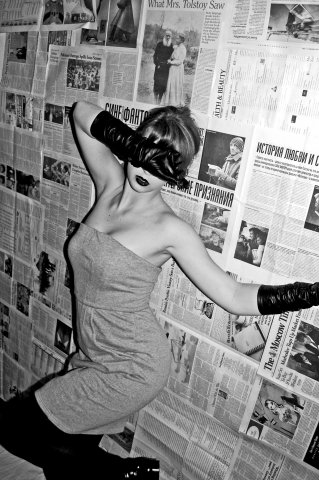
episode 3 - visual inspiration: Anastasia, 2014
Anastasia: Inshallah, I will come on time.
Asya: Inshallah, I will come. Inshallah, I will be on time. But yeah, I think that’s a fun little gamified thing for me where I’m like, oh, I’m from the future. That’s so sick. I love that. That’s so fun.
But it’s also kind of sad because I don’t get to be in the present at all. And I don’t get to be in the future because then my mind just moves on, moves on, moves on. And I can’t almost align mind experience with body experience. So I can’t have them at the same time.
But then, if I stop viewing time as this line where I constantly need to jump ahead to go to the end of the experience or to have a new one, if I start seeing it as just a blop, then my mind and my body, I guess, will align a bit more within that blop. And I think that will provide for better experiences. So let’s hope I’ll work on that.
Anastasia: Yeah. Oh, my God. This was such a delicious episode.
Asya: Yes, I love it. So many clips, so many quotes. We love.
Anastasia: We love. We love. Thank you, guys, for watching, for sticking with us. We love you, all of you.
Asya: Yeah. And stay tuned for more in the future if you view time linearly. And if you don’t, our next episode has already happened, will happen and is happening as we speak.
Anastasia: Inshallah, next episode comes out.
Asya: Yeah, inshallah, the next episode will come.
Anastasia: Yeah, it will. All right. Bye, guys.
Asya: Bye.