Location London, Barcelona
Published April 15, 2026
episode 1 - visual inspiration (Anastasia)
About Culture Confessional:
The chaos of contemporary culture jumps between deeply spiritual and comically ridiculous like a deranged tree frog. We are simultaneously anxiously attached to the digital and completely overwhelmed by the material.
Culture Confessional is born out of discussion, dissatisfaction, contemplation and sometimes, sheer fucking confusion. Read: midnight DM rants fests. We needed a space to process, and here we are.
Intro:
In a race to be original, to be unique, we have lost critical pieces of our individuality (and also the plot). Culturally, we have repeated the word authenticity so much that it has caused mass semantic satiation. It has gone the way of disruption and innovation, words that were supposed to represent a shift in independence, but are now reserved for title cards of creative agency decks. But we are taking it back, not by using it pointlessly to signal some sort of magical transformation, but by exploring how it lost its meaning to mass production in the first place.
In a world ruled by algorithms, being nothing other than your true, authentic self is a radically rebellious act. Yet now we all find ourselves in a collective identity crisis, and a lot of us are asking ourselves the dreaded question: Who am I? And what the fuck do I actually want to wear? What kind of identity do I want to project outwards? Sounds simple enough, right? Well, it is not. TikTok “core” trends, Pinterest boards, and constant scrolling made us stray so far from authenticity that it’s actually tragic. In this episode, we are exploring the different ways we have lost our sense of self and subsequently our personal style, what capitalism has to do with it and how we can hopefully get out of this quicksand.
episode 1 - visual inspiration (Anastasia)
Transcript:
Asya: Hi, okay, first one.
Anastasia: First one, here we go. Welcome to Culture Confessional, a podcast where we process society’s chaos through the lens of art, fashion, and our own spirals.
Asya: And we are your hosts, Asya and Anastasia. Hi.
Anastasia: Yes, here we go.
I think we just addressed the issue first that we discussed with you over text messages and we decided that it was just too good not to record because we have so many very important opinions that the world just needs to know.
Asya: Yes, so many thoughts, they all must be shared. Anastasia: Yes, so we were basically talking about how we ended up somehow in a Pinterest matrix and no one has personal style anymore and then it obviously spiralled to a conversation about capitalism, the illusion of choice.
Asya: The absence of and the race for the need to be unique and style yourself. We have trapped ourselves in a loop of absence of style, where we somehow are all uniformed without even trying to be.
I think, honestly, out of all the midnight DMs that we’ve had, which was quite a lot, this is the one that stood out just because it was the one that lit us up most at that point and I couldn’t stop thinking about it in the last two months, literally.
And then every time I see another little Pinterest board outfit inspo, vintage haul on TikTok, new article about how Demna is rediscovering Gucci, even though he is not, he is reheating Tom Ford’s nachos. It just made me think.
episode 1 - visual inspiration (Anastasia)
Anastasia: And then the method dressing part. Especially with the whole Margot Robbie Wuthering Heights press tour of it all. And then I sent you that app that the Pinterest founder made that you can now create Pinterest boards for every single day of the week and you can just be not just knee deep in absence of personal style. But drown in it. I just feel like it’s just really strange.
We were talking about how both of us are children of ex-Soviet Union parents and it was just a really interesting point that you made about how we come from so much conformity, yet somehow I look at the pictures of my parents who couldn’t buy anything, and they had more personal style because they were forced to be creative, as you said. Do you want to elaborate on that?
Asya: When you are forced into something, even looking back at our parents and looking back at the things that they would kind of do to stand out and also looking back to even us as kids in school uniforms, where we would be given this strict parameter of you are only allowed this jumper, this skirt, and this top. And I remember doing so much crazy shit with so very little that we had because we were so confined within these bounds that we needed to express it somehow.
So you’re like, okay, I’m gonna take the one limit accessory that my school is giving me, and I’m gonna make it fucking insane. I’m gonna take this black skirt, white top combo, and I’m gonna try to style it in such a way that just represents me. And it comes from this idea of play, and it comes from this idea of looking at styling like it is art and like it is a reflection of your inner artist and not your outer environment.
So when we had these confines, we were so eager to just play around with things and we didn’t really think… Honestly, I think it’s also the fact that we didn’t really get that much access to crazy internet trendy stuff when we were younger and neither did our parents during the Soviet Union.
So it was a lot about what you can do for yourself? But it was a lot about… I would never Google when I was in school how to dress, how to have an original style with a uniform. No, I would just look at my uniform and think, what can I do today to represent how I feel on the inside, on the outside, with these limited things that I now have at my disposal?
But then we grow up and we have this choice.We have so many of these things. We dreamt about this when we were kids, right? When we’re like, oh, I’m looking at this runway and I wish that I could wear all these cool dresses. I’m looking at all these models of the 2000s.
episode 1 - visual inspiration (Asya)
Anastasia: Absolutely. And it’s just really interesting because you said all of these restrictions force you to be creative. And I feel like it works just like that. And right now we have so much choice. We have so much, quote unquote, OOTD, outfit inspo hashtags. And I feel like all of us are just so confused as to who we are, what do we actually authentically want?
Hence the title of this podcast – Authenticity is the New Punk. Because I feel like we’re just so disconnected from our true authentic essences because we are just bombed by the algorithms. OK, right now we are cottage core. Right now? We are clean girl aesthetic. Right now, the clean girl aesthetic is over, now it’s messy girl aesthetic. And at the same time, you don’t even know who you are anymore. And it’s so interesting how we ended up here.
But I also feel like it’s worth mentioning that we live in a very capitalistic world. And it’s no surprise that if you do not follow any of these trends, it’s very hard to sell shit to you. And I feel like this is where the poop lies, basically, because we exist within this system, the funny, ridiculous matrix that we live in and trying to make sense of (that makes absolutely no sense). We are just forced to conform, even though there is so much choice. But is there any choice? Or is it an illusion? It is a big question.
episode 1 - visual inspiration (Anastasia)
Asya: And it’s kind of something that you mentioned before. It’s the, is personal style even personal anymore? Like, is there any personality and style whatsoever? And on the note of that kind of like capitalist machine of, you have to conform to a certain aesthetic, it does feel like we were given so much choice, or more like the illusion of so much choice, that the plan worked of us getting so overwhelmed that we’re like, oh my god, we don’t know what this is. And how do I choose between 20,000 identical sweaters?
Oh, let’s just categorise ourselves. Let me just create this category, this style aesthetic for myself that I’m going to follow. So that my algorithm will only work giving me things of that aesthetic. My Pinterest board will only be of that aesthetic. And I will only follow that aesthetic.
It is not personal. It’s not based on who I am as a person. It’s not based on my personal inner artists, my emotions, or how I feel that day. Because you also cannot be feeling like, if you decided that you’re an office siren, what are you going to be an office siren 24/7? On the days when you wake up and you feel like shit, and you’re like, I just want to be dressed like Adam Sandler, but no, I have to be an office siren because this is what I’ve decided that I am for the rest of my life now.
And it’s not really that personal, but it also goes to the way where we don’t only use these personal style things to categorise our style, we categorise people. So if you see someone and you’re like, oh, they are cottage core, that doesn’t only give you an idea of who they are as fashion related. It’s who they are as people. You think of their policies, their choices, their taste in home activities, thoughts.
You can look at her sneakers and think, oh, she probably read that book. And you can look at someone’s outfit and you can be like, oh, that’s probably their policies and their ideas. And then you immediately decide whether you want to even spend your time communicating with them or not, not letting people surprise you, not giving way for any sort of meaningful conversations and getting to know people.
Because, yeah, there might be a girl who is very futuristic, who came out of a Rick Owens show aesthetic. And then you come and talk to her and she’s actually like a bit of a homebody. And she really wants to just show you a new cookie recipe.
Anastasia: And the dissonance is just not making sense because the math is not mathing.
Asya: Yeah. And it’s so crazy to us that, you know, how many times have you had a conversation with someone and they judged you literally by your cover. And then when you tell them something about yourself.
Anastasia: And they’re wrong.
Asya: They’re almost always wrong because none of us are just one thing. And then they’re like, oh, it’s so surprising to me that you’re into that stuff. I wouldn’t say that by looking at you. Yeah, because you’ve categorised me based on not just my style, but also something I was wearing that day, who God knows if I’m going to feel like that tomorrow.
But it’s just these absences of choice and these conformities have also just taken away from making actual human connections. Because we’re just not, we can’t be arsed.
episode 1 - visual inspiration (Anastasia)
Anastasia: Yeah, because we’re wearing masks, essentially. It’s a mask that covers the real you. And people don’t fully read you, they judge you by the cover, which is very human. It’s just human nature. You look at someone, you instantly read their cultural codes, fashion codes, whatever. And all of us, not all, but I’m thinking in this economy, most of us fail to actually express our true authentic nature through our clothes. And people are almost always wrong.
And I feel like it’s really interesting, because everything feels manufactured right now. And we are falling into the same trap, because we ourselves are manufacturing, but manufacturing what even? What are we even doing? It’s really crazy.
And we were discussing with you how it’s really interesting that it’s reflected in celebrity culture. Right now we are the unwilling – well, I’m unwilling – I’m sure you are too – spectators of the Wuthering Heights press tour and the whole method dressing thing.
I read this quote that I told you about that goes like, “before celebrities had stylists, they had style”. And I feel like that was so interesting, because it’s everywhere right now. And if you look at the way it was in the 90s? You see Penelope Cruz and Gwyneth Paltrow on Vogue flicking through the albums of their favourite looks – the most iconic looks from the 90s – the ones that we are now referencing in our Pinterest boards – full circle. All of them said “oh, I picked this myself, I styled myself, I was actually sent catalogues from designers, and I was calling them and asking them to fit this for me, because I liked this piece.” And I feel like this is why we keep referencing those looks, because they were authentic to them.
In your opinion, I never asked you this, like, do you think in about 20 or 10 years time we will be referencing Margot Robbie’s really manufactured looks that are like mediaeval aristocracy core vibe? Which I’m sure is just none of her personality, because she’s an Aussie girl. She’s just so simple. Do you think we’ll be referencing her WH looks in the future?
episode 1 - visual inspiration (Asya)
Asya: Honestly, that’s something that I’ve started to ask myself as you were telling me this as well, because obviously,
Anastasia: Right, great minds.
Asya: But honestly, like, no, and I don’t even think we’ll be referencing any of the big designer kind of surges. Because right now, I think there’s, I can count on one hand, the amount of designers that are doing something originally, and actually drawing inspiration instead of just repurposing.
And when it comes to red carpets, method dressing, which thanks, Law Roach. We’re doing all this now. Yeah.
It’s pretty, it’s pretty insane, because I understand that there are certain projects where you do this, you go out, and we talked about Zendaya before in that regard, where the way that I view her is, she turns it on and off. She goes, she acts, she goes onto the red carpet, she turns it on. She’s Zendaya. She is a canvas. She’s been painted on by this method-dressing outfits. She knows how to wear them. She knows how to work the cameras, her angles. And then she takes them off. She goes home, and she’s just chilling with her fiance and her dog, and just living her life. And then she turns it on again.
Which is, I think, an interesting way for an actor to behave in the current day and age. Because right now, for some reason, we have decided that for us to support a celebrity, we need to get to know them on a personal level and create this weird relationship, world around them, create this co-dependent relationship with them. Even though, if you think about it, even in the 90s, the actors were just doing their job, and then sort of fucking off a little bit. There were tabloids, there were, like, obviously scandals and stuff, but they weren’t always on. They weren’t 24/7, always on, always dressing up, always trying to tell us a story. They would go to their premiere in their pretty dress that they picked out themselves because they felt good in it. They would promote their movie, maybe go on one talk show, and then just go back to living in their fun little lives.
Right now, we need to go through these layers and layers of, like, there needs to be every single up-and-coming designer that has to put a dress on Margot Robbie, for example, and have her come out in it and have her have this cute outfit.
I think also, if these method dressings were supporting more up-and-coming and unique and original designers, who would actually be willing to work with actors in a way that they’re like, okay, I have to style Margot Robbie. Let me talk to Margot Robbie. Okay, she’s a chill girl. Okay, how does she dress in her real life? What does she feel comfortable in? Let me create an outfit based on that and also sprinkle in some inspirations of the film just to make it silly and goofy and cute for the photo shoot. Let me combine the two so that she will feel comfortable in this and it will represent her and it will also represent the film. And I think a lot of up-and-coming designers can do that and can work on that, but unfortunately, nobody wants to do that because everyone wants to get that LV, Dior, Balenciaga, Dilara.
episode 1 - visual inspiration (Anastasia) - Inferno Atelier
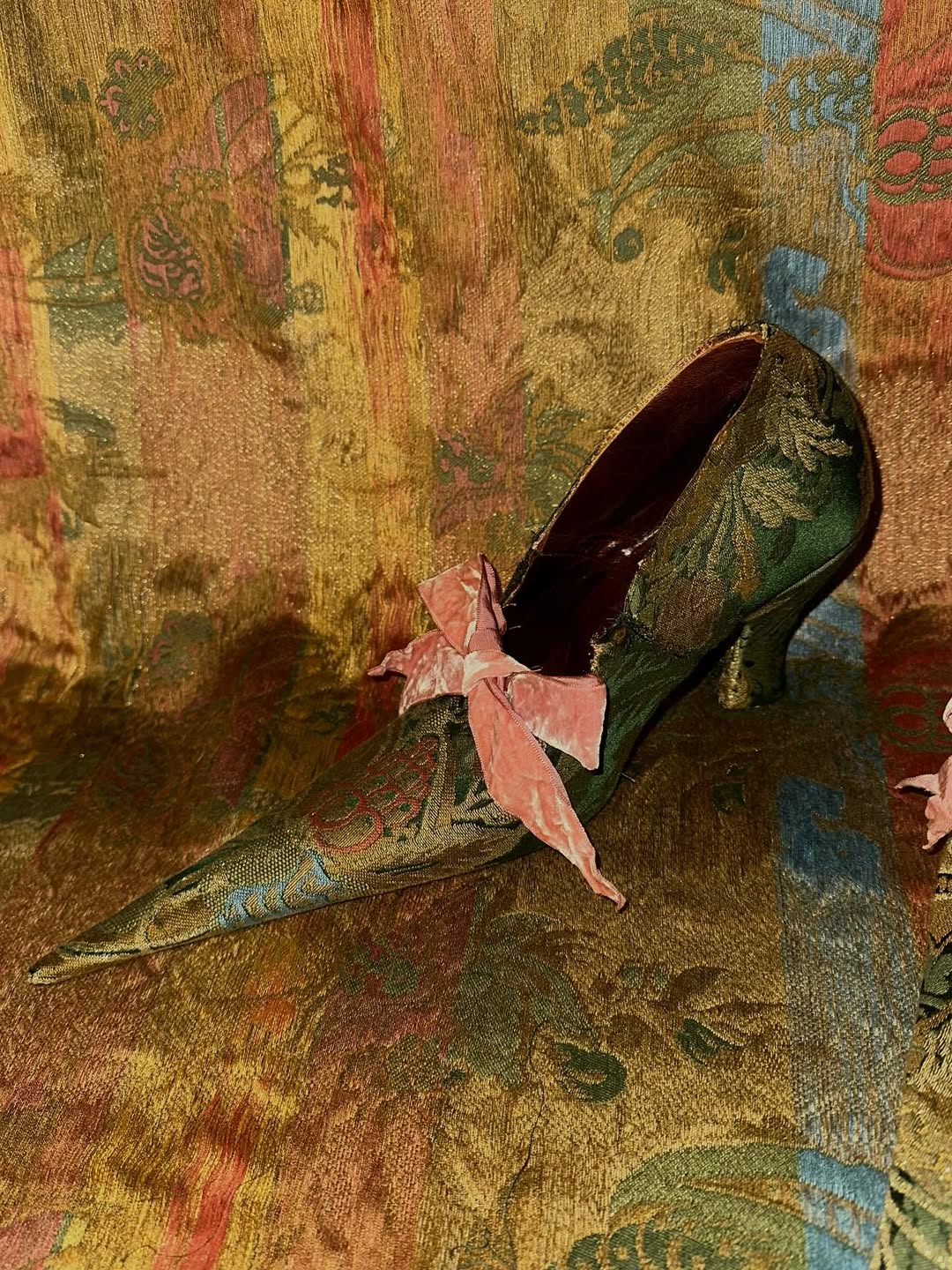
Anastasia: Also, I feel like, you know, even with the whole, like, once again Wuthering Heights thing, remember I sent you the brand of shoes (Inferno Atelier)? We will have to link it down below because it’s so gorgeous. Couture, Marie Antoinette style, and they are a very niche house. How amazing would that be and so on theme? Yet what we’re seeing is just… kind of okay, great, some of the outfits are custom-made Thom Browne, the one that she wore yesterday, but why does it feel so boring?
Okay, you want to go method? Do it in a more fun way. Attract new designers. Make it kind of theatrical, and I think that that’s what they were going for, but some of us are just so unsurprised anymore because everything feels boring and still devoid of personality and any sort of creative risks because it feels generic.
It feels like the same mask, the same old capitalistic machine that is selling us this vision of mediaeval Wuthering Heights core. And even like their whole chemistry, the one that they’re selling, when Margot said “I think I became codependent with Jacob Elordi”. Girl, first of all, you’re married, okay, chill. But yeah, it’s obvious what they’re doing because it’s the same kind of part of manufacturing this vision that they’re doing it through style too.
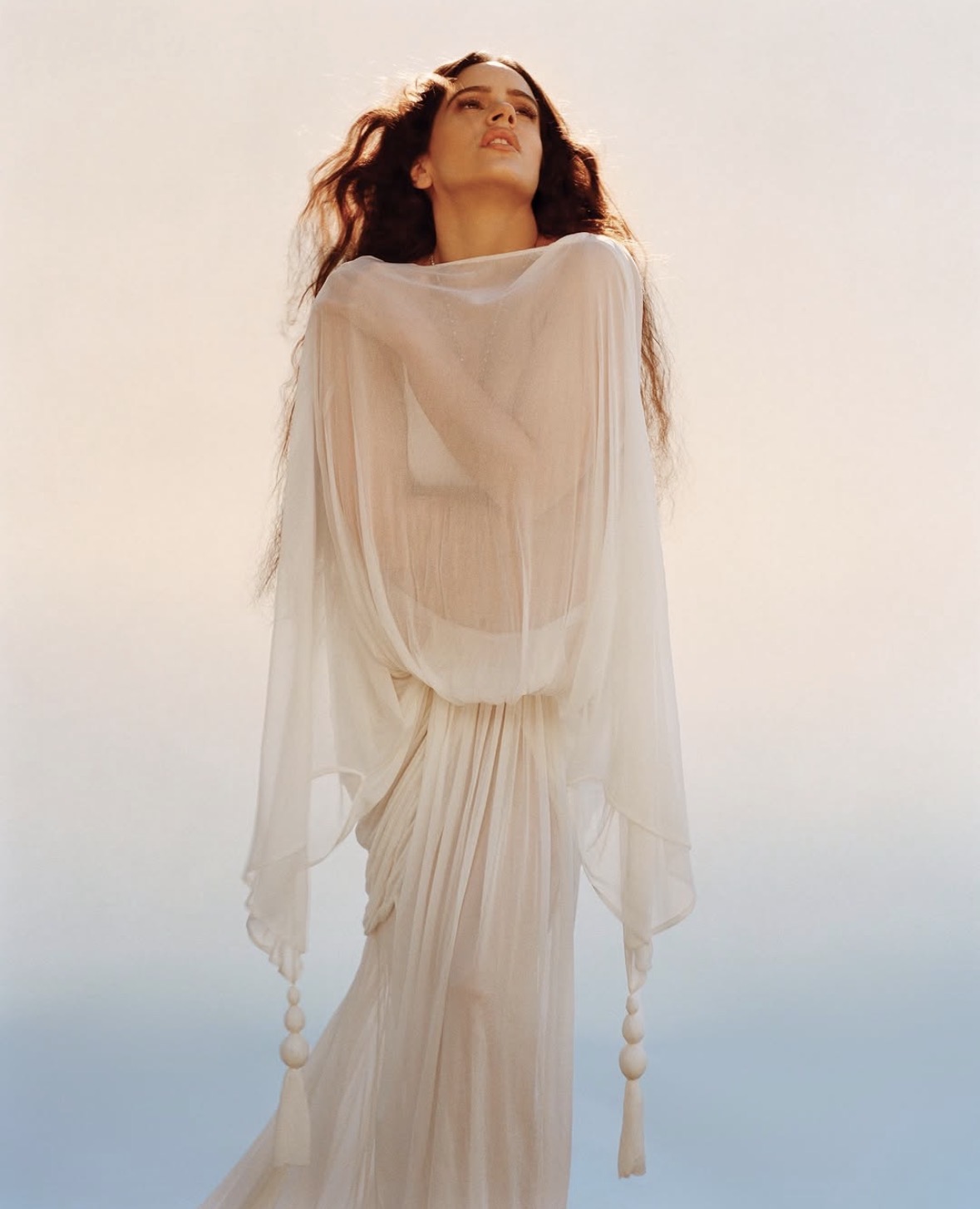
But I also want to bring up one girly that did it pretty well because she was truly authentic. And people always know because people are not stupid, people feel and read energy. I completely believe that. Rosalía, what’s your opinion on her?
Asya: She did it great, but she also did it, like this was her. This was genuinely her and you could tell that this was just her going out and buying stuff and dressing up and just presenting herself the way that she is. Because the thing is if you compare some of her looks to the looks of some of the celebrities on the red carpets, it looks like the looks are wearing them a lot of the time. It literally looks like the dress was photoshopped onto them. With Rosalía, it looks like she’s wearing them, she’s in them.
With some of the celebrity looks, it literally looks like they’ve put it on and they’re just going to stand there and then they’re going to sit down and they’re not even going to live within the clothes that they’re wearing. It doesn’t feel like they’re going to exist in them, it just feels like they have put them on like it is another costume for a movie. With Rosalía, it felt like she was living in these clothes, she was existing in them and kind of to talk about a bit about like the vintage archival of it all.
The Substack of “Everything can’t be Tom Ford Gucci”, which I loved and taking all of these looks from archives, from all of these celebrities, some of them, it’s just like she’s just wearing an archival piece and it has not been styled, nothing has been done to it. They took it from the archive just to be like, “see, see, look vintage, vintage Tom Ford, vintage LV, vintage Dior, look, cool, right? Vintage, we all love vintage.”
But for Rosalía, it was like, it literally felt like she herself went to the thrift store and she was like, oh let me pick up this and that and she has accumulated this collection. And I obviously don’t know what her dressing process is, I’m sure she has a stylist and they’re doing an amazing job.
And I’m sure that it was way more thought through, way more collaborative. I think it was obviously way more planned out than I think it is. I obviously don’t think Rosalía and her stylist just went to a bunch of thrift stores and decided to pick up a bunch of things. Obviously, they did so much work, which shouldn’t be overlooked. But to me, it feels like that’s what they did. They just casually went shopping together and she tried on, they had like a 90s montage.
Anastasia: Authenticity!
episode 1 - visual inspiration (Anastasia)
Asya: Literally, and that’s what makes it so cool. Because to me, it literally feels like she’s just a girly who feels good in her clothes that she picked out and she’s doing it and it doesn’t seem so foreign from the way that she used to dress. I know obviously she had a big style evolution, just like she had a musical evolution, which kind of matches with each other. But it doesn’t feel so removed from her. It doesn’t feel like one day she just woke up and decided to completely change everything about herself. It feels very organic.
Anastasia: We discussed this with you because I feel like we are looking at Rosalía. Look at me saying Rosalía in my Catalan little lingo. Anyway, I really hope it’s one of her many peaks, but she’s definitely peaking as an artist right now, both musically and style-wise. She went on Bella Freud’s podcast, Fashion Neurosis, and she was also wearing her archival, remember those Alexander McQueen shoes with the rosary and necrosis?
And Bella Freud, she’s such a great podcast host. She was like, “okay, why did you pick that out?” And her answers were “This is an extension of me right now. This is the extension of my vision. This is the extension of my artistic feeling right now”. Because she’s also exploring faith in her album through her music.
She said it herself. And I actually feel like this is a big key to how we should operate in the age of AI – doing things the hard way. So she brought the orchestra to the studio and the music videos. Everything was done the hard way. Without any fucking shortcuts that we take right now, just being lazy and asking the algorithm and AI to pick whatever outfits for us, Pinterest, anything.
And I feel like, once again, the title of our podcast, Authenticity is the New Punk – It is very punk of Rosalía to be doing things so deeply. Not shallowly. Okay, I’m just going to decide to be a mediaeval cottage core queen, which I’m just a little bit, as a Wuthering Heights fan, just a little bit, this just paints the whole thing for me. Because the whole movie just feels like such a fantasy world to me. But that’s a topic for a whole other conversation.
But absolutely, Authenticity is the New Punk, and I feel like Rosalía is doing the thing. But I also wanted to talk about how I spent a month in Paris recently, and we were discussing this with you, because we were like, okay, vintage, vintage Tom Ford. I remember you were also thrifting in Paris, like, oh my god, I got this jacket. And then both of us were like, okay, shit. Are we actually original?
Because you look at the Le Marais in Paris, and you’re like, okay, so all of the girls are wearing vintage pieces. Some of them are one of a kind, but if you squint, you will not tell one from another. What do you think of that?
episode 1 - visual inspiration (Asya)
Asya: It was very jarring for me as well, when we were discussing it, but also when I went to Paris, and the first couple of days, I was just chilling, I was wearing my outfits. And then on the last day, we went vintage shopping in Le Marais. I got myself some cute glasses. I got myself some vintage low waist jeans. I got myself this cool leather jacket.
And I was like, oh my god. And I was really feeling myself because I was like, wow, this is so unique. And I’ve matched the colours, and I’ve picked up all these random things in these three random different shops. And I’m like, wow, this is so unique for me. And this is so lovely. And I’m feeling so confident because I’m just wearing these outfits. They’re really shaping my body. I love it. It’s really me, the colour palette, everything.
And I was walking, feeling like the baddest bitch on earth. And then I started to look around. And I noticed at least three different girls wearing a similar jacket, pants, and glasses combo. And I was like, oh my god. I ain’t shit. I am the problem. I have become the problem. I have got trapped in the loop. Shit.
And I’m like, okay, okay. It’s fine.
Anastasia: How do we do this?
Asya: This happens. How do I get out of here? What is happening? Because in a matter of minutes, I went from dressing like I usually dress to being so subconsciously affected by my environment, where then I started thinking about it. And I was like, oh, was I really picking these pieces and putting them together because I like them? Because I thought it looked cool? Or did I just walk in Paris for three days and the subliminal messages of the cool French girl aesthetic was in my periphery so much that it permeated my subconscious thinking that this was my idea? Where in fact, it was just me having like living, breathing Pinterest boards walking around.
When I saw the jacket and the pants, I was like, oh, something inside me tells me that this is going to look so cool and unique. It wasn’t something inside me. It was just this loop.
Anastasia: Programming.
Asya: Literally, I was programmed by the Parisian girls, who by the way, Parisian girls who have the best style are not the ones who go to these thrift stores recreationally.
Anastasia: Actually, that’s true.
Asya: Vintage, I think, used to be just you go and you look for a specific item, or you just go and you kind of browse and you find something really unique. And you study the collection, the place, the thing. But now it has become like this race. Vintage is a sport now. We have TikToks of, these are the best vintage shops. We have vintage hauls. We have like, where to get the best John Galliano and Dior, Tom Ford and Gucci, micro shorts, low-waisted jeans, leather jackets.
The whole point of vintage was supposed to be for us to not give money to fast fashion and to not look the same. We just end up a little bit paying for it more as well. And I do understand that.
At least we’re being eco-conscious with our purchases. At least we’re not contributing to fast fashion brands. That is something. If we’re all going to look the same and look like robots, at least we’re not going to kill the planet while we’re at it. Something there, I guess. But still, we are just looking the same. Like vintage is not safe anymore.
episode 1 - visual inspiration (Anastasia)
Anastasia: It’s really not. It’s just, I feel like it’s worth talking about, okay, how do we get out of this? And obviously, the key is, as we have uncovered, authenticity. And I was thinking about what authenticity is to me.
I feel like a lot of the keys to my personal journey, which I’m still on, lately, all of my mood boards (still mood boards) are more paintings, more even random things I saw around that inspire me. A lot of what I was reflecting on as well was my childhood and what I liked as a kid. We were kind of more exposed to subcultures because we didn’t really have much of the algorithmic influence that the teenagers have right now. So we were kind of forced to, okay, like the only way to experiment out of conformity would be some sort of subculture. You would listen to rock music, pop music; it would always be music-related.
And I was thinking – oh, I was actually a bit of a rock chick when I was a teenager. Maybe I should lean back into that and understand what I actually liked about that because something in my soul responded to that. A lot of the inspiration – if you want to desensitise yourself from the Pinterest boards – actually should lie in anywhere but there. It could be from a book, it could be from an art gallery, it could be from your teenage hobby. What is authenticity to you?
episode 1 - visual inspiration (Anastasia)
Asya: First of all, I want to bring up that I think dressing up based on anything but Pinterest is incredible. I love that.
Anastasia: Already. In this economy.
Asya: That’s already like an achievement. And I’ve been following these two, this one influencer online, I think it’s @zeopatra or something. And she does this series called “How to Not Be Boring”, where she gets inspired by literally anything but clothes. And then there’s this other influencer whose name I’m going to attach also, whose name is Hussain (@ztlxz), who we were actually kind of having a conversation with from MKH. And he does art inspired stuff.
So I think also drawing inspiration from other people online or even from Pinterest is not necessarily bad because I think the authenticity lies with the type of inspiration you draw. Because if I would, for example, radically reject any inspiration that is clothing, that would be me once again limiting my own authenticity because I’m like, oh, sometimes I do want to get inspired by that person who I see dressing up or like that Pinterest board.
But I think it’s about the definition of that inspiration where I’m not just copy pasting this, or I’m looking at someone dressing up or this Pinterest style at it. And I’m like, I’m going to do exactly this, exactly this way, or I’m going to copy paste someone’s outfit onto my body, because that just doesn’t work. That’s never going to work. Personally, emotionally, metaphysically, even like energetically, never going to fucking work.
But looking at the way that someone does it and thinking, oh, I love the risk that they took with mixing these two textures. What similar risk can I take in my own way of dressing myself up?
It’s been, I think, 200 days since I have copy pasted an influencer’s outfit onto myself. I am getting my chip. It is 200 days.
episode 1 - visual inspiration (Asya)
Anastasia: You deserve a badge of honour. Taking my power back!
Asya: Yes. And I think like, it’s about this conscious consumption, which I think I’m trying to practise, where if I go and I buy something, or if I like something, or if I want to style something, I think about how does this make me feel? How is it going to make me feel when I wear it? What emotion does it give me? What colours does it remind me of?
It’s little bits of practicality, because obviously, I’m still a human being that has to go through this world existing and wearing my clothes and actually being convenient to them. Because yeah, maybe I want to buy this really extravagant twenty-part corset dress, but I won’t be able to sit in it. And unfortunately, I do not live in the Marie Antoinette times.
Anastasia: Or like a Daphne Guinness where she wears everything crazy. But she has a personal driver.
Asya: Yeah, literally. When I’m like, hella rich, and I’m in my 50s. I’ll be out there in the ballgowns every day, because I’ll just probably have people carrying me from place to place. I’m assuming that’s the vibes.
Anastasia: Yeah, that’s the goal, honey. That’s the goal. I’ll be right there with you.
Asya: Yeah, but right now, it’s still a bit practical. But also, how is it going to make me feel like on a sad day? Is it going to cheer me up? What is it going to make me think? How do these two textures match? It’s just more about feeling and vibes.
Because dressing up is not algorithmic, it’s artistic. And it’s also so fun, which is, I think, why it’s so sad that it’s so algorithmic these days, and why it’s so sad that we’re stuck and trapped in this loop and we’re not even allowing ourselves to do this. Because there are so many times where I literally just had genuine fun, authentically, like, emotionally put in an outfit. And it’s so awesome.
It’s so much better than going on to TikTok and having, you know, these new trends on TikTok that are like, my age outfit, my zodiac sign outfit, my birth time outfit, and then let TikTok algorithm decide your outfit for you. Why? It’s already deciding so much for you. It has decided most of your life for you. Leave something for yourself.
episode 1 - visual inspiration (Asya)
Anastasia: Yeah, I feel like we are currently in this really crazy collective identity crisis. But what I’m actually noticing is that, you know, ourselves included, and on Substack, even on TikTok, all of the self-proclaimed and respected alike cultural critics and cultural observers are all noticing it. Everyone is clocking it right now.
I feel like we are in this really strange birth canal of personal identities. And, you know, because I feel like there is a lot of friction with AI, and the fact that all of us now have attention spans of goldfish, basically (if we’re lucky) unable to go through three pages of a book without getting distracted.
I feel like in the world, in any culture, whenever there is some sort of pressure, there’s always a counter pressure. Because we live on this weird planet of scales. And because it was so prominent for such a long time, I feel like right now people are starting to wake up. And all of us are going through this, like guys, we are figuring this out with you. It’s kind of like the blind leading the blind.
And, you know, like even myself, I was feeling, you know, this like Gaultier top, which is a re-edition, it’s so interesting that you mentioned that a lot of the vintage pieces are even more expensive than the new ones. Most of the time. Because once again, in Paris, I saw this top, but this is a re-edition from the 90s. But the actual one from the 90s was 700 euros. I got this one for 300. And I was like, okay, interesting, interesting.
But yeah, this whole identity thing for all of us, I feel like it’s going to be more and more prominent in the upcoming year. The year of the fire horse, all of us are going to be galloping and thinking, who are we? How did we get here? Oh my God. We need to put “The Scream” by Munch right here.
episode 1 - visual inspiration (Anastasia)
Asya: I think relying on who we are and what we feel is the biggest tool that we have against capitalism. Because I think a lot of these promotions and a lot of these capitalists kind of traps of like, buy this, buy this, buy that, basically you buy this in order to look like this, and that will make you feel like this. You buy this in order to become this new person. So this identity that starts with yourself and with understanding yourself and your inner art and your inner person and your inner feelings, that reflects onto then the way that you understand yourself enough to dress yourself, that makes it so much harder to be affected by all these things.
Anastasia: Yeah, but for a lot of people, I feel like we’re so disconnected from ourselves that it’s just really hard to tell the difference. Whether it’s your intuition or it’s – once again – the programming talking.
And I feel like my personal medicine, what’s worked for me, I’m a huge meditation aficionado, because you just have to calm your mind to hear yourself, because all of us have so many tracks in our brains going at the same time, especially as women, because I feel like we are more prone to all of this, because we all carry this collect of always having to conform. I feel like men, of course, are subjected to that in some sort of but doesn’t come near as what we have been taught culturally, ancestrally, spiritually, politically.
So I feel like for us, more than anyone, it’s so important to calm our minds first, to hear ourselves. Any kind of meditation that calls to you, I personally really like the To Be Magnetic meditations, we can link them down below. But there are so many things just to breathe on YouTube, and I feel like this is such a huge key for all of us to just start hearing ourselves first.
Do you ever journal, by the way?
Asya: Oh yeah, I think that’s also a big one.
Anastasia: It’s actually scientifically proven that it helps you clear your mind. There is a book, it’s called The Artist’s Way, and it’s one of the most popular ones, and the author says that to be more creative? Do morning pages. You wake up, do three, five pages of writing anything, freehand, brain dump. This book is a bestseller, and she has the method that’s been proven to bring you back to your creative practice, and this is how we start with ourselves. And this is how you break capitalism. Morning pages, simple as that. Ten minutes meditation, you guys, game changer.
episode 1 - visual inspiration (Asya)
Asya: I also think it’s literally just about when you wake up in the morning, and I think that’s why morning is so important. Every day that I wake up and that I make a conscious choice, at least for five minutes, instead of going on to my phone and opening TikTok, which is at this point, it’s almost a reflex. When I wake up, I immediately go to my phone, and I have to be like, no, no. And you just do some yoga, or meditate, or journal for five minutes.
Obviously, none of us have fucking time to be doing this for hours and hours on end.
Anastasia: No, no, we are all busy.
Asya: We’re all busy, we have lives, we have responsibilities. Obviously, unless it’s a Sunday morning where we can all spare a bit of time for that, if we can, it’s going to be a five-minute thing, but even five minutes of just journaling.
Anastasia: But that’s all it takes, though.
Asya: That’s all it takes, five minutes a day, and then your day is set.
Anastasia: Five minutes of journaling a day keeps capitalism away.
Asya: Yes! Then your day is set with your own brain. It’s not set by your phone, by any other mechanisms that are in place. This is a bit crazy, because this is what we would do as kids, pretty much.
Anastasia: Yeah, we are the last generation, actually, that spent their adolescence without phones. We are millennials, you guys, for those who don’t know.
Asya: When I was in school, and phones were a big part of life, but not that big part of life, but I remember my phone broke for two days, and I just let it be broken. Right now, if my phone breaks, my life breaks. This is it. If my phone breaks, nobody will be at peace until my phone is fixed, and that’s a bit insane.
Anastasia: We’re addicted.
Asya: We are, we are. We are addicted.
Anastasia: As a society as well.
Asya: As a society, making that choice to prioritise your mind instead of your phone for five minutes in the morning. Because then after you do that, what do you do? You have breakfast, you have a workout, you do some work, whatever you do, then you get dressed for the day. And the first thing that you saw in your mind that morning before you get dressed can either be your own thoughts and reflections, or it can be TikTok.
episode 1 - visual inspiration (Asya)
Anastasia: It just kind of feels like we’re living in this Black Mirror episode, and it’s really, really crazy. But I remember, actually, I wanted to talk about this one thing that really, really stuck with me.
I did a semester at Stanford, and we had one lecture that not a day goes by that I don’t think about. It was with a guy named Marc Porat. He basically tried to invent an iPhone back in the beginning of the 80s, when the technology was not there yet.
There’s an amazing documentary called General Magic, which I highly recommend to everyone who’s watching. And it’s about an inspiring group of young people in Silicon Valley in the 80s trying to fulfil their dream of connecting people, of having the technology to send a picture to anyone in the world at any time, and the technology was just not there at the time.
I remember I asked him “so you had this dream of connecting people, now we are, well, where we are, you see what technology did to humanity, what do you think about that?”. And he said one thing that just slayed everything. Technology amplifies human nature. Technology in itself is neutral. It just showed how disconnected we were from each other already. And how the power structures were broken. It amplifies everything. And, well, basically, humans suck. Not the technology.
It’s just really interesting how me and you started with the conversation about personal style and method dressing, and it all came back to how humans suck as a species. So humans just really need to try to not suck as much. This sounds like something Julia Fox would say. But she’s the queen. We love her.
Asya: But we love her, and we would quote her. It is true, and it is making me think a lot about the fact that, yeah, we’ve been striving towards a certain level of disconnectivity for a while, just in general.
I think in one of the, like, notes for this episode, we literally wrote, like, should we just all move to a commune?
episode 1 - visual inspiration (Anastasia)
Anastasia: At some point – yes. Live off the land, read books, eat actual fresh food, bathe in the sun, have connections with everyone. Honestly, this is, obviously, a radical downshifting path, but I feel like a more fitted for society version of that would be great (which is basically socialism, but not the socialism that was attempted by dictators). It’s really funny how all of the attempts to build a more social and equal world just ended up being a dictatorship. I find it really beyond.
But anyway, we’re oscillating between wanting a better social system, but then the power structures press down. I feel like it’s up to humans. I feel like it’s up to all of us. I think it’s all of our personal responsibility to try to not suck as much as humans and go back to ourselves, our true authentic nature first and foremost.
And every time you pick a piece of clothing in the morning, just maybe ask yourself – do I really want this? When you make a Pinterest board. Fine, make a Pinterest board. Of course, none of us are going to renounce technology and go live in a cave. But maybe, just maybe, make a Pinterest board of something that is more authentic to you, something that is rooted not in just a “core” trend or something that you saw on a celebrity, but maybe something that truly inspires your soul. And I feel like only you, only a human individual has the power to do that. It cannot be outsourced to anything or anyone. It has to be you.
episode 1 - visual inspiration (Anastasia)
Asya: Yeah, 100%. Nobody is going to renounce technology altogether and just say, no, it is all technology’s fault and we now have to completely block our phones and just be inspired by sky and journal and self. No, of course not. There’s still useful tools. These are still things that are keeping us in touch with the world. These are still natural progressions of our life that are convenient and that are great for us. It’s just about using them for us and not being used by it.
I think it’s about understanding what they are. When you go on Pinterest, also, don’t just go on Pinterest. There’s Cosmos, there’s Are.na, there are so many other digital engines that are really great.
Anastasia: Go read a book, goddammit!
Asya: I mean, go read a book, go, you know, go swipe through a magazine, go invest into some print media. It’s dying out. Come on. Go on to digital websites and read some fucking articles, you know. Go on to mkhdp.com.
Anastasia: Yes, absolutely. Go on Substack.
Asya: But also, even if you go on Pinterest or Instagram or TikTok and have style edits, just don’t be as influenced by everything. Don’t be as susceptible to everything because it’s quite hard, I think, to do it as well. I think it’s quite easy as someone who is only now also building my kind of like style identity and conscious identity of all the items that I want in my life and how they’re gonna serve me and make me feel. I understand how incredibly easy it is to get susceptible to different influencers.
I’ve spent years just switching my style and literally revamping my wardrobe every year when a new trend comes around or when a new aesthetic that I thought was gonna make me feel like, oh, I finally feel good in my skin and my clothes.
My interest in those aesthetics never came from me actually liking them. It always came from me looking at a certain person who embodies them and thinking, wow, they’re so confident.They’re so hot. They’re so cool. So if I dress like this, I’m also gonna be like that. Crazy that it took me like ten years to realise that’s not how it works. Ten years and thousands of pounds in different types and styles of clothing to the point where two years ago I had to sell my whole wardrobe and start from scratch.
Anastasia: I did the same thing.
Asya: Because I’ve realised, wow, I have three sparkly skirts and fishnet tights and none of them represent who I am as a person. Even to the point where I would fidget in my clothes or I would try to fix how I look in them all the time. That’s a good sign of realising that you’re not comfortable with your own outfit because it’s just not yours and I wasn’t inspired by the right thing. You keep fidgeting and you keep being like trying to fix something.
episode 1 - visual inspiration (Anastasia)
Anastasia: The notion of an outfit wearing you. And it’s fascinating how we’re always talking about like how you can use the technology, but don’t let it use you. Wear an outfit, don’t let it wear you. It’s the constant play of these polarities once again that brings us back to authenticity.
Since this is a Culture Confessional, we were thinking we would wrap up with a fun little confession. I will go first!
Forgive me fashion gods for I have sinned. I have actually yesterday made a Pinterest board. It’s a joke, I know.
But after the confession, I feel like it would be good to say how we will do better. And I actually decided that this year’s manifestation of mine is… I want to go to an atelier and make a dress that’s fitted for me from my own sketch. Now your turn. What’s your confession?
Asya: Okay, forgive me fashion gods for I’ve sinned. I have in the last two months followed like three new influencers that I’ve looked through their Instagrams and tried to see, oh can I, can I pull that off maybe? Which is hard. It’s a loop I’ve been stuck in since I was like 15 years old. I am, I am a graduate of YouTube influencers. Give me a break.
And the way that I will try to do better than this is by literally just not buying it, I think is already a step. So the way that I will practise it is instead of looking at influencers and trying to see what their styling and what their purchase history or whatever is, I’m gonna try to follow some smaller brands instead and get inspired by their creativity and see how maybe I can work with them within my own parameters of style. So that’s my little Instagram homework for the week.
Anastasia: Resolution, yay! So good, so good. So thanks to everyone who tuned in with us. We love you guys.
Stop making Pinterest boards, fuck capitalism and authenticity is the new punk.
Asya: One day we’re all gonna move to a commune but for now.
Anastasia: But for now we just stay here.
Asya: But for now we just stay here. This was our first episode, there’s gonna be many more and yeah. Bye.
Anastasia: Bye!