Category Fashion
Published April 8, 2026
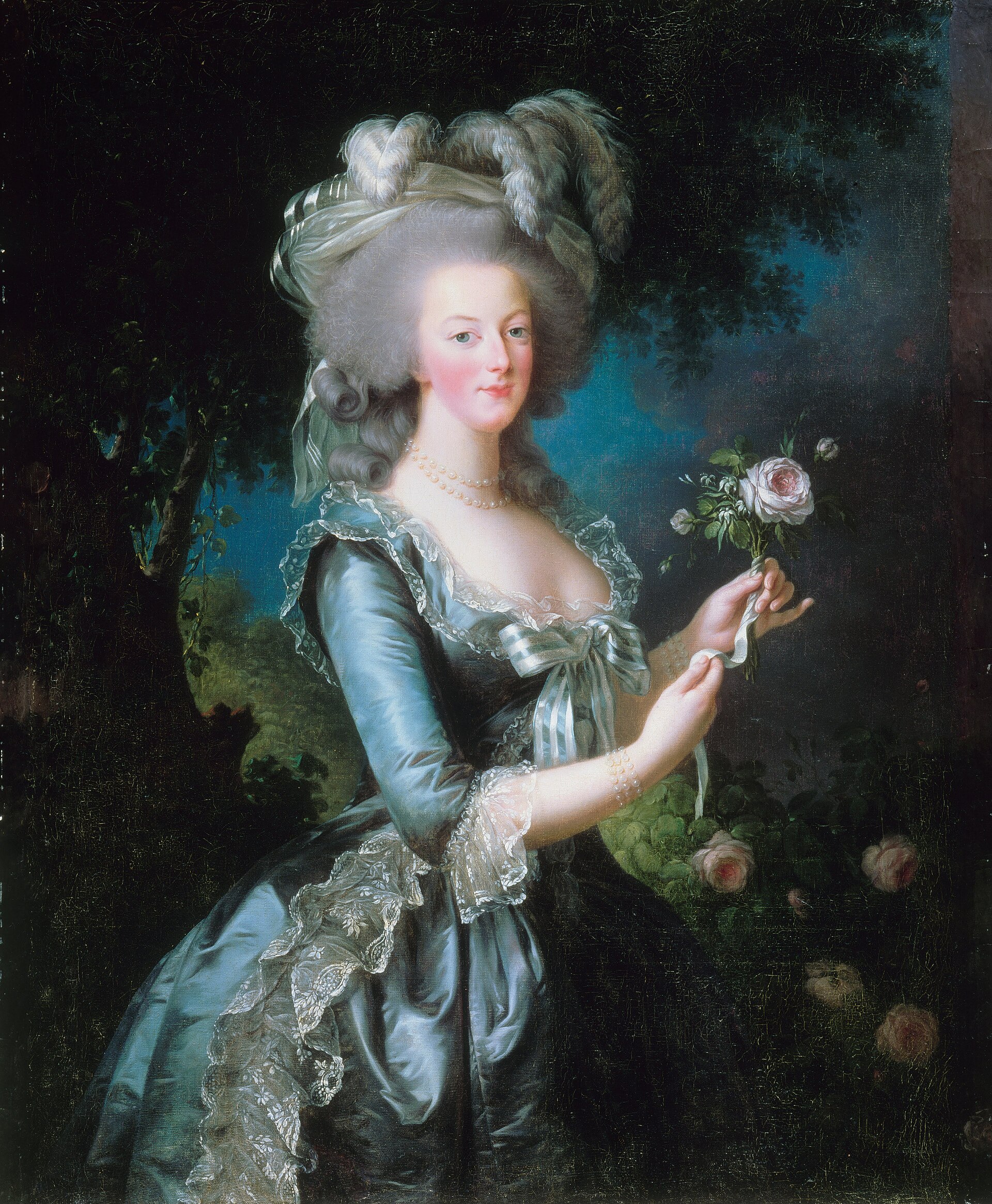
Marie-Antoinette dit « à la Rose », by Élisabeth Louise Vigée Le Brun
Story Taste: Cake
Story Scent: Chanel N5 (aristocracy made accessible)
Story Sound: “The Blue Danube Waltz, Op. 314“, by Johann Strauss II
There is something happening in fashion. Once you notice it, it’s over. It’s everywhere. Have you noticed that lately it’s hard to tell if we are dressing for a renaissance fair or to impress a Bridgerton brother? Every collection of the past few fashion seasons had its version of: a corset, a Victorian-esque silhouette, a Napoleon jacket or a Marie Antoinette homage in some shape or form. Sometimes, even all of the above at once. And not only the usual suspects, but from runways that, until five minutes ago, wouldn’t be caught dead referencing anything pre-1980.
Then, when I watched the likes on my personal selection of the most positively medieval looks from the Ralph Lauren AW26 collection set off to the stratosphere on Substack notes. And afterwards the photos of very cunty and corsety Vivienne Westwood line for pets and owners of such followed its lead. Although, to my own later surprise, it turned out to be AI-generated. Oops, sorry for that one. The internet is a lie. Anyways, all the sentiments aside, it has become official. We most definitely romanticised ourselves back into the XVIII century. Or any other time period, no later than 1900.
Important editor note: I am a huge history nerd. Visiting palaces, reading biographies and letters of Windsors, Medicis and Romanovs of the world is my cardio. But let me tell you – if I felt pretty alone in my lifelong aristocracy obsession. I certainly do not anymore.
But why this? Why now?
The answer is definitely not simple. But definitely juicy. Let’s dive in.
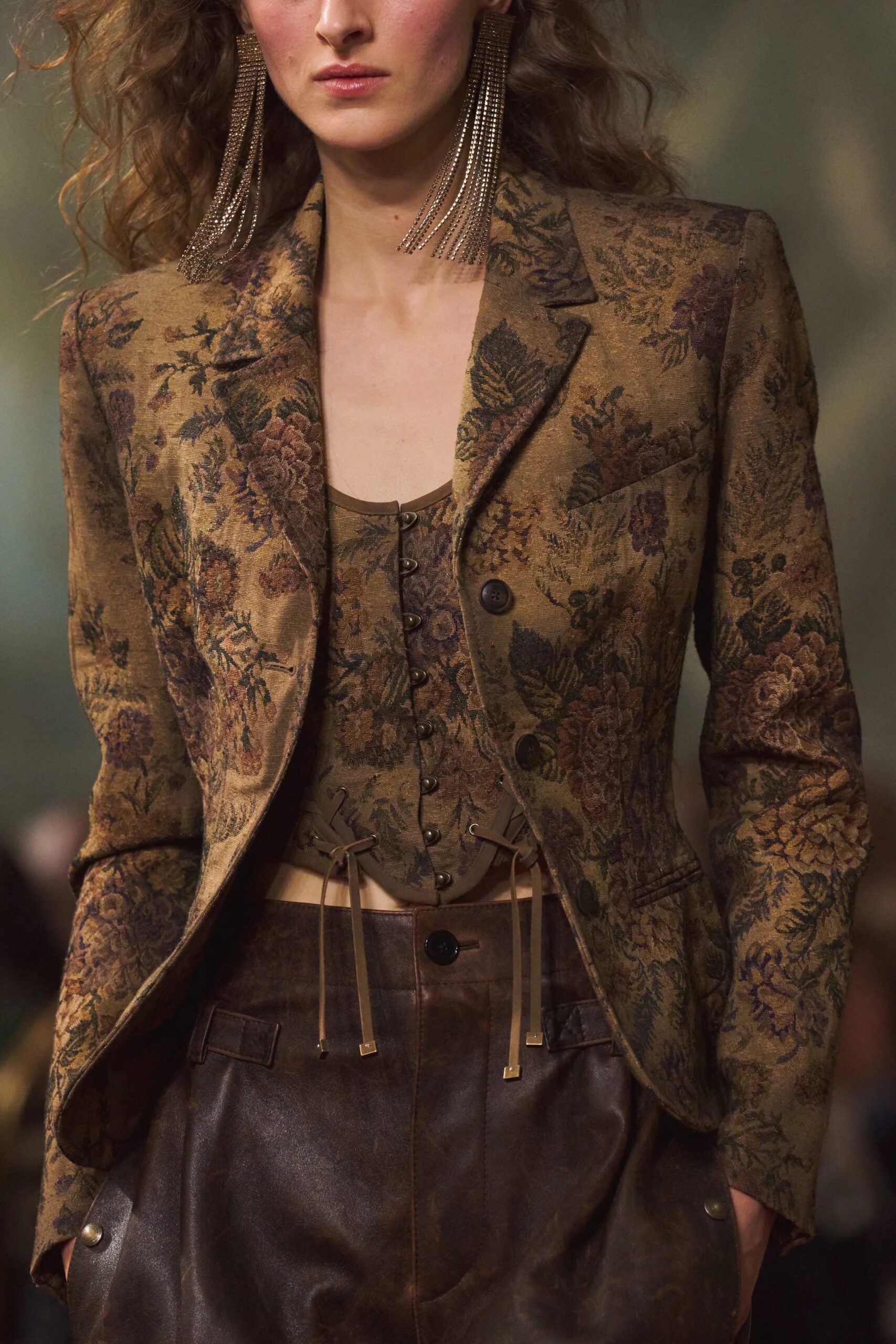
Ralph Lauren Fall 2026. Image courtesy: vogue.com
The internet’s current fetish du jour is labelling just about anything a recession indicator. Skinny jeans? Recession. Office siren? Recession. Indie sleaze? Recession. Recession. Recession. And while I find most of those takes mildly tiresome, in this case, there is definitely truth to it. Only we are already past indicating, we are literally in the middle of WWIII, mass political psychosis, climate dread, and the full AI slopocalypse that I have fallen prey to with my fake Vivienne Westwood pet collection fiasco. So, naturally, we as a species are desperately reaching for romance, and the culture follows. It’s not just fashion. Look at the popularity of dark romance novels and hyper-romantic TV shows. How many times have you heard the word “yearn” lately? Let me take a wild guess and say a lot.
Naturally, to understand the present, one must look into the past for clues. And this is definitely not the first time culture turned to the regency-victorian-marie-antoinette-napoleon-fusion for solace. Let’s take a quick trip back to late-1970s London and the majestic era of the New Romantics. The movement in question came out of London’s club culture as a response both to the Thatcher-induced political collapse and to punk becoming a bit too grim. They decided that if the world was collapsing, it might as well do so under a pirate hat, in a corset, with just the right amount of rouge (read: a lot of it). Even Vivienne Westwood, disillusioned after punk got swallowed by the mainstream, pivoted into Pirate and chose a romantic direction. And it was that era that gave us John Galliano, who in 1984 launched himself out of Central Saint Martins straight into fashion mythology with his graduation collection Les Incroyables, inspired by post-French Revolution dandies.
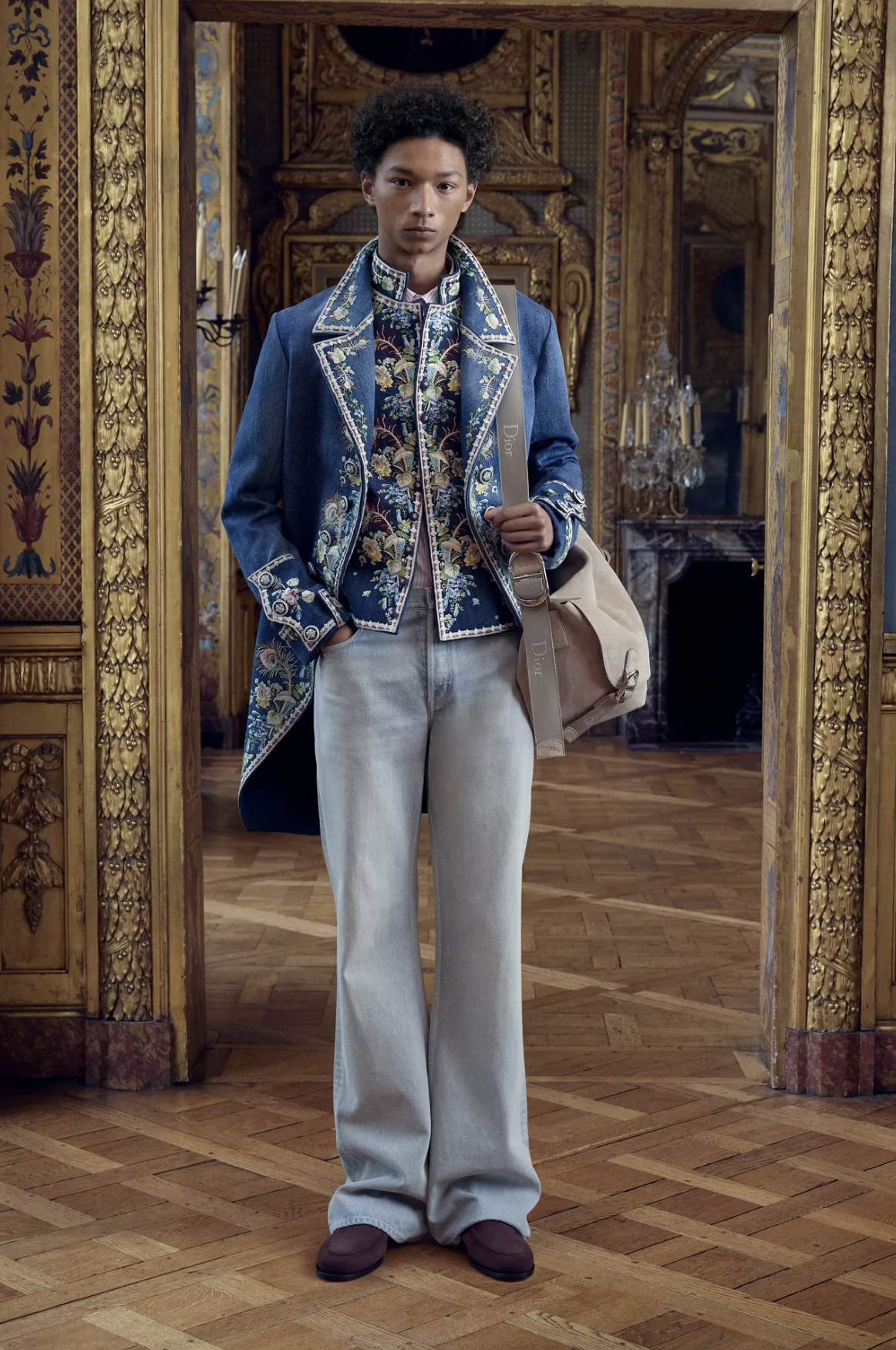
Dior Homme Spring 2026. Image courtesy: vogue.com
The fact that Galliano’s Dior years are now working overtime on Pinterest is not an accident. This whole romantic relapse is not just about recession. It is about our deep collective emotional starvation. By romanticising any of the eras in question, we don’t yearn for feudalism or cholera. We yearn for the times when clothes were made by humans, not algorithms. For humans, not markets. We miss looking at art and not trying to decipher whether it was made by AI or not. We miss knowing that beautiful things take time and actual skill to create. So just like in England back in the 1970s, we are seeing the exact same plot play out: the world becomes desperate, and the fashion embodies theatrical excess as a response.
There are so many designers who are borrowing romantic/aristocratic codes of different eras: Etro, Ralph Lauren, Chopova Lowena, Dreaming Eli, Simone Rocha, Conner Ives, even Alaïa and Sandy Liang. The list is very seriously endless. Even Rosalía’s LUX tour is no exception. Yet I want to talk about one juicy case study. Jonathan Anderson’s Dior. Because this is where the whole thing gets even more interesting. If Galliano gave Dior its great fever dream of fallen empires, the current creative director is doing something subtler and, in its own way, even more radical. Yes, what is left of the old money beau monde definitely still shop at Dior, yet Anderson is reimagining aristocracy for people who have no title, no estate, and certainly no trust fund hidden behind a crumbling château of their duchess great-great-grandmother.
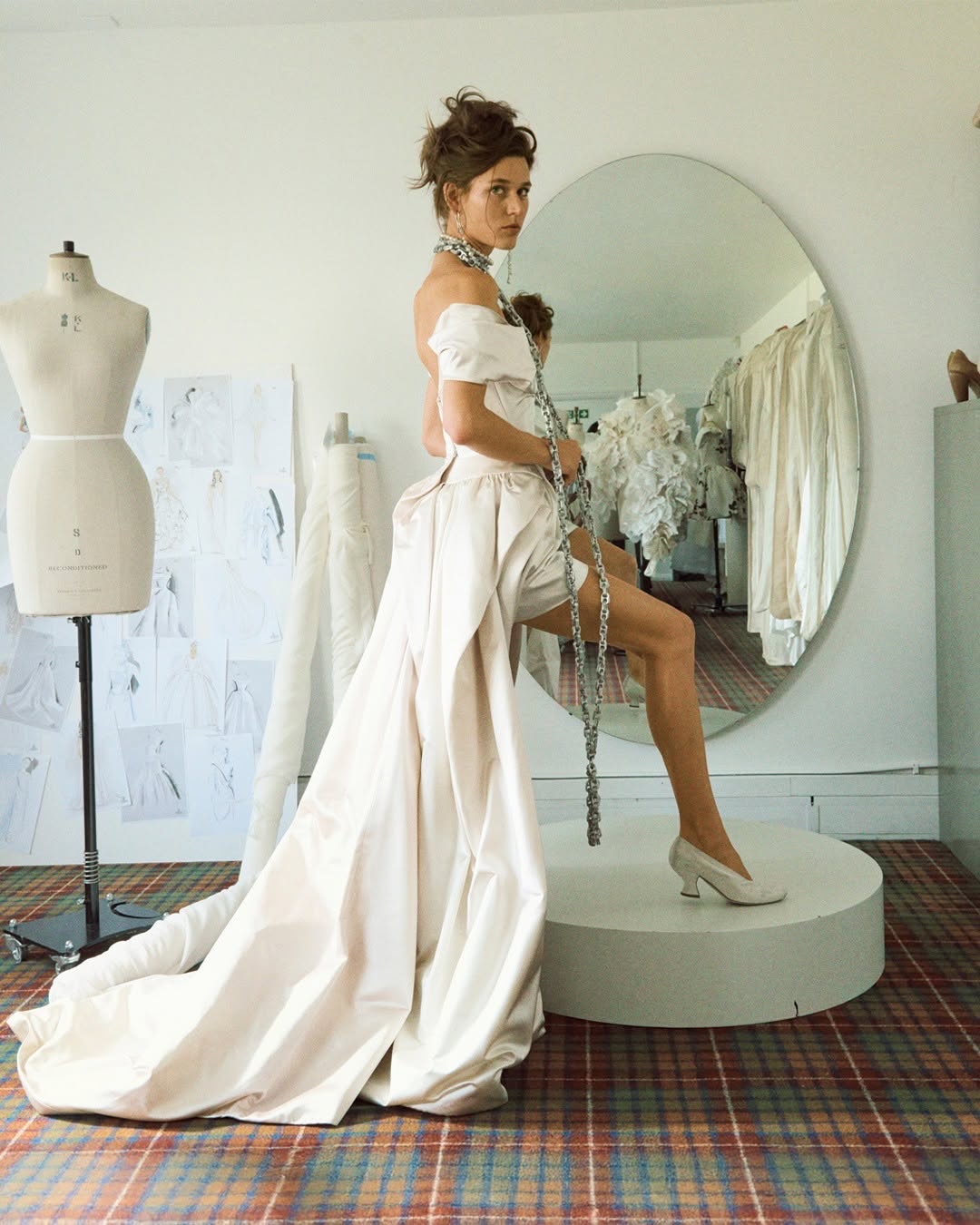
Vivienne Westwood Bridal Couture 2026. Image courtesy: vogue.com
He has been openly fascinated by how dress codes signal power and belonging. Dior’s Autumn/Winter 2026 show absolutely stole all of our hearts, and refuses to give them back. Personally, I’m not mad about it. Staged in the Tuileries, he described the collection as being about “seeing and being seen,” explicitly invoking Louis XIV and the aristocracy of his reign gallivanting around the gardens just for the sake of showing their outfits off. And some juicy gossip. What a life, right? Jonathan turned that whole idea into a modern promenade, where a walk through the park becomes a performance, and every passerby is dressed to play a part. That is what makes his version of Dior so sharp: it is not nostalgia for bloodlines, but a study of public self-possession and confidence.
Which, if you really think about it, is probably the only version of aristocracy still worth salvaging. Because no, we do not live in a classless society, and the political theatre extravaganza of the past few months has made that brutally clear. Capitalism loves to sell us the fantasy that anyone can simply manifest themselves into the upper echelon through grit, branding, and clothes that they don’t have money for, when in reality, the old structures are still very much alive. But that does not mean the story ends in doom. What Anderson seems to understand is that the codes of aristocracy can be stolen, stripped of pedigree, and rewritten around intention, discipline, taste, and the willingness to take responsibility for how one moves through the world. We all know that luxury brands heavily depend on the aspirational client, not just the 1%. And how clever is it of Jonathan to make us all feel invited into – as opposed to excluded from – that modern aristocratic dream? Bravo.
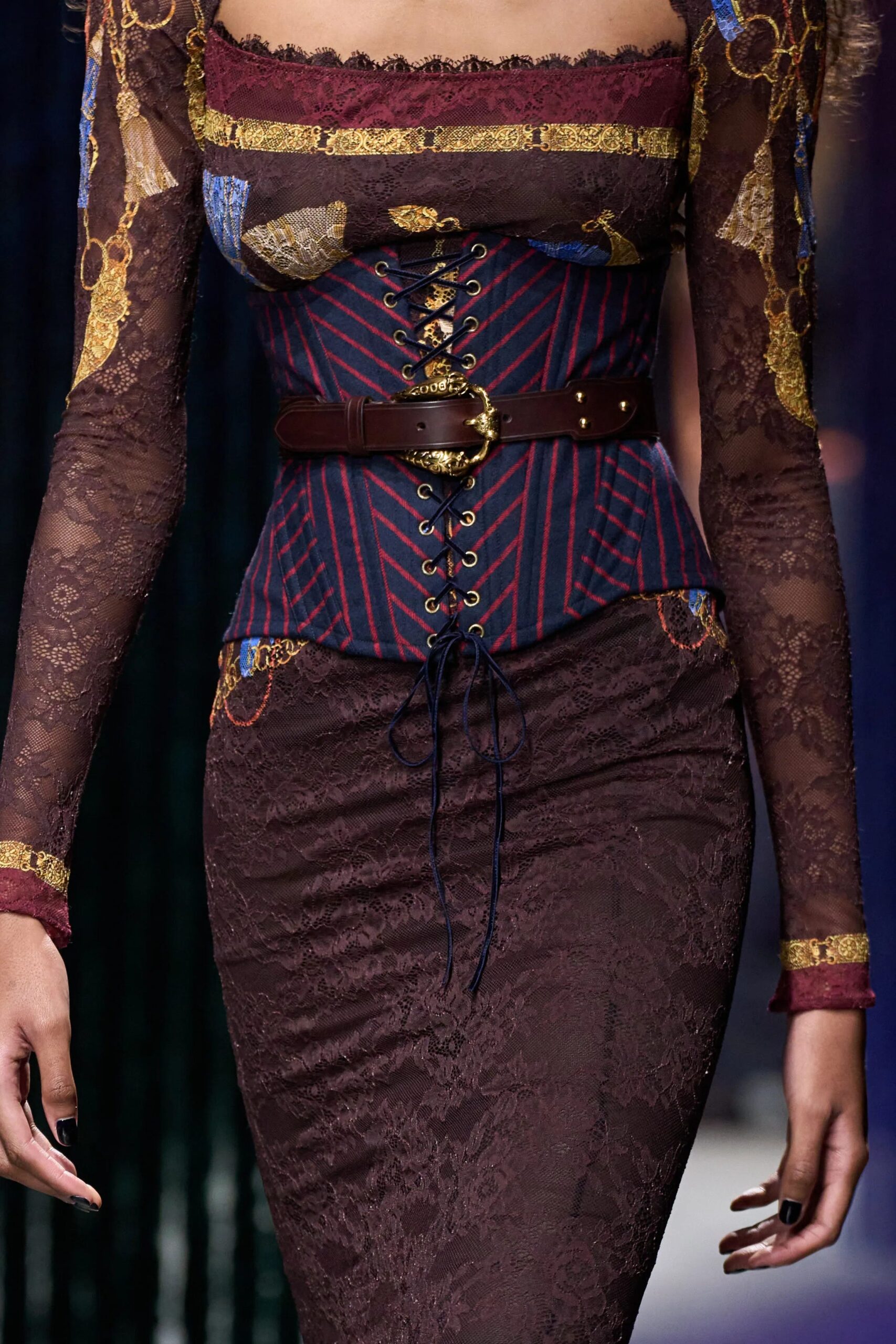
Etro AW2026. Image courtesy: vogue.com
In Vogue, he talks at length about purpose, patience, and the “brain-to-hand” nature of making clothes, insisting on craft, legacy, and the knowledge held in couture at a moment when the rest of culture is busy consuming, cancelling, and making numerous Pinterest boards. That is why this moment at Dior feels so spot-on. And kind of ironic. History is repeating, yes, but with a new twist. Galliano once made Dior the cathedral of romantic excess. Now Anderson arrives at the same house, at another moment of new political turmoil, and asks a different question: what does sovereignty look like now? Not inherited power, but chosen poise. Not lineage, but authorship of your own life. Not old money, but old-world seriousness in a world that has forgotten how to take beauty and craft seriously. Modern aristocracy is about taste. Discipline. The highest quality everything. And restraint in a world that wants to steal your attention. That is true power. Basically, John walked so that Jonathan could fly.
Now, obviously, let’s not lose the plot entirely. The pre-twentieth-century aristocracy was not some beautiful utopia. It was violent, unequal, and built on grotesque class divisions. But it’s important not to forget that fashion movements don’t resurrect political systems. They steal silhouettes, gestures, corsets, feathers and fantasies. We are not nostalgic for feudalism or cholera. But for the aesthetic values that got lost somewhere between mass production, algorithmic homogeneity, and things arriving at your door in two business days wrapped in so much unnecessary plastic, it’s genuinely baffling.
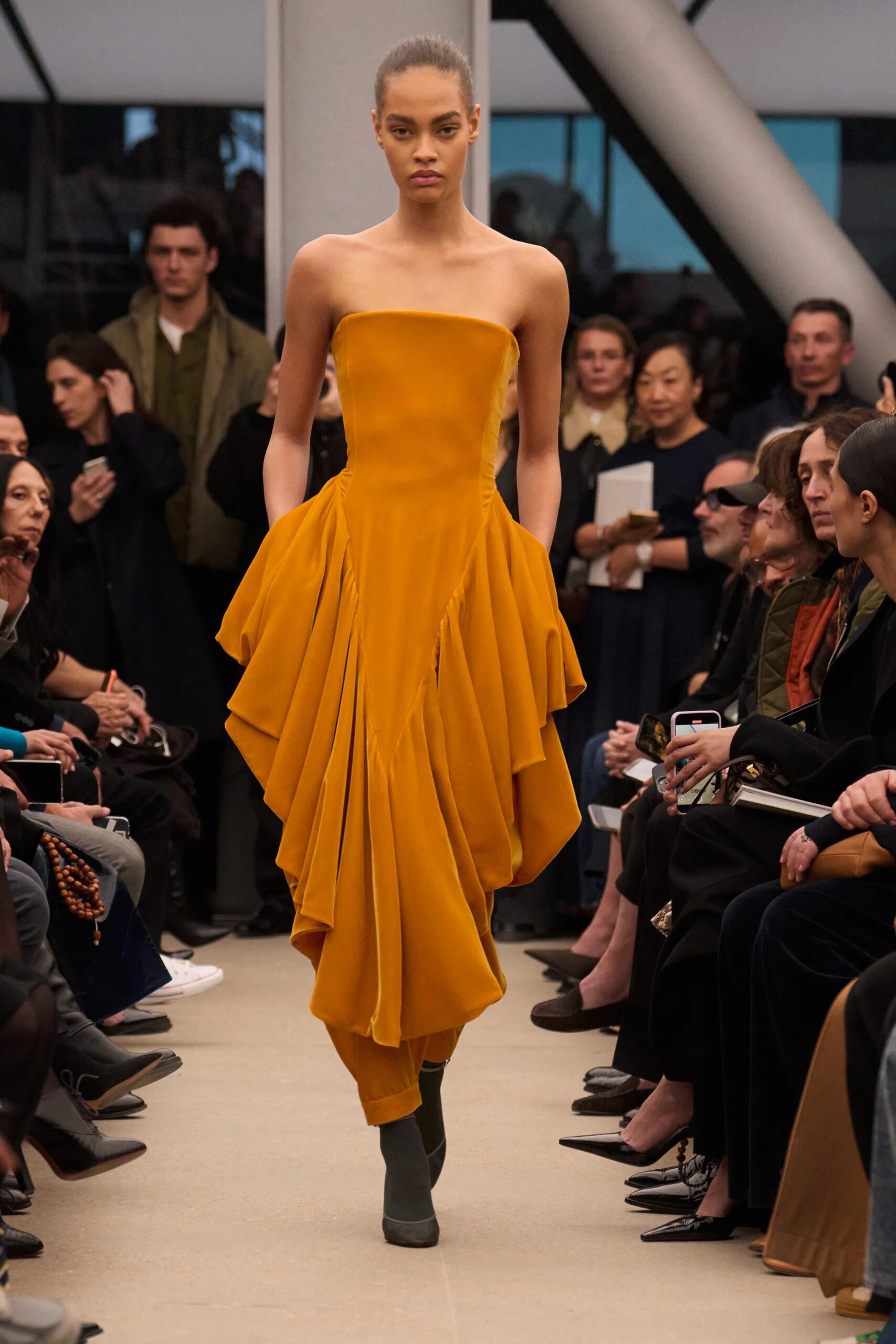
Alaïa AW2026. Image courtesy: vogue.com
Another important thing to mention here is that capitalism is dangerously good at sniffing out a deep human ache and selling us a dead little polyester cure for it five minutes later. Which is exactly what Emerald Fennel’s Wuthering Heights with Margot Robbie’s method dressing press tour was. A pretty facade that failed to satiate those who actually yearn. That is a very slippery slope. Because it’s not that girls suddenly want to become duchesses (well, maybe we do a little, why lie?). But that very real hunger for romance, craftsmanship, beauty, and material integrity also gets flattened into a costume. A puff sleeve in a sad synthetic blend is not the same thing as a garment made of 100% silk with care. A “Bridgerton-core” dress from Shein will never satisfy the deeper need that made this revival happen in the first place. Margot Robbie dressing in corsets and then changing into her favourite minimalist outfit, the second the press tour is over, will not leave any of us in true awe. It imitates the surface while completely missing the soul. And that is the difference between a trend and a movement: one borrows the codes, the other restores the values.
Which is why I pray to the Gods in charge of this deranged hologram that this New Romantics 2.0 comeback is not just another damn trend. This one feels visceral. More human. More necessary. If you are reading this, maybe this is your invitation not just to dress the part, but to actually meet the need underneath it. Buy less things. Buy better things. Learn where your clothes come from. If you can’t afford Jonathan Anderson’s Dior, it’s not the end of the world. Support the brands and ateliers that still believe in human hands, time, and mastery. There are plenty that will not leave you penniless (but also don’t expect good work at the price of mass market). Mend something. Sew something with a tailor. Or yourself, even? Wear the corset if you must, but understand that the real romance was never just in the silhouette. It was in the care. Modern aristocratic romanticism is a refusal to harden in the face of algorithms and political shenanigans.
The horrors persist. But so do we. Possibly in a pirate hat.