Category Art
Published June 9, 2026
Hers, by Danaia Konstantinova
Story scent: freshly picked white roses
Story flavour: black peppercorn cheddar cheese
Play on repeat while reading: “Kepko“, by Sega Bodega
What is a self when so many external biases have been projected onto it? How do you examine the space you occupy in an industry that uses the perceived stereotypes of your gender to define your position? And can you continue without constantly internalising?
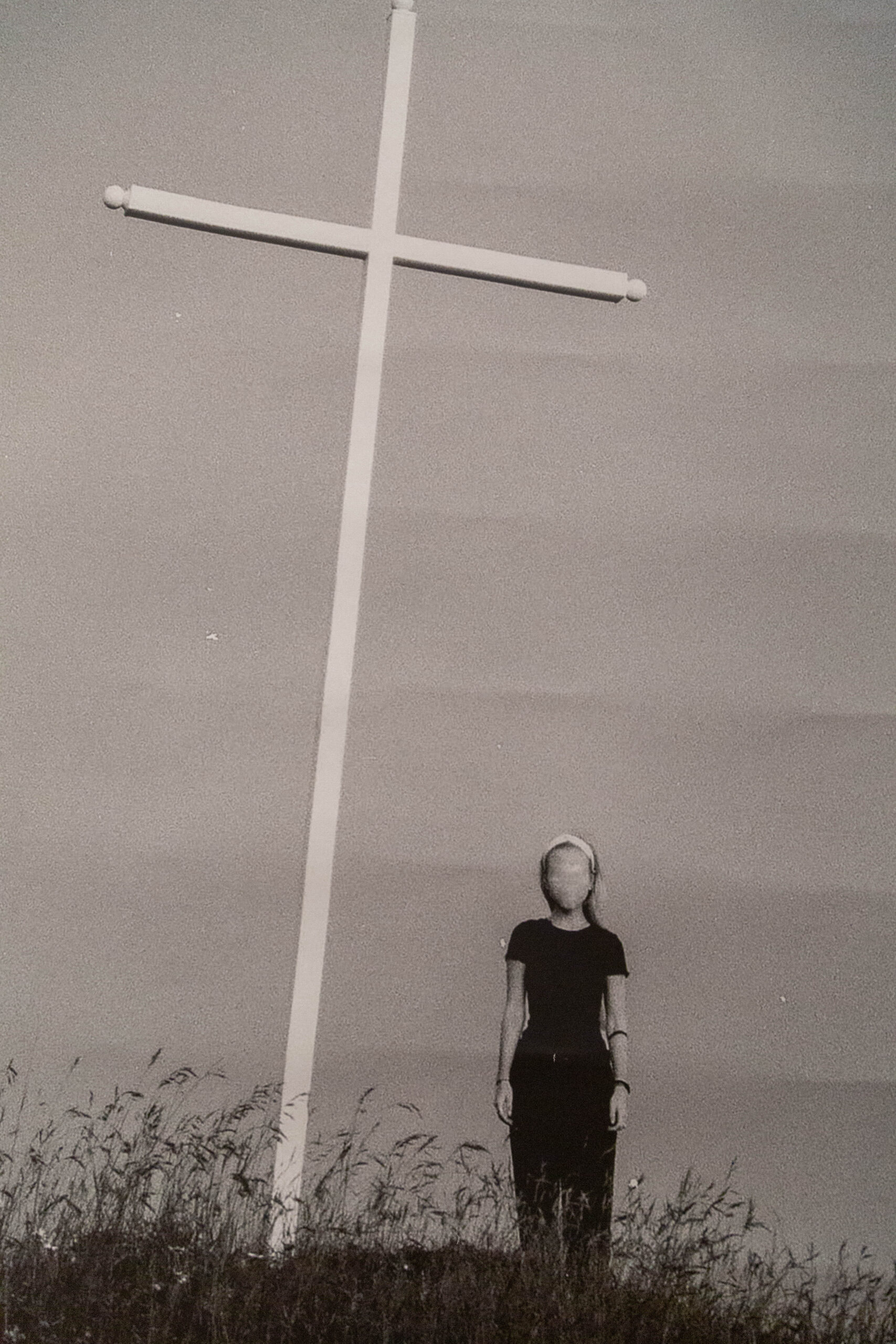
These questions bleed through the black-and-white photographs in Danaia Konstantinova’s most recent series, Hers. Resisting the path of simple admiration often prevalent when a female body is explored through traditional art forms, the series instead claims the space with internal unsettlement.
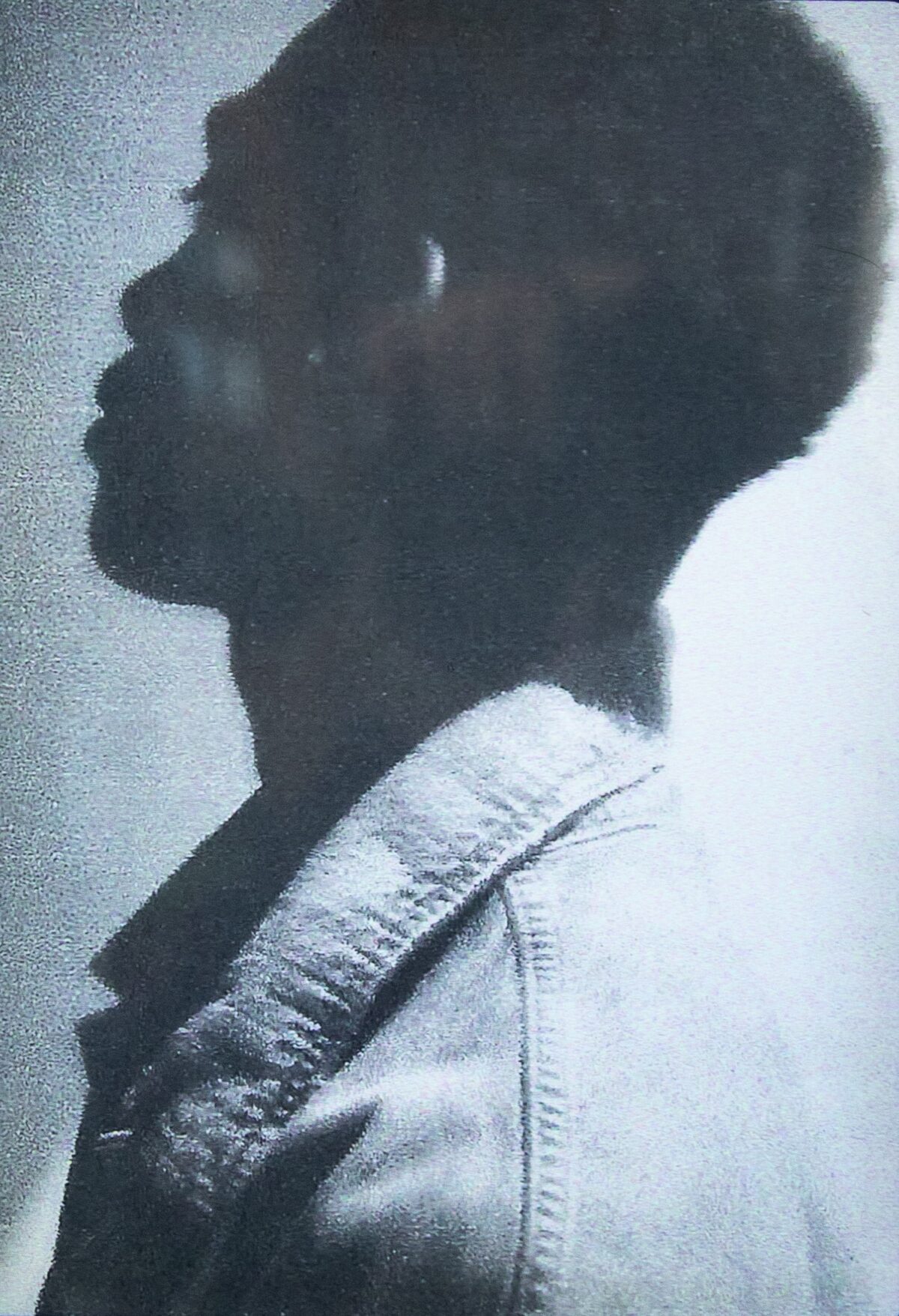
The subject is hidden in plain sight. Looking at her almost leaves you feeling personally dissonant. We meet her as she pushes through the spotlight, a shadow of her own making cast upon her face. Even as we get a glimpse of her looking up, it is with a sight of melancholic distrust.
Where many other portrait photographs have the subject looking out at the viewer, challenging them into direct eye contact, Hers presents a different kind of challenge: a more introspective one. Instead of looking out or at, it dares to look inwards, reconciling with our self-perception and the feelings we inherit through spaces designed to distort us.
Whether you find Hers inexplicably unsettling or achingly familiar depends completely upon the side on which you reside in inherently patriarchal lived experiences. In this series, the role of a woman is explored and subsequently challenged through an examination of age-old forced perception.
In creative spaces, women have gone from means to an end to muse to afterthought to unwelcome presence to, now, slowly (and finally), a peer. But just because the hard work of women has finally manifested in us carving out a rightful space for ourselves, it does not mean all the other incredibly unsettling stereotypes and labels given to us over time have magically disappeared.
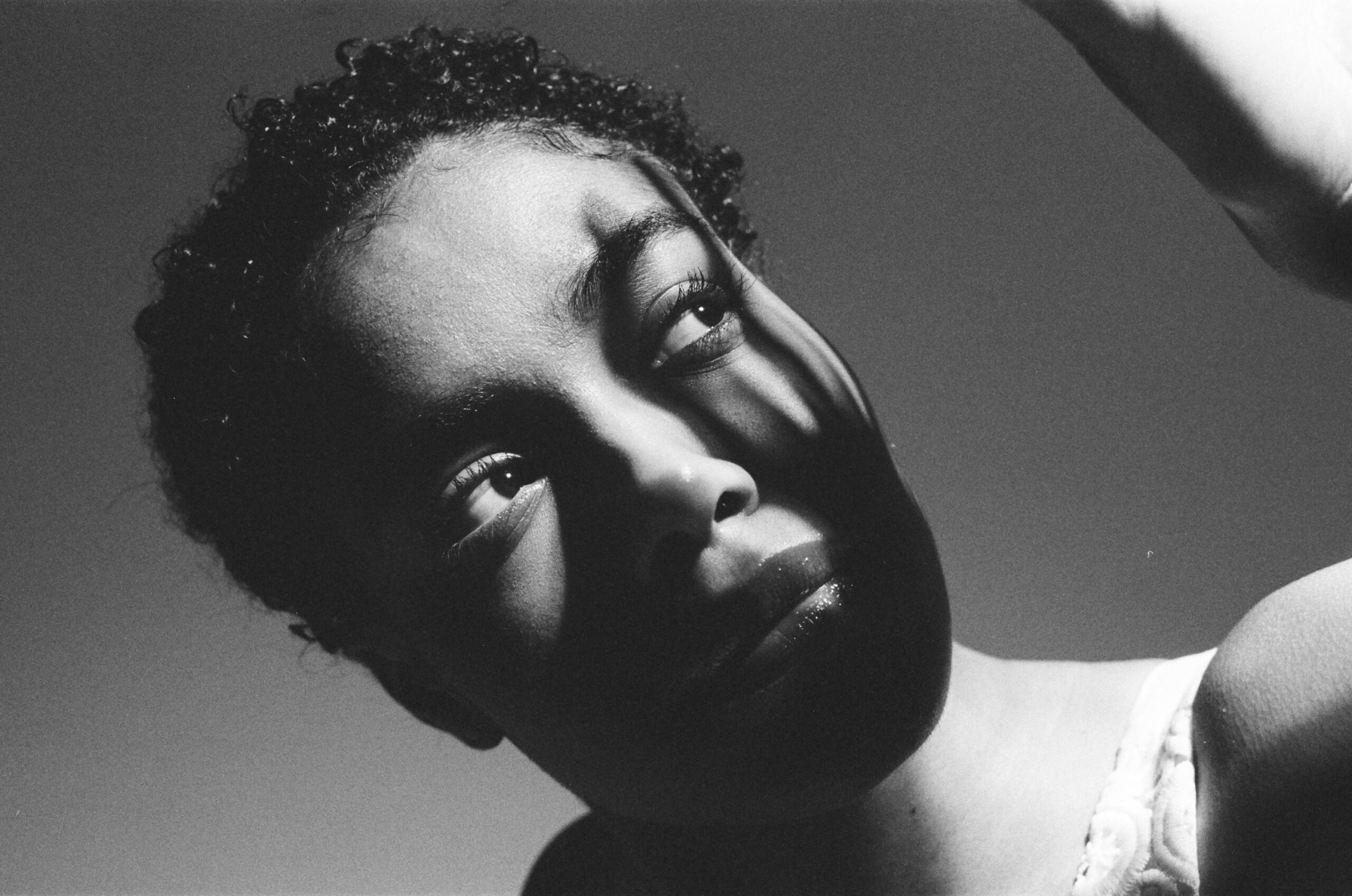
Hers, by Danaia Konstantinova
Hers views the female form as resistance. It also perfectly encapsulated the anxieties and conflicts that come with being in a place that, after years of struggle, feels more like a minefield of preconceived notions.
It makes me think of both rightfully and stoically occupying a space, and being almost haunted by outside voices that question your presence there. These voices often scream so loud that they disrupt, making a home in our thoughts. So we exist in a state of constant confusion, giving into the shadows and fighting to outshine them.
In these photographs, the voices become shadows that convulse, tearing the subject’s mental unrest from her physical body.
The series tells a story that is both chronological and frozen in contemplation. We see the subject with half her face hidden by a bright light. Another half giving into the darkness. Looking at this sight, I am unsure which side appears freer.
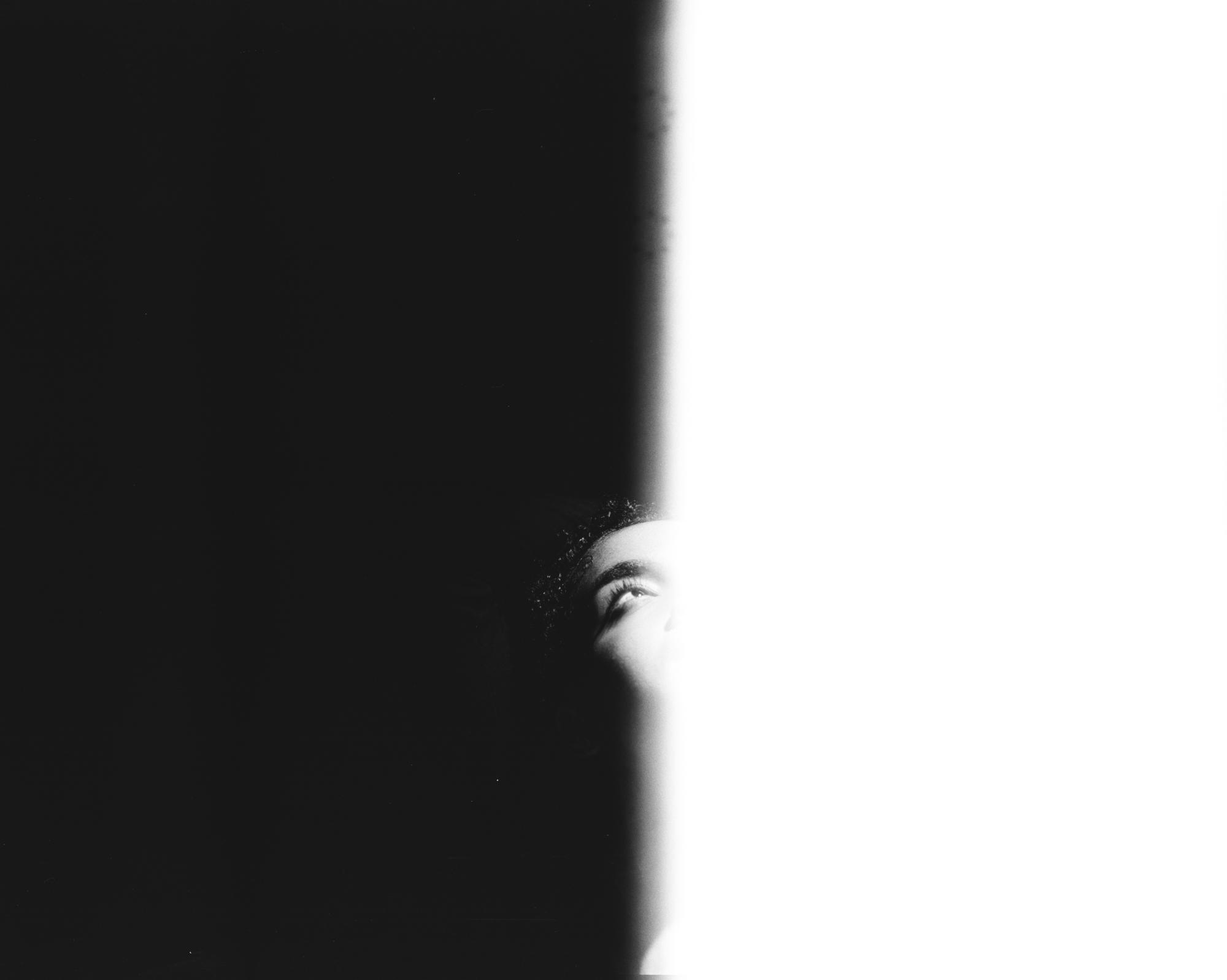
Hers, by Danaia Konstantinova
While Hers thrives as a standalone series, it was originally presented as a part of a group exhibition titled “Fragments of Her”, which took place at Espacio Gallery on 12–16 March. This collection of works focused on representing women through portrait‐based practices, highlighting both universal and singular experiences through faces, gestures, shapes and visual narratives.
The series hung on the white wall of a small room, with a bright light pouring onto it from the ceiling. It perfectly complemented the mythology of womanhood on display, yet the subject of Hers still caught the eye with her conflicted metamorphoses.
The blank while space, normally symbolising a sort of enlightenment, becomes slightly unsettling when you consider her face disappearing in it completely. Is she resisting the darkness by going into the light, or is the light the weight of external perception, and the dark is where she wants to remain, the dark where her face can be seen, can be spotted?
The black-and-white contrast and grainy textures add a layer of intimacy to the images. The bright highlights further charge the moment with emotional depths.
The artist’s choice to deprive the images of colour only heightens the subject’s inner conflict, raising the stakes. It suspends time and space, making Hers a metaphysical presence rather than a singular conflict. It does not work as a physical mirror, reflecting all the shades of the material world. It is more spiritual; it mimics the mind’s constant tension.
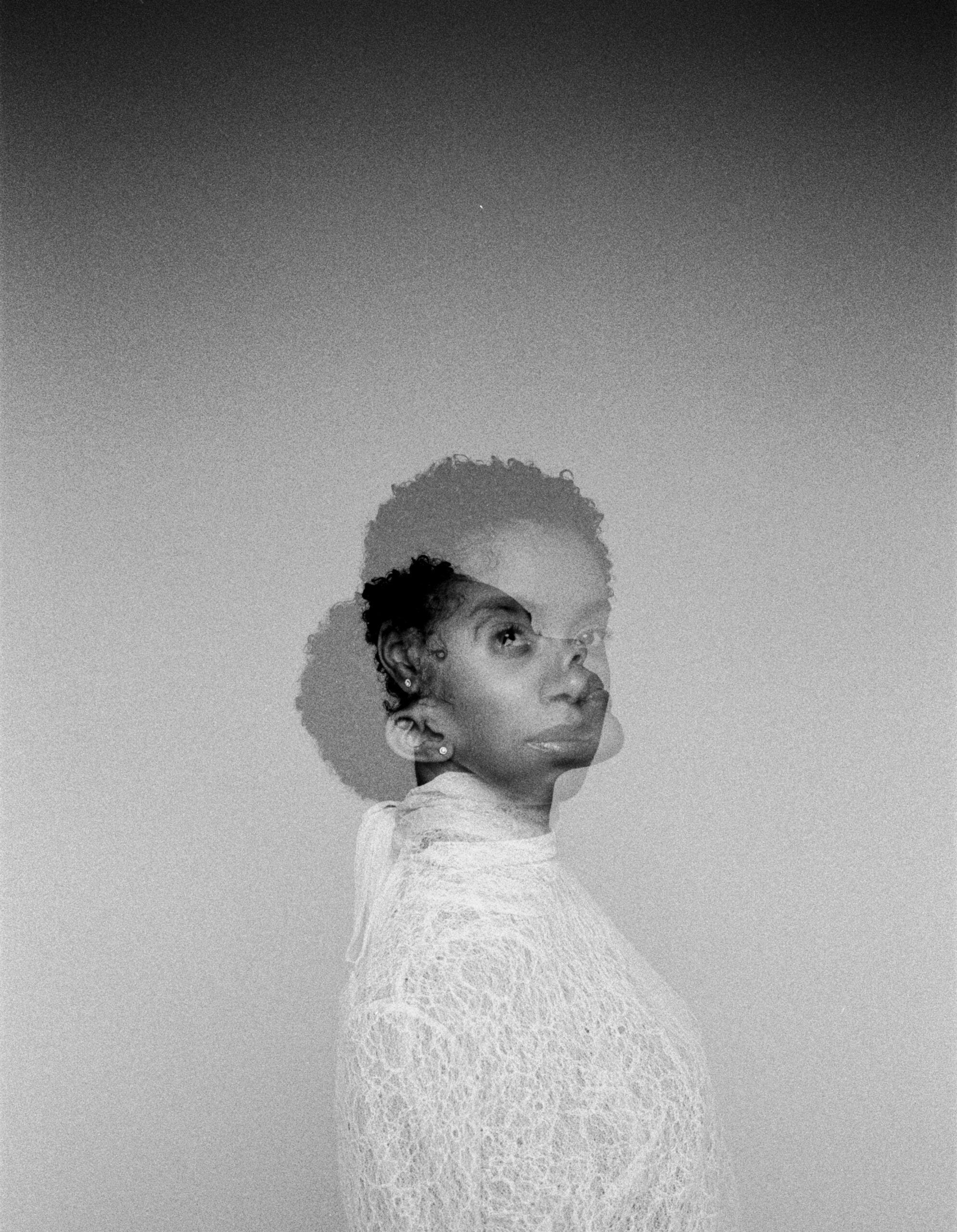
Hers, by Danaia Konstantinova
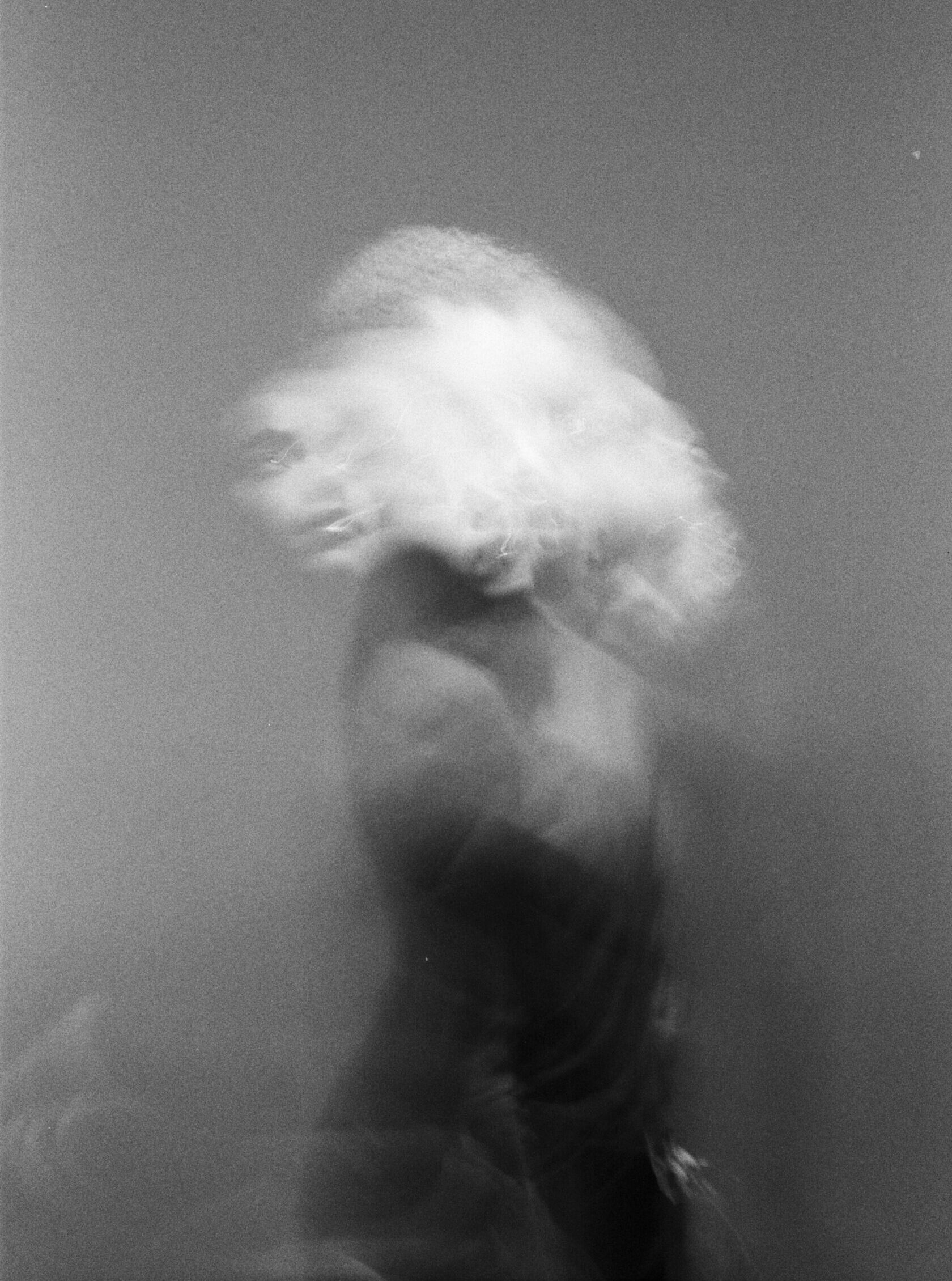
Every image in the series carries its own weight, its own unique iteration of the theme. But there is one that heightens the senses with a stunning unease. In the photo, the subject is both present and absent, both look out into the distance with a calm expression and attempt to escape the gaze of strangers, looking upward into an empty space.
This photograph was created using a double-exposure technique. The artist combines two moments within a single frame, fragmenting the subject’s body in a seizure-like state. Nowhere is the struggle of external and internal mora apparent.
Creating a deeper charge through the use of analogue is a familiar technique for this artist. In her work, Danaia Konstantinova rejects the digital and favours the meticulous procedure of analogue photography. By humanising her process, Danaia embeds her work with a physical presence. The final product comes with an aura of empathy.
Although an average viewer can’t possibly know the amount of effort that goes into working with analogue, that level of care still translates into subtle colour grading and incredible imperfections, so rare in our highly digitised world.
Ultimately, Danaia’s new series turns a state of creative conflict into a sight to behold. It brings the struggle to life, making it easier to unpack, easier to eliminate. In turn, it helped me put that same feeling of constant confusion into words. Yet, this is the kind of work that does not require explanation. It reaches into the heart of the viewer and lives on in the spaces it is meant to challenge. It continues resisting, just like we do.