Categories Art, World
Published November 24, 2026
Story scent: the fresh smell of a tropical forest after a light, warm rain
Story flavour: a tea with strawberries
Story sound: the sound of large keys bumping up against each other on a thick metal keyring (how I imagine the woman in the Bluebeard Tale carrying the keys to her misfortune)
During her book launch, author Julia Merican spoke about the feeling of letting go of her work, of releasing the writing she had spent so much time with into the world. In the pages of her new book “Plain Things for Lustrous”, a character echoed the same sentiment.
It is true that authors often offer a reflection of themselves in the characters they create, but the characters in Julia’s book are both parts of her and not her at all. She hides in the mannerisms of the daughter and the solemn artistic contemplation of the father, yet the people she crafted are so brightly themselves that they come alive, making you wonder how they could be projections of an author’s imagination rather than actual creatures born into this world.
“The characters are all simultaneously pieces of me and constellations of stories I’ve heard, things I’ve read, people I’ve met and people I’ve purely imagined. Truthfully, I didn’t consciously decide where to draw on personal experience and where to withhold—the great thing about fiction is that it lets you throw in bits of yourself without having to claim them as part of your lived experience. You can always say it was made up. I found that so freeing,” Julia told me.
This book has been with me for a week. I followed the daughter and her estranged father on their road trip as I rode on the train, sipped my morning matcha and, on one special weekend, took a very drunk Uber home, words wiggling in front of my eyes (I, of course, had to re-read that chapter).
Now that it is over, I feel a deep sadness, as one always does when finishing a novel. I had these people with me for a week.
For a week they were my greatest companion, my closest confidants; for a week I could disappear in them and not ever feel alone.
Now that they are gone, I have to reconcile with their meaning to me. I can no longer exist with them, so now I must do the fascinating job of analysing them.
I will come back to them one day. Years later, when the memory of the time I spent with them in dark, narrow caves has faded almost completely, I will be back in the backseat as the daughter drives tirelessly, flashes of their parallel memories passing in the window.
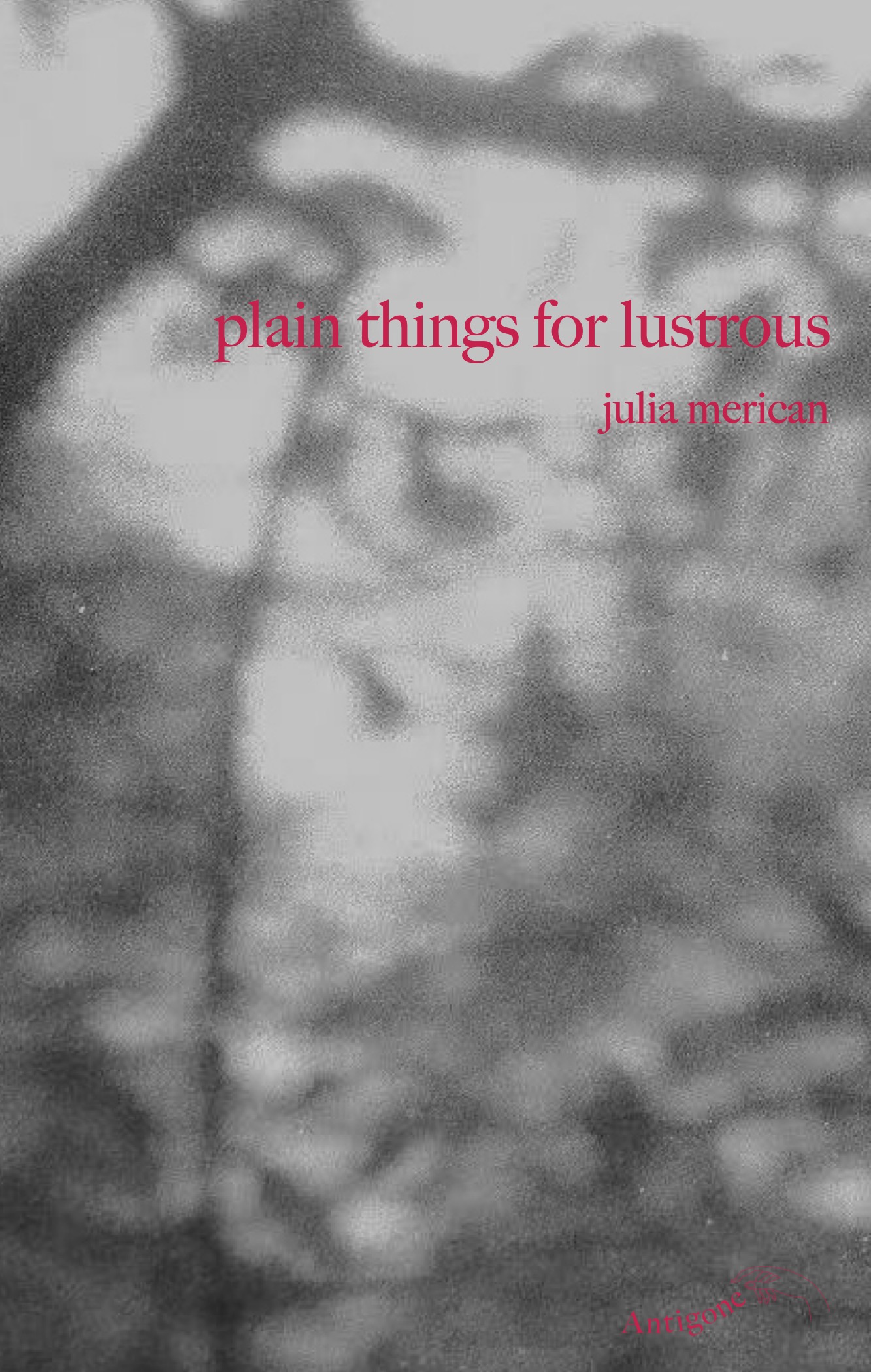
The book is written so beautifully it almost feels ancient, like an old poem excavated from the ground by a determined expeditionist. I read the marvellously imaginative descriptions, the old tales hidden between casual conversations, and then a quick callback to the modern world would bring the magical and the real together.
Beyond the bittersweet moments of two individuals forming a conscious connection throughout their journey, the book feels like the writer’s love letter to her home country. From the sea and the trees to the delicious breakfasts and (apparently) truly abhorrent tea, the vivid descriptions of the spaces the characters occupy made me wish more than anything that I was right there with them, at a table nearby, grabbing a bite or walking as a background silhouette while they sampled their strawberry tea.
When I asked Julia about the importance of setting the story in her home country and all the details she included to paint a beautiful picture of the places she grew up in, she told me:
“The entire book is a love letter to my home country, with all the messy, sometimes critical elements that it entails, amid all the tenderness and nostalgia. Each location in the book was based on a different place I’ve travelled to on the road: I mapped out a route which naturally created chapters, so it was a very helpful cartography for the writing process.
You could say home gave me my bearings for navigating Plain Things for Lustrous. All these visual descriptions anchored me further: they reminded me that I was writing fiction, not an essay, which is my usual form. I had to remember that I was creating a world of sorts, or recreating one, and I wanted to make the reader feel they were there with my characters, right in the thick of it.”
This book, taking place within a span of a few days, describes a relationship between a daughter and her estranged father, whom she meets for the first time in adulthood as they embark on a road trip across her home country. I do not have an estranged father, nor do I share the daughter’s home country or any of the childhood memories she recalls during the trip, yet to me, it felt deeply personal.
Coming at a time in my life when, as a late-twenties adult, I often meet my parents- my father, specifically in new ways, discovering more layers of a person who felt like a distant tower rather than a human, it feels deeply relatable. Through its pages, I feel the push and pull of meeting a parent on their level, knowing deep down that the time for parenting is over, and the time to get to know each other has arrived.
The first chapter introduced me to the daughter’s perspective, and, of course, the voice felt like home. No matter how much individuality our subconscious likes to plead for, there is a special kind of warmth you feel when you find yourself in the thoughts of a character.
The way the daughter described her mother, the knowledge of her being gained through the mundane and the everyday, starkly contrasted with the way she is now getting to know her father in a controlled and voluntary environment, created an immediate and defining difference.
The relationship they could have built, the one only possible through constant, prolonged moments, is not possible. Now they are left with the puzzle of what they will be to each other and what roles they will take.
Throughout the first chapter, I saw the daughter question her newly encountered father’s every move, seeking deeper meaning in every gesture and phrase, and in interactions that, upon further reflection, were never really that casual.
This relationship, to me, felt both chillingly distant and incredibly tender. The awareness both people bring to a conscious decision to get to know each other comes only with the wisdom of adulthood and gives each conversation special meaning.
Everything feels uncertain, yet it all comes back to that same dedicated choice, which soothed me as the reader. The question of willingness to explore is answered, so the interesting part, the exploration and reveals of small truths within the relationship take centre stage.
After hearing so much from the daughter in the first chapter, I was curious to hear the father’s perspective, but his voice was jarring at first. It was so much deeper, filled with a special kind of heaviness that is only born through prolonged, personal encounters with deeply seeded regrets.
Through the first twenty or so pages, I managed to connect with the daughter so closely; I understood her, saw myself in her a little, but also saw the depths in her as someone so different from me. I am also a writer, so the vivid descriptiveness with which she saw the world, the way she would space out, taking a small detail and carrying it into a corner of her mind where it could connect itself to an old memory, a childhood fairy tale or a fictional scenario, felt like a mirror of sorts.
The father’s tone was also very bright and poetic, yet slightly more tortured, more weighted, even slightly more cynical. I could trace the familial relation in the way they both saw the world, the way they connected nature to poetry and poetry to lived experience, tropical leaves to memories and the bitterness of tea to questions of their own place in this world.
Of course, the book itself was written by one person, and the flow of the story has to remain somewhat uninterrupted in order to retain continuity, but in this case, understanding her character so thoroughly, Julia managed to use the general tools of fictional writing to her advantage, as ties that bring her characters back to each other and remind us that, for all their differences, their artistic inhibitions are matched.
On the way the characters revealed themselves to her, Julia shared: “I had vague outlines of my characters before I started, but they mostly revealed themselves to me through the writing. If you asked me to describe them with adjectives right now, I’d struggle a little, because it doesn’t really feel like I created them. I got to know them, and the settings I placed them in told me more about who they were: their beliefs, their likes and dislikes, their little quirks.
That’s what I love about writing: there is a blank page, and suddenly, things I never knew I was thinking about or people I didn’t know existed within me make themselves known. Writers always talk about how painful their chosen vocation is, and honestly, they’re completely right, but still there are days when you don’t feel like doing the work and do it anyway, and you let go of any expectations and surrender to the process, and something alchemical happens.”
At the end of the first chapter, the father asks his still somewhat estranged daughter if she forgives him; she tells him she hasn’t decided yet. Bold move to ask such a question so early on, I thought. Then again, when all they have to define their relationship is a short road trip, maybe there is no time for formalities. That decision, of course, lay solely with the daughter, a character I felt deeper in my bones to with each word.
Entering chapter two, I almost did not want to hear from the father; I just felt so mad at him. Perhaps my own blunt cynicism didn’t want to give him a chance, pushing me to look at the darker side and decide before I even heard a thought from his head. In that way, maybe my worldview matches the heaviness of a father who has, at a later age, come to seek forgiveness and reconnection more than that of a daughter willing to give him a chance. After all, I still did not know what really happened.
Why was he not there? Why are they only meeting now? These questions linger throughout most of the book. The mystery is revealed only by the end, but not at the very end. Late enough to keep me guessing, but early enough to let the characters develop beyond the big reveal, and to have us sit with the consequences of what that newfound knowledge means to them and us.
I am getting ahead of myself, my thoughts running faster than my eyes can get to the next line of the page.
This wonderful journey these characters are on is as much a focal point of the story as it is a literary tool, a chance for references and metaphors to run wild in a contained environment.
To me, the smaller stories and the little fairy tales throughout the book felt like a magical way to convey the characters’ emotional states. Instead of only describing their physical shifts and mental contemplation, Julia uses familiar stories to connect us more deeply to what both heroes are experiencing.
What first caught my eye was the caution with which the story treats touch. At first, the daughter wonders why the father has not touched her yet. Then the two discuss fingers and hands. Even the tale of Bluebeard, which the book spends quite some time retelling and deconstructing, has the princess touch something she is not supposed to, her hands stained with the blood from the key.
Touch, such a specific sense, one that requires a physical closeness that many other senses do not. Sharing touch is reserved for those closest to us, and as the roles our two heroes explore begin to stretch, physical touch appears, almost making their relationship gain corporeal form, proving it is a growing thing and that it is real.
Blood is another big part of the book. There is, of course, a whole chapter titled “blood”; blood appears front and centre in the stories the characters share, but to me, it wasn’t just about the physical aspect of bleeding, although the bare vulnerability it represents means a lot within the context of the book. To me, blood felt like one of the symbols of connection the story keeps coming back to. That unbreakable, invisible link between generations, woven through childhood stories and witty proverbs.
What better way is there for two people to get to know each other than to exchange stories? So that is what our characters do, yet the way this passing of knowledge is described differs from many other first-person narratives I have encountered.
When the time comes for one of them to share a new piece of information or go on a longer verbal adventure, we often do not get to hear their inner monologue throughout. Instead, what we get is the other character describing how they tell a story. And what that story triggers within them as they listen attentively.
This way, we begin to discover their emotions and peculiarities by reading how they describe one another, what details they notice, and what thoughts the other’s story evokes. We also get to see the characters through each other’s eyes and learn about them visually.
As for the stories themselves, what they share with each other is extremely honest. Once again, it’s something you can only share with someone you meet in adulthood. The way their relationship is framed allows for a very specific kind of honesty; there are no reasons to lie, and all the mistakes have already been made.
The stakes of them being in each other’s lives are, of course, high, but in a way, they are also extremely low. The daughter is an adult, an established individual. They can’t turn back time; they can’t lose what they never had; all they have left is the present and the undeniable power of honesty.
The advantage of having your characters meet for the first time on the pages of the book, while already sharing an ultimate connection, is that you can explore how they see each other as people without the burden of unspoken family-dynamics intricacies the reader needs to catch up on.
Of course, we get to know the characters themselves, their past, and their reasoning. But seeing how their relationship develops in real time allows us to grow with it.
There is, however, also the power of context. We come out of the book knowing these two people so well, yet we only know them in an echo chamber of this trip, of this relationship. Through their thoughts, we learn they can be different from what they appear to each other, which, of course, is only natural. Yet as I read some of their memories laid out on the page, evoked by the presence of one another, bleeding into their conversations, I thought, maybe the way we get to know them is the most honest.
The spaces the daughter and the father both occupy in each other’s minds twist, turn, and reverse in a metamorphic pattern. As the daughter tells the father a story, he sees his mother telling fairy tales to him as a child. As the father tells his daughter of his mischievous errors as a young man, she sees her ex-boyfriend, the man who broke her heart.
Patterns repeat in the book in more ways than one. For the father and the daughter, their similarities make their upbringing feel like a backward reflection. One was raised in love, laughter, and a close family; through her stories, you can feel the warmth of her childhood home, her mother’s care, and her sibling’s support. In stark contrast, the father’s home feels alienating and cold.
And then there’s the story that creates a true mirror of life lines. I won’t spoil too much, but the moment I read will stay with me for a while. I saw the words on the page, my brain realising what’s happening before I even finished reading, and I froze for a second. I had to close the book to process, then open it again to see how the story and the characters process that same truth.
What I loved about this reveal, beyond the incredible impact it had on the story as a whole, was that Julia didn’t leave us waiting until the very last page, only to end the story right there and saddle us with an unsettling craving for a resolution.
After all the deepest truths are revealed, we get to spend time with the characters as they are fully formed in our minds. This includes two moments of true vulnerability, where we see the trust built between the father and the daughter. The subject of touch, which had been so reserved in the first chapters, was now used for them to comfort each other.
I have felt these characters through the way they saw each other, through the openness with which they shared past tales with someone who is both the closest person in the world and a complete stranger. When I closed the book, their memories and experiences stayed with me, carving out a special little place in the corner of my mind.
That is what I love so much about living with a novel, making it your constant companion for a week or two. Even after it is done and you have felt the bittersweet taste of reading that final word, reaching that final FULL stop, it stays with you, changing and growing independently.
In a few years, something might bring my memory back to this tumultuous road trip, but the character will appear to me differently, more native, like they have lived inside me longer than outside of me.
I think the longer the book stays with you, the more time passes after the initial reading, the more of you it becomes. A very particular blend of the world Julia created and my own perception.
For Julia herself, her connection to the book has undergone many metamorphoses since she published it.
“The editing process was quite difficult, despite my editor Alicia being brilliant in every way, because the book was so freshly written and it had been such an emotional process.
At the time, I felt like I had just given birth and was now being asked to bathe the baby and clean up the delivery table. But after some time and distance, I started to like it again and feel happier with what I’d written.
When more people began reading it and sharing their thoughts with me, pointing out details and offering interpretations I hadn’t consciously thought about, it felt so unexpectedly cathartic. Readers close the cycle for me, again and again.
I feel, with each reader, that the book is being given new life.”