Category Art
Published July 14, 2026
Eldritch Bodies, by Sanchit Bembi
Story Flavour: Cocktail – Look! Flowers! (Sanchit’s personal creation)
1 part Gin
1 part Lillet Blanc
1 part Overproof Sake
1.5 part Sparkling Grape
Story Scent: Cedarwood, Red Cinchona & Dried Apricots
Story Sound: “Honey“, by Sebastian Roca
How can art transcend static experiences? How can reverberating memories and personal connections be created in a single time frame? Sanchit Bembi answers this question with something he calls “digital fermentation”. What emerges from the process is not just a response or a reflection, but an almost literal teleportation of the artist’s mind, sight, and thought into the artwork.
In his recent lecture at Tate Modern’s “Exceptional Spaces: The Cosmic Vision of Aleksandra Kasuba” event, Bembi shared his vision for immersive art, drawing on both Kasuba’s legendary interactive practice and his own experience with synaesthesia.
In what she called a “sensory-enhancing spatial circumstances environment”, Aleksandra Kasuba challenged Western artistic standards that rely on vision as the primary means of engaging with creative projections.
Naturally, the worlds Kasuba built came from her mind, but by integrating sensory triggers that leave room for personal interpretation, she allowed viewers to write their own story around her work. Experiences creeping in as people entered her world ranged from new discoveries and slow, steady contemplation of the surrounding physical materials to uncovering repressed memories and building new pathways.
All that is to say, as a trailblazer in the world of artistic immersion, she serves as a great prologue to the works of Bembi, who, inspired by her ability to drop the audience into an environment they can make their own without sacrificing the general artistic storytelling, is guiding us into the new age of all-consuming art.
In 1975, Aleksandra Kasuba built “Spectral Passage”, an interactive environment filled with colour, light, sound, scent and feeling. Over 40 years later, Sanchit Bembi saw it and, fascinated by the physicality of Kasuba’s use of colours, felt like it gave form to something he had only previously come face to face with in his own mind.
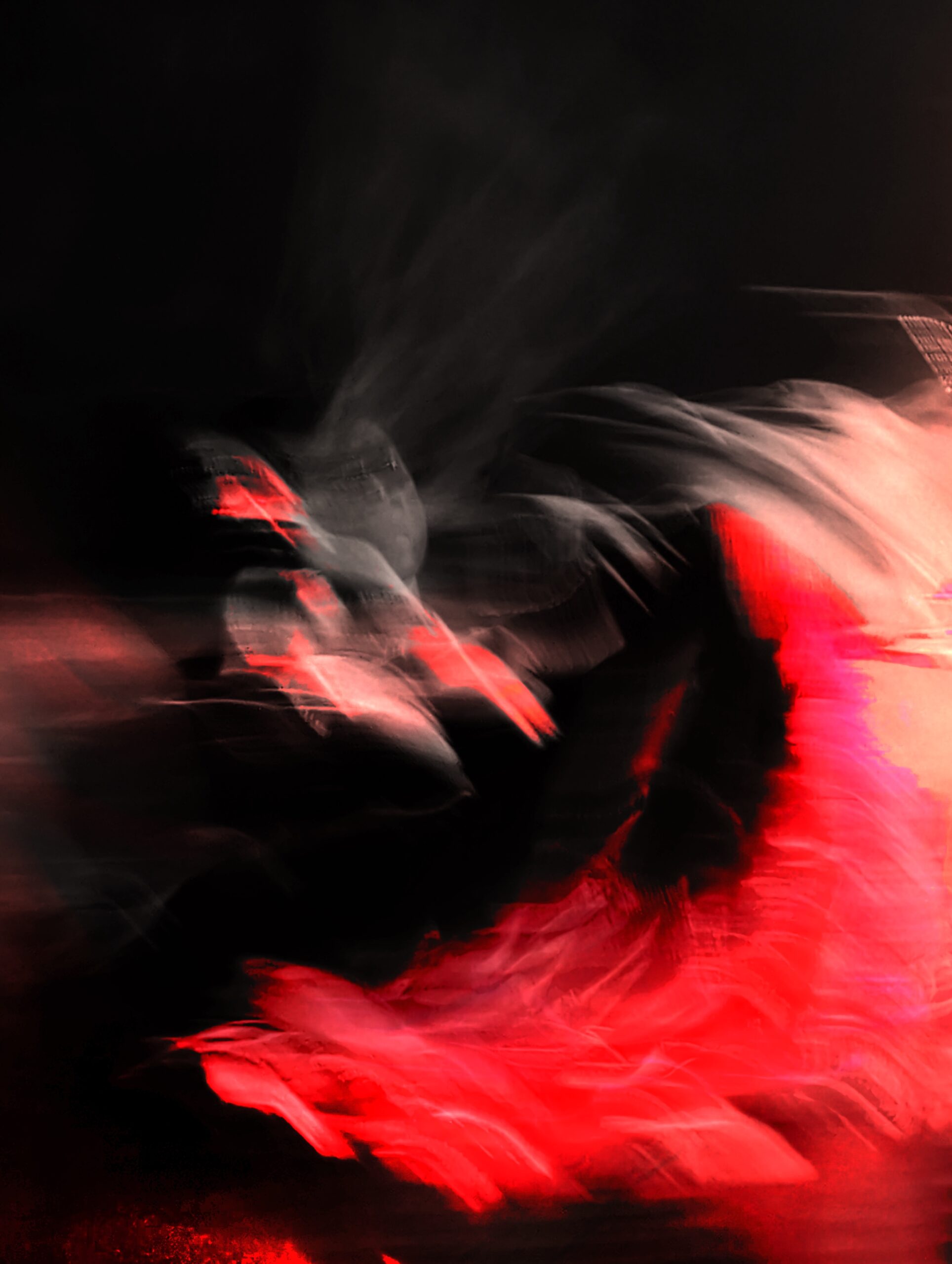
Eldritch Bodies, by Sanchit Bembi
Synaesthesia first became a part of Bembi’s life six years ago, as a result of a traumatic brain injury. For him, sounds become colour and motion leaves chromatic trails in the vision. Along with synaesthesia, he also experiences something called visual snow syndrome, which creates a grain of analogue static across his vision, often triggered and intensified by loud noises.
“I’d read a bit about HPPD and Visual Snow Syndrome out in the wild before, stumbling on a few stories here and there of people who’d taken ecstasy on a night out and woke up with their vision permanently, irrevocably changed.
Chronic illness was just about one of my deepest fears, as it usually is when you’re in your teens and feel invincible. I didn’t feel particularly invincible after hitting my head on a pole the night of a Cage the Elephant concert in Feb 2020, but I woke up the morning after and went about my day anyway,” he recalls.
It wasn’t until a couple of days later that Sanchit first began feeling the effects of his injury.
“I was face-timing my mum from my living room, and I felt head-splitting pain at the back of my head for a second.
It felt like someone had hit me with a frying pan, and when I opened my eyes, I noticed the sunbursts, usually reserved for your eyes scrunched tight, wouldn’t leave my vision. The tinnitus followed shortly thereafter, and in my panic, I thought I was having a stroke at the ripe old age of 20. A short ambulance and A&E stint later, I was told that it may be a visual migraine and it would just go away. It didn’t!
I think I spent the next few months in bone-deep fear and panic, moving across different neurologists and MRI machines before I finally accepted that I know what this is and that it isn’t going away. My memory of that time is unusually foggy, though perhaps not as unusual considering this was all kicked off by a traumatic brain injury. The synaesthesia started in slight bursts, and funnily enough, I used to lie awake in a dark room and play soft music to see the colours. Seeing the colours was better than seeing the persistent grain when I closed my eyes.”
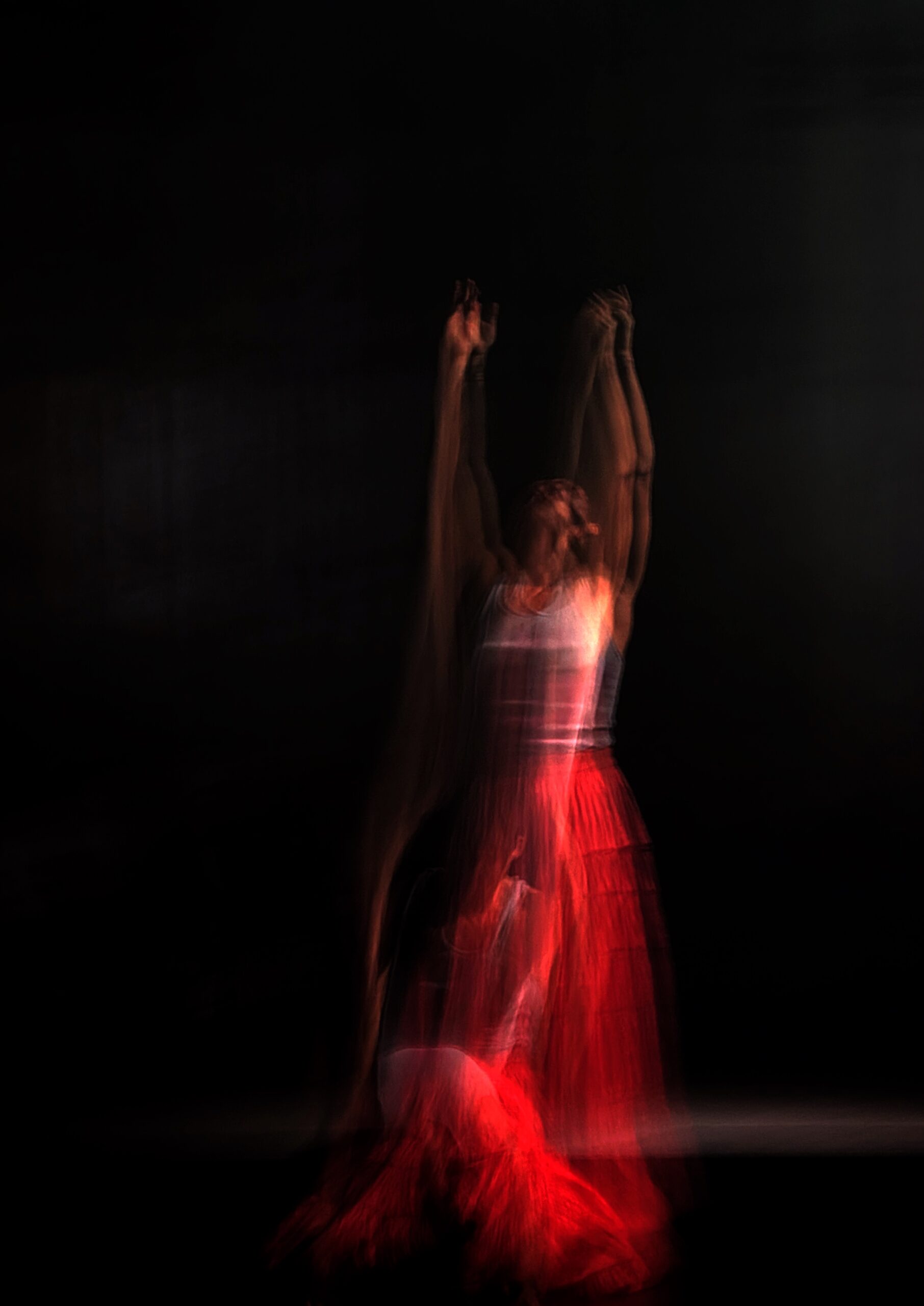
Eldritch Bodies, by Sanchit Bembi
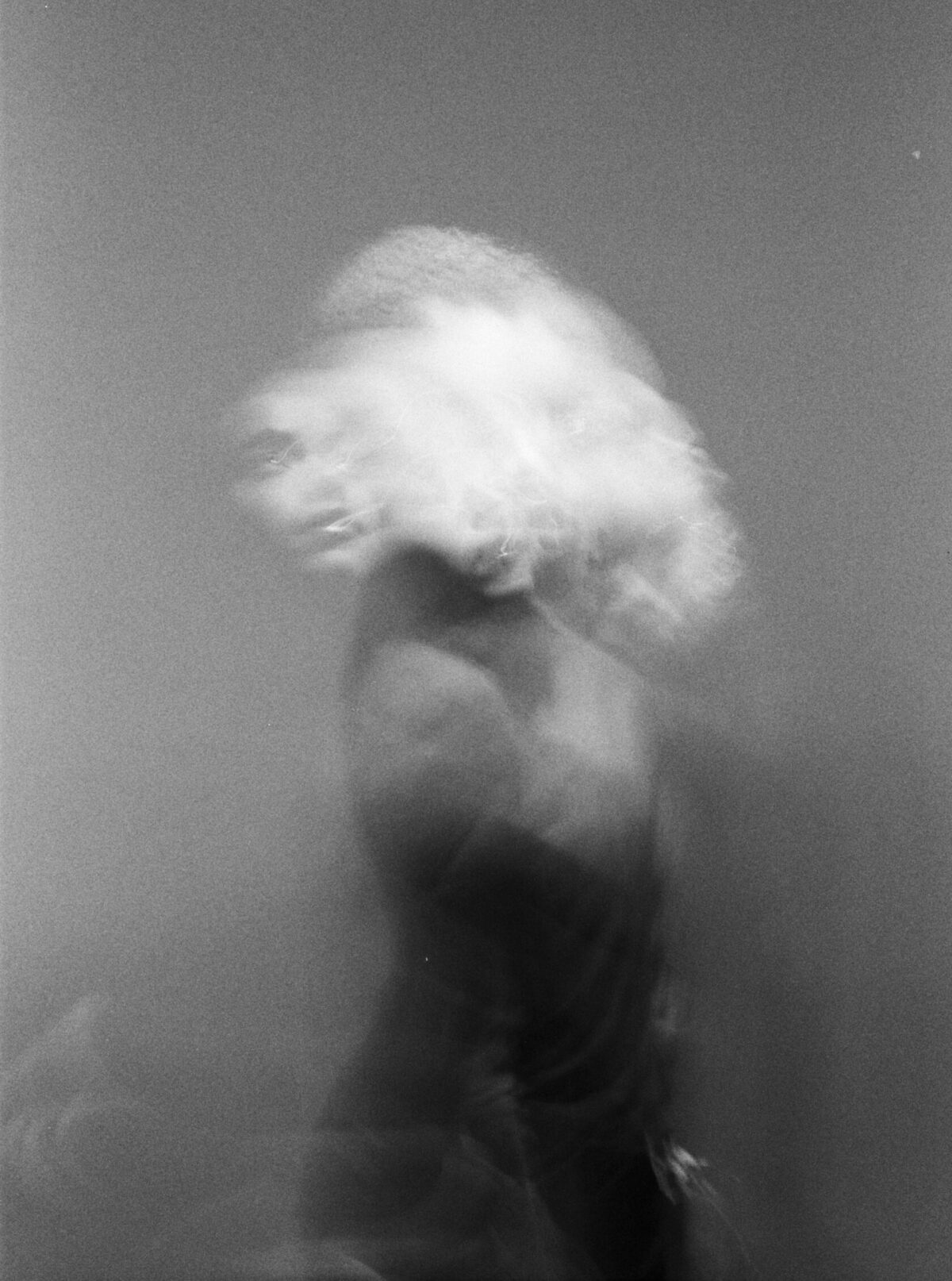
Sanchit’s art is not just a way for him to translate what he sees to the audience, but to show them the feeling he experiences in the moment. It is beautiful and confusing. Looking at his work, you see shapes echo in emotion. It overwhelms and releases at the same time, helping you focus on the lingering sensation of silhouettes rather than on a single clear frame.
While photography usually focuses on freezing time and immortalising a single moment, Bembi’s work makes it tactile.
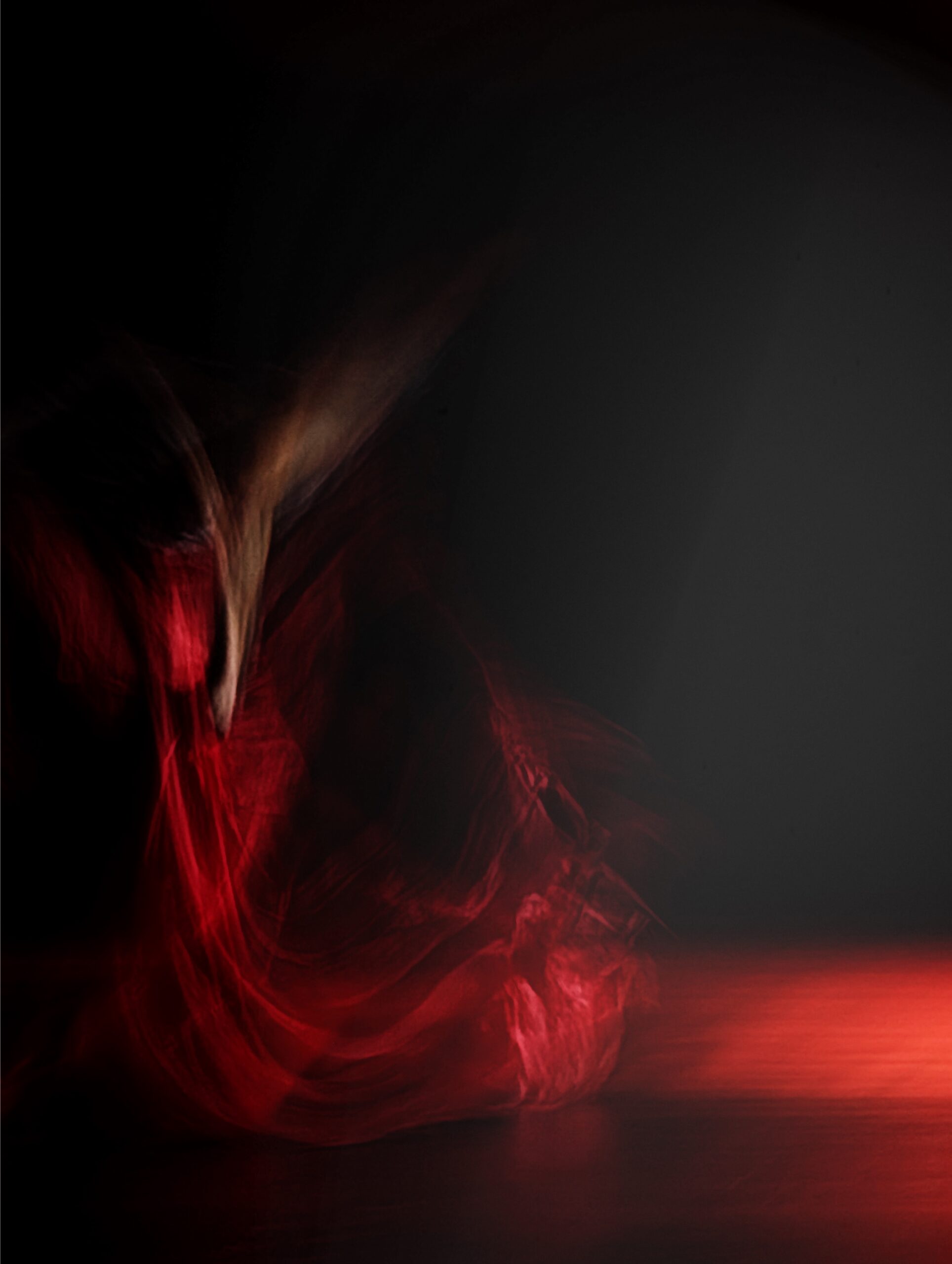
The colour red, prevalent in Bembi’s work, grows more tangible the longer you look. You almost feel like you want to reach out and touch the shadows, run your fingers through them, feel their weight. The rays of light almost force the mind to imitate a sound; they vibrate and whisper, stretching the moment, making it linger.
Red comes directly from Sanchit’s mind; it is the colour that dominates his synaesthesia and his imagination. In his lecture, he joked, “The Central Line is hell on earth for me, very loud, very red, would not recommend.”
So how does Bembi achieve this effect that leaves us in emotional disarray, feeling every movement, sound and light at once? The answer brings us back to his incredibly imaginative method of digital fermentation. The artist stacks photographs on top of each other and often literally ferments the film rolls in tea to create the same streaks of light that compel interaction.
Kasuba’s aim to “disorient” her audience stands in direct contrast with Bembi’s experience with loud and crowded environments.
His practice, however, does not only aim to display that distortion, but create a space where more universal and, in our time, extremely pressing issues of accessibility can be addressed.
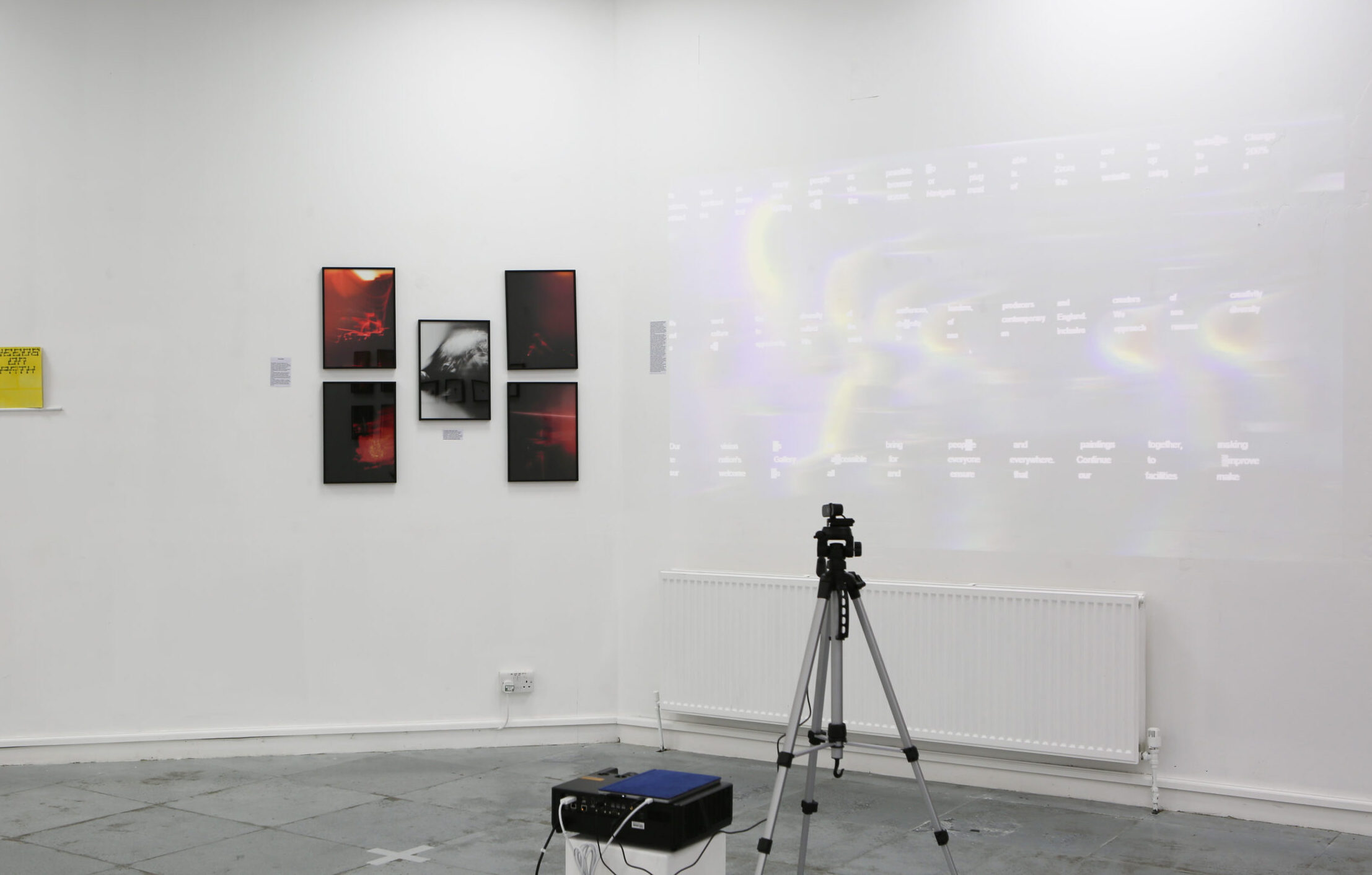
London Design Festival, 2025, Installation by Sanchit Bembi
During the 2025 London Design Festival, Sanchit presented the first spatial manifestation of his artistic practice as an Official LDF25 Partner.
Using Hydra live coding software and a real-time camera feed, the installation used noise as a trigger to corrupt the visual projections and transform the screen into visuals only previously seen through the artist’s eyes.
As viewers came closer, speaking, clapping and making noises, the colours on the screen changed mimicking the visual disruptions caused by the artist’s synaesthesia.
Watching friends and strangers finally being able to physically share in his experience brought “a sense of giddiness” to Sanchit.
“A few of my closest friends are musicians, and I’ve often tried to describe my experiences at gigs they’ve played in, but I’ve struggled to communicate that verbally. I think my favourite part is people I’ve known for years interacting with my exhibition, only to come up to me and tell me now they know exactly what I see.
In a sense, that is what my work has been trying to communicate, and it is incredibly satisfying to see that validated. I imagine a lot of the giddiness comes from my own coping mechanisms for my disability, imposing this interaction on people often instils a sense of whimsy both in the person in front of the installation and me – if I can’t treat this condition at all, why not use it to have some fun?”
An added depth of the installation was the audio-reactive text, which also glitched in accordance with the noise changes in the room. This feature of the installation took the viewers one level deeper and allowed them to intellectualise the limitations institutional languages still retain when faced with the question of accessibility.
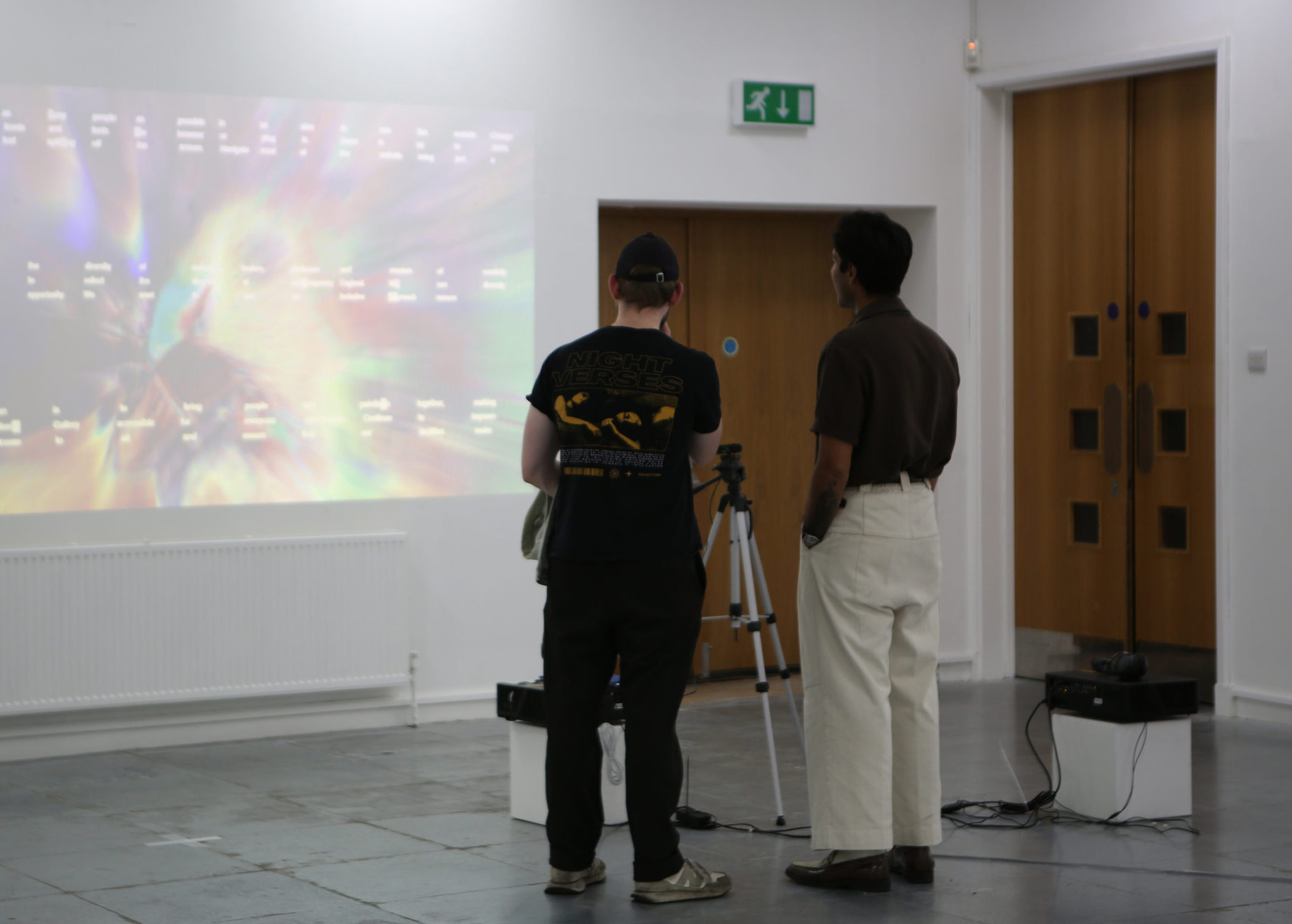
London Design Festival, 2025, Installation by Sanchit Bembi
In real time, Bembi challenges the artistic and cultural structures to gain flexibility rather than rigidly pushing marginalised communities to adapt.
Months later, while discussing the installation in his Tate lecture, Bembi explained, “Working as a Product Designer in Healthcare has taught me how systems either include or exclude users based on assumed capabilities. This series translates those insights into the cultural sector, investigating how galleries and museums might evolve their processing systems to become truly accessible to neurodivergent artists and audiences.”
Installation becomes documentation, and the sensations of seeing sound connect to movement, reverberating through colour, build new associations. By showing the viewers the cross-wiring of senses in his own brain, Sanchit introduced a completely new and singular experience while challenging them to think beyond the screen. These are the kinds of projects that stick with the audience, that become stories exchanged among friends and live on as faithful memories.
Bembi’s first installation was just the beginning. He saw it as a jumping point, yet found it too colourful and not specific enough to his own experience. So he did it again. This time, for the audience at that same Tate lecture we keep coming back to, with the context of Kosuba’s work sprinkled in.
In the back of the room, guests were introduced to a Kinect-based real-time point cloud system driven by audio. A body inside the space becomes material for sound to reshape. The shadows and figures dispersed and took on new form as the frequency shifted.
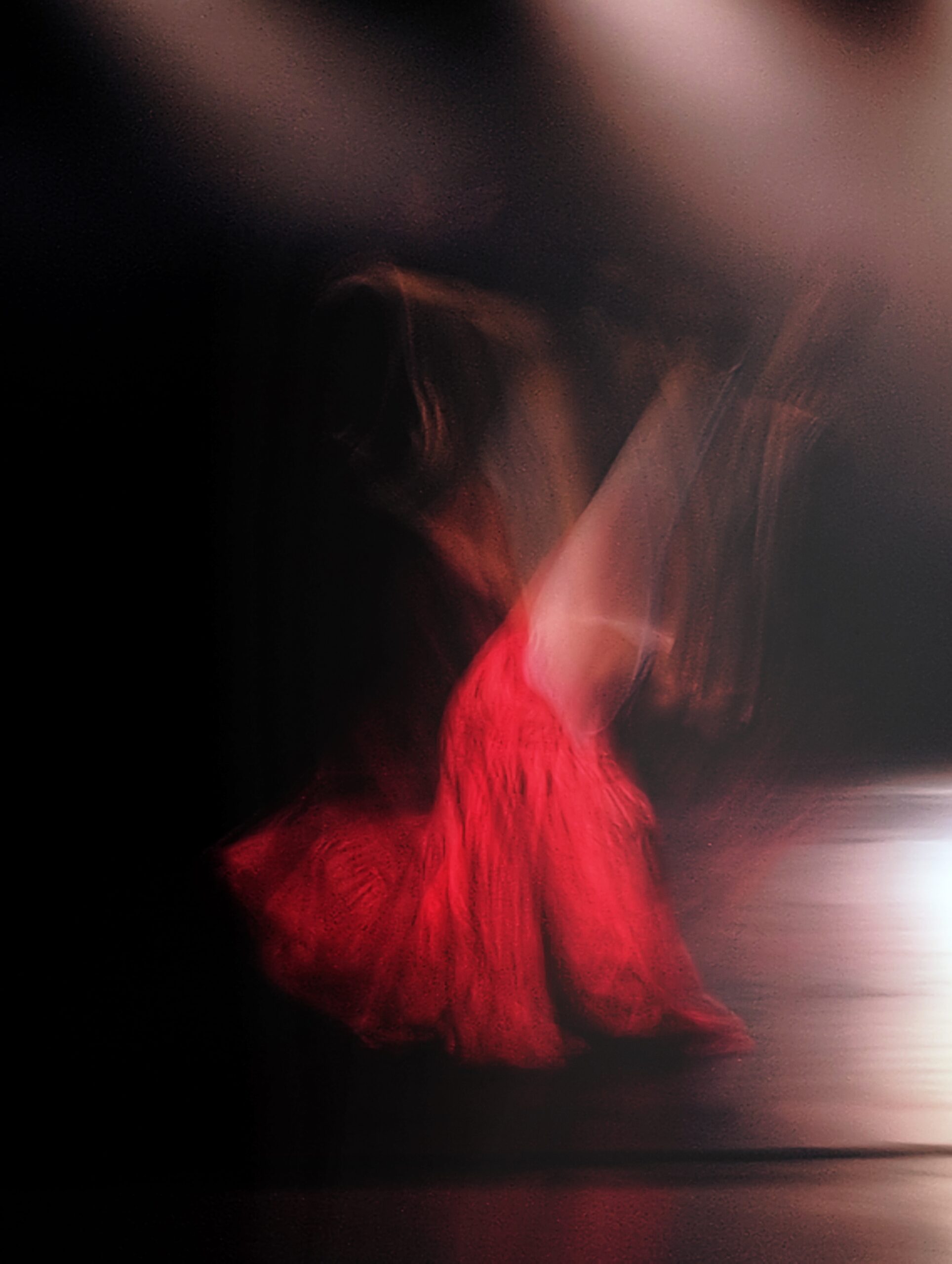
Eldritch Bodies, by Sanchit Bembi
This installation came even closer to translating the subtle complexities of the triggers Bembi’s synaesthesia is reactive to. But he’s not done yet.
“Both formats I’ve exhibited so far have been constrained – whether by preparation time or just health and safety requirements. I was really keen to have this installation as a walkable audio-reactive installation, perhaps similar to passages Kasuba herself had built.
I am aiming to develop this more to showcase at my first solo exhibition at Copeland Park Gallery (15 -21st September), hopefully bringing it full circle during the London Design Festival this year,” he explains.
Bembi is set to continue the metamorphosis of this project, adding new layers and drawing inspiration from artists who have perfected the craft of audio-visual manipulation. He wants to isolate the experience further, bring it closer to the sensations in his mind and almost literally insert the viewers into it.
“The third format of this installation will be exploring the audio-reactive installation in combination with polarising filters, Fresnel lenses and birefringent sculptures.
While a lot of my work so far has been inspired by Kasuba, I think Olafur Eliasson is another big influence on my practice, and I haven’t had the chance to express that yet. I’m hoping to create a walkable space surrounded by these light-dispersing objects facing the audio-reactive installation to create a sense of external, unpredictable and physical synaesthesia.”
The LDF installation will be in the room, fully performing, but invisible to normative perception – only visible to those holding or walking through the right perceptual apparatus.”
Whether this will be the final stage of this specific installation or live on, evolving alongside Bembi’s countless other projects and artworks, I can’t tell. I just know I will be there, walking slowly into the complexity of his work, ready to see what he sees.