Category Film & TV
Published November 16, 2026
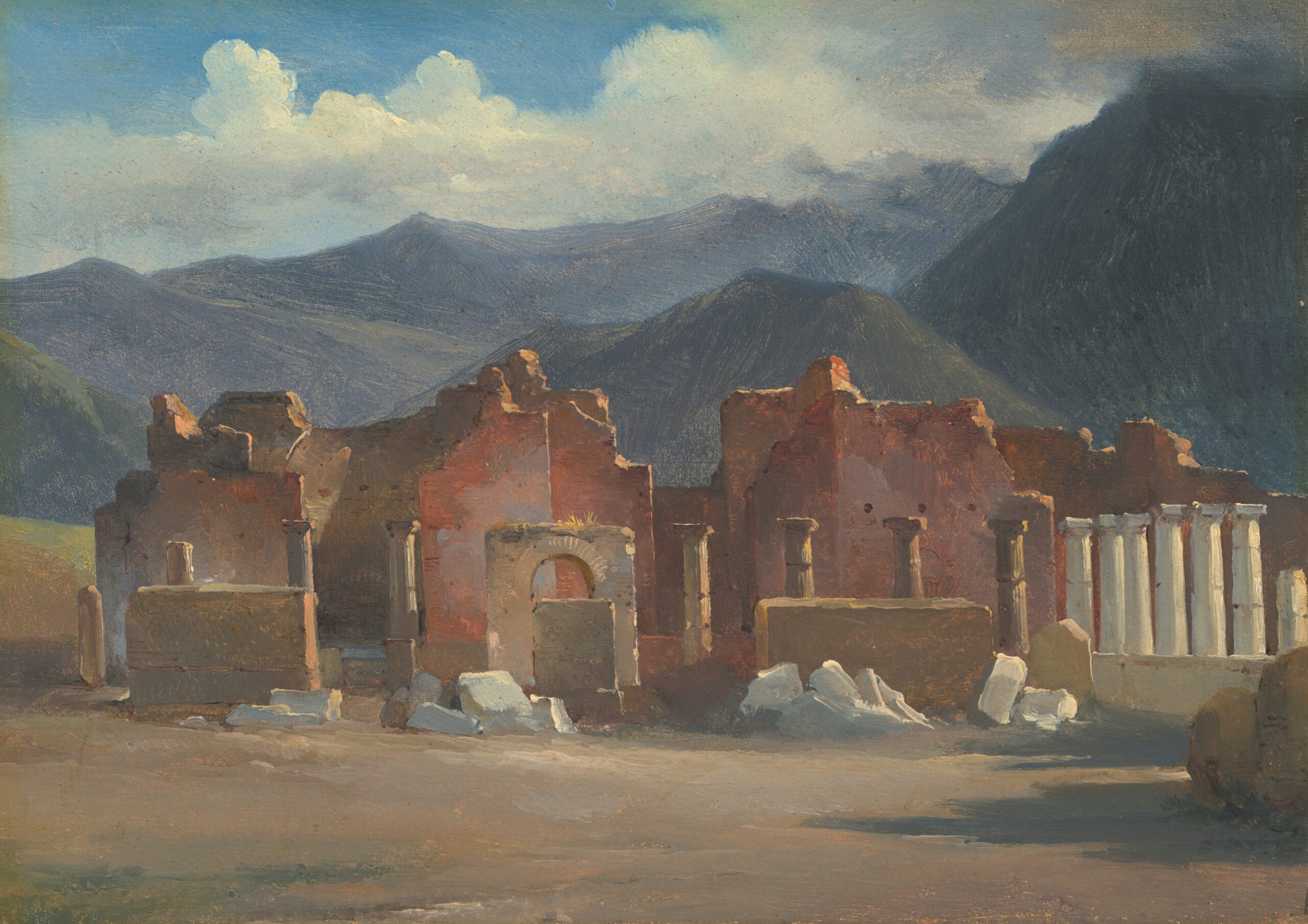
The Forum at Pompeii, by Achille-Etna Michallon
Story scent: last days of summer breeze
Story flavour: mint
Story sound: “canción de muerte y salvación“, by Zahara
There is an inherent archaeology to the maturation of the self. Out of all the representations of a life I can think of, the one that best fits mine is the archaeological site. An architectural space with bridges, houses, columns, and remains. And to remember is to navigate these, to stick to the well-preserved structures and to imagine how the torn-down buildings used to be. There are no facts in early memory; it is only a field of excavation, a stratified city to discover.
I watched Marine Atlan’s La Gradiva during the 71st edition of the Seminci Film Festival, where it won Best Editing and the Silver Spike. I had been following the film since its debut at Cannes, so knowing it would have its Spanish premiere at Seminci was thrilling. It began gently, stunningly filmed, presented as an atmospheric collage of people and places depicting a school trip of French teenagers on the cusp of university to Naples. It is a very captivating movie to look at, but as it ran, I found myself confused about where the story was taking me, waiting for an overt event to happen. However, I slowly realised the story had been there all along. “I knew right from the writing stage that the film would start out with a naturalistic feel, almost like plunging into a dream… and little by little, it would shift toward something closer to the tragic,” Atlan said during the press conference.
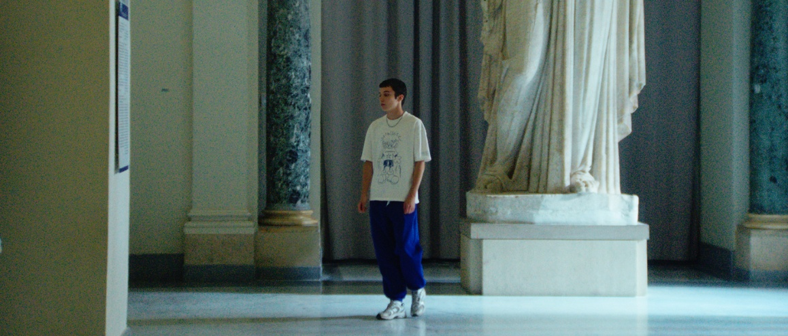
La Gradiva, dir. Marine Atlan
During the first two-thirds of the film, Atlan takes her time introducing us to the group. Rather than following a chaptered structure, she adopts a digressive approach that allows us to experience the present alongside her characters. They are morally ambiguous, vulnerable, and contradictory. They are teenagers approaching adulthood, crossing the threshold that will walk them away from naivety. But before that happens, they have the chance to walk around Naples and the nearby ruins of Pompeii.
It is there that the archaeological conception of maturity ceases to belong only to me and becomes the organising principle of the film itself.
The mind of the teenager is a deep and obscure place. Adolescence is defined by the exploration of the self, the sudden unearthing of private ruins and the fragile attempt to rebuild them. Away from the watchful gaze of domestic life, the adolescent secret is born. Freud, writing about Wilhelm Jensen’s Gradiva, described this as the return of the repressed.
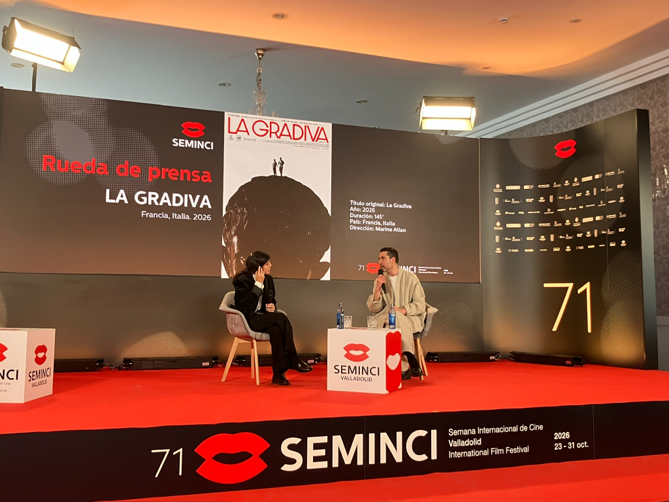
La Gradiva film press conference at 71th Seminci Film Festival
One of the film’s pivotal scenes takes place during the visit to the ruins of Pompeii, when Madame Mercier (Antonia Buresi) explains the frescoes of the Villa of Mysteries, dedicated to rites of initiation into womanhood. She asks questions; some students answer, others interrupt, and the lesson slowly dissolves into an argument. What begins as an academic discussion becomes the revelation of character. It is filmed with such naturalism that it resembles a documentary, exposing the temper hidden beneath nonchalance.
Atlan mentioned during the press conference that they began with four hours of material before cutting the film down to almost two and a half hours. The goal was “telling a collective story”, with long scenes like blocks of the present, which convey tension; the collective dynamics and the silences all help to build this naturalist sensation where drama starts boiling beneath the surface.
The anger, the certainty of one’s own ugliness, falling in love with a friend, leaving the group behind to hook up with an Italian man met on Grindr, the collapse of an identity built over trembling ruins, or the uncertainty of the future are all the teenage secrets that expose the most unsettling parts of existence. Each character must decide whether to confront these or continue burying them. Atlan talked about Mount Vesuvius during the press conference as a symbol “of great spirituality regarding existence, and fragility in how life is lived.” The volcano is and will be there, and it’s our duty to uncover the remains of the old city that is no longer there on its slopes before they are gone forever.
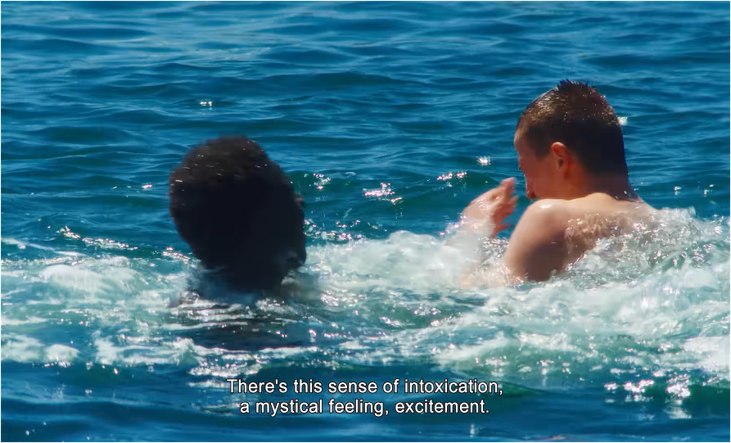
La Gradiva, dir. Marine Atlan
By the time La Gradiva reaches its final act, all of Atlan’s digressions fall into place. The mystery of adolescence, deepened by the Neapolitan air, salty and sensual, reveals itself as something capable of burying a person alive. The subtle realisation that comes after discovering that maybe some archaeological landscapes are too torn down to map without any help means acknowledging that the transition to adulthood cannot be achieved in isolation. And therefore, crossing that threshold means giving up some privacy, letting others in, and helping organise the inner chaos.
When the screening ended, I left the theatre with this beautiful feeling of things making sense, of it not being too late. I decided to play the album PUTA by Zahara on shuffle, and canción de muerte y salvación started playing:
Los fantasmas se asentaron
Tomaron el control, asumieron el mando
Te quedaste a vivir
En la cárcel más cercana, estaba dentro de tu propia jaula
La habías construido tú
Con los restos que quedaban de tu infancia
The ghosts moved in
They took control, they took command
You stayed to live in the nearest jail; it was inside your own cage
You had built it yourself
With the remains left over from your childhood
And this song that I had heard a thousand times before got a new layer of depth, brought by La Gradiva. There, the idea of this article was born. There is still time.