Category Fashion
Published September 30, 2026
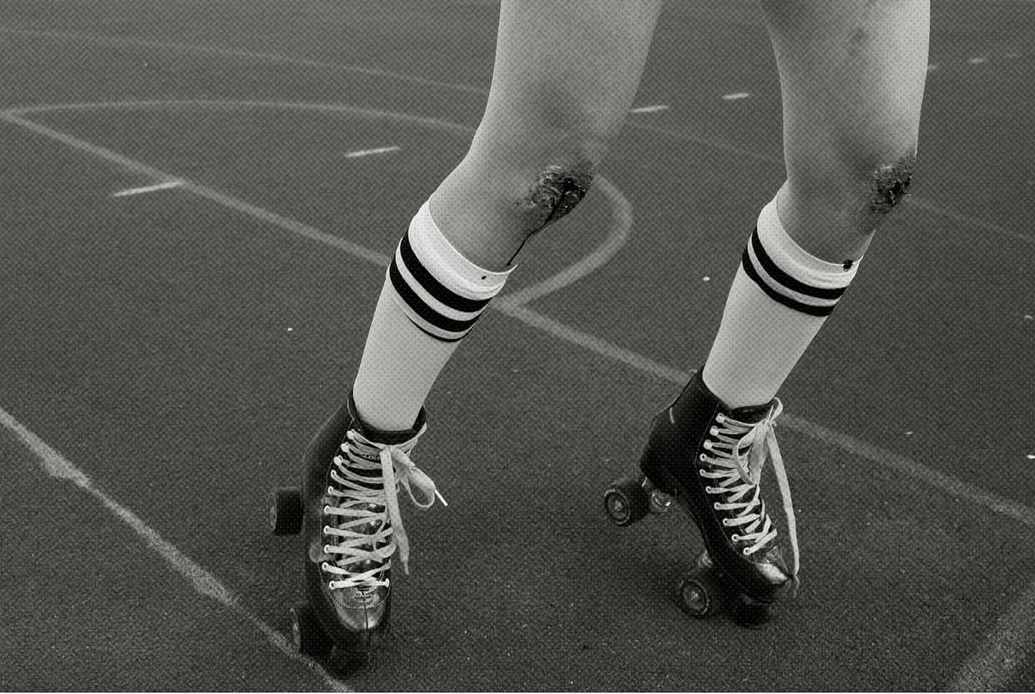
Cruise burn, 2021, by Ellie (@__fortyfour)
A girl gets dressed in front of a mirror. She changes outfits again and again, searching for something that feels like her. Each look becomes a different version of herself: confident, mysterious, effortless, powerful. Eventually, she leaves the room wearing something simple.
Maybe fashion isn’t about finding the perfect version of ourselves.
Maybe it’s about deciding which version we want to be today.
Story scent: dark chocolate with sea salt (sweet, bitter and slightly sharp — comforting at first, but with an unexpected edge.)
Story flavour: old perfume on a wool coat (something slightly powdery, warm and nostalgic, mixed with the faint smell of fabric and city air.)
Story sound: the sound of heels on pavement, mixed with the soft noise of a changing-room curtain opening and closing, camera shutters, distant traffic and a low electronic beat (a mixture of the intimate and the public: the private moment of getting dressed and the feeling of being watched.)
We Don’t Just Wear Clothes
Every morning, we make a decision that seems almost insignificant: what am I going to wear today?
We open our wardrobe, look at our options and choose. Maybe it is a pair of jeans we wear constantly, a hoodie that makes us feel comfortable, or a statement piece that makes us feel more confident.
But what if this decision isn’t as simple as we think?
Fashion is not only about covering the body. It is about identity, emotion, desire, belonging and even anxiety. The clothes we choose can reflect how we feel, how we want to be perceived and, sometimes, who we wish we could become.
This raises a fascinating question:
Do we choose our clothes, or do our clothes reveal desires that already exist somewhere beneath the surface?
The relationship between fashion and psychology has been explored through ideas ranging from enclothed cognition to psychoanalysis. Designers have also used clothing to explore sexuality, vulnerability, power and identity.
Ultimately, fashion might be less about the clothes themselves and more about the person we imagine ourselves becoming when we put them on.
1. Fashion as a Mirror of Identity
Clothing is one of the first things people notice about us. Before we speak, our clothes have already communicated something.
A minimalist outfit can suggest simplicity. An oversized silhouette can communicate comfort or a rejection of traditional ideas about the body. A dramatic outfit can express creativity, confidence or a desire to be noticed.
But fashion doesn’t necessarily reveal exactly who we are. It can also communicate who we want to be.
This is one of the most interesting aspects of fashion: clothing becomes a form of visual storytelling.
We can dress differently depending on the version of ourselves we want to bring forward.
You might wear something structured for an important meeting because it makes you feel powerful. You might choose something oversized when you want to feel protected. You might wear something completely experimental because you want to escape your everyday identity for a moment.
In this sense, getting dressed becomes a small act of transformation.
2. The Psychology of Getting Dressed
One concept mentioned in discussions around fashion psychology is enclothed cognition: the idea that the clothes we wear can influence our psychological state and behaviour. This relationship between clothing and psychology is also explored in discussions such as The Psychology of Fashion: Why We Dress the Way We Do.
The relationship works in both directions.
Our mood can influence what we choose to wear, but what we wear can also influence our mood.
When we feel confident, we may be more willing to choose strong colours, unusual silhouettes or statement pieces.
When we feel vulnerable or exhausted, we might instinctively reach for oversized sweaters, comfortable fabrics, muted colours or familiar clothes.
This means that our wardrobe can become almost like an emotional vocabulary.
Black might feel protective. Bright colours might feel energising. Soft fabrics might create comfort. A tailored jacket might make someone feel more composed.
Of course, these associations aren’t universal. Colour, clothing and emotion are heavily influenced by culture, personal experiences and individual preferences.
But the underlying idea remains fascinating:
Sometimes we don’t dress according to how we feel. Sometimes we dress according to how we want to feel.
3. Fashion as Communication
Clothing is a language without words.
A pair of sneakers can communicate something completely different from a pair of formal shoes. A graphic T-shirt can make a statement. Jewellery, makeup, accessories, silhouettes and colours can all contribute to the image we create.
Streetwear is a particularly interesting example.
Oversized clothing, sneakers, graphic designs and relaxed silhouettes can communicate creativity, individuality and belonging. What once might have been seen simply as casual clothing has become a sophisticated cultural language.
Fashion therefore allows us to control how much of ourselves we reveal.
We can make a loud statement.
Or we can deliberately say almost nothing.
4. Desire: Why Do We Want Clothes We Don’t Need?
This is where fashion becomes particularly interesting.
Clothes are practical. Fashion is emotional.
We need clothes to protect our bodies, but we don’t necessarily need a particular designer handbag, pair of sneakers or dress.
So why do we want them?
Because fashion transforms an object into something symbolic.
A designer item can represent success, taste, belonging, rebellion, nostalgia or aspiration. We don’t necessarily desire the object itself. We may desire what the object represents.
Luxury fashion understands this extremely well.
A brand isn’t only selling fabric and craftsmanship. It is selling an image, a world and an identity.
When someone buys a luxury item, they may not simply be buying a piece of clothing. They may be buying the possibility of becoming the person they associate with that object.
This idea of fashion and desire is also explored in The Times article “From Christian Dior to Coco Chanel: Why Fashion Is All About Desire”.
This is why fashion can make us desire things we didn’t even know we wanted.
5. The Power of Exclusivity
Luxury fashion also plays with another powerful psychological mechanism: scarcity.
Limited editions, exclusive collections, small production runs and highly controlled access can make an object feel more valuable.
The idea is simple:
If everyone can have it, it feels less special.
If only a few people can have it, owning it becomes a form of distinction.
This connects fashion to our desire for belonging and individuality at the same time.
We want to belong to a particular group — but we also want to stand out within it.
That contradiction is incredibly useful to fashion.
A luxury piece can tell us:
“You belong here.”
While simultaneously saying:
“Not everyone can belong here.”
6. Fashion, Culture and Belonging
Our desire for clothing is not created in isolation.
Culture, geography, gender, social expectations and the communities around us all influence what we consider desirable.
We learn that certain clothes are appropriate for certain occasions:
- A suit for an interview.
- Black for a funeral.
- Formal clothing for certain ceremonies.
- Traditional garments for cultural celebrations.
These rules can be explicit, but many are subconscious.
Fashion can therefore become a passport into a community.
Streetwear, for example, developed into a global language connecting people through shared references and aesthetics.
But fashion can also do the opposite.
Instead of helping us fit in, clothing can become a way of rejecting expectations.
This is particularly visible in the growing movement toward gender-fluid fashion.
Men wearing skirts, women wearing oversized tailoring and designers rejecting traditionally masculine or feminine categories demonstrate how clothing can challenge the rules society has historically placed around the body.
7. Gender: Who Are We Supposed to Look Like?
For centuries, fashion has helped define what society considers masculine and feminine.
Certain silhouettes, colours, fabrics and accessories were assigned to particular genders.
Today, those boundaries are becoming increasingly fluid.
But that doesn’t mean the old expectations have disappeared.
We still receive subtle messages about what is considered attractive, masculine, feminine, professional or appropriate.
Fashion can therefore be both liberating and restrictive.
It gives us tools to express ourselves, but it also exists inside a society that constantly tells us what our bodies should look like.
This tension is particularly important when we talk about desire.
Do we want a particular garment because we genuinely love it — or because we have learned that this garment will make us more desirable?
8. Fashion and the Unconscious
This question takes us into psychoanalysis.
The exhibition Dress, Dreams and Desire: Fashion and Psychoanalysis, discussed in The Guardian, explores clothing as something much deeper than a practical covering for the body.
Curator Valerie Steele describes clothing as a kind of changeable “second skin” through which unconscious desires and anxieties can appear.
Psychoanalytic thinkers have offered different interpretations of clothing.
Carl Jung, for example, associated clothing with the idea of a psychological “mask”: the version of ourselves that we present to the outside world.
Jacques Lacan went further, suggesting that identity itself is shaped through our relationship with others and through how we perceive ourselves being seen.
This makes the mirror an especially powerful image in fashion.
We don’t only look at ourselves.
We imagine how other people see us looking at ourselves.
That creates a fascinating psychological loop.
9. Designers Can Create Desire Too
The psychology doesn’t only belong to the person wearing the clothes.
Designers can deliberately create garments that provoke psychological reactions.
Alexander McQueen’s work is a particularly strong example.
His collections explored themes including violence, gender, religion, death, beauty and vulnerability.
Elsa Schiaparelli also incorporated surrealist ideas and psychological symbolism into her work. Her use of mirrors, for example, can be connected to questions surrounding self-image and the gaze of others.
This is where fashion becomes more than commerce.
A garment can become an artwork, a provocation or even a psychological experiment.
The designer creates something.
The viewer interprets it.
And the wearer eventually gives it a completely different meaning.
10. Fashion, Social Media and the Desire to Be Seen
Today, our relationship with fashion is also shaped by screens.
Trends can spread globally in a matter of days. A celebrity wears something, an influencer posts it, and suddenly thousands of people want the same aesthetic.
“Clean girl”, “dark academia”, “cottagecore” and countless other aesthetics demonstrate how quickly fashion can turn identity into a visual category.
Social media has transformed getting dressed into something increasingly public.
We don’t only ask:
“Do I like this?”
We can also find ourselves asking:
“Will this look good in a photo?”
Fashion becomes part of a curated identity.
Our wardrobes can begin to resemble our social-media profiles: carefully selected, edited and designed to communicate a particular version of ourselves.
11. The Dark Side of Desire
But there is a problem.
If fashion is built around desire, what happens when desire never stops?
The fashion system constantly introduces something new to want.
A new collection.
A new trend.
A new colour.
A new silhouette.
A new “must-have” item.
The moment we obtain one thing, something else can become desirable.
This creates a cycle of consumption.
And this is where the psychological fascination with fashion meets one of its biggest contradictions.
We love fashion because it allows us to transform ourselves — but that constant desire for transformation comes with a cost.
The fashion industry has significant environmental and social challenges, including waste, resource consumption and concerns around labour practices. Even luxury fashion is not automatically free from these problems.
Some brands have taken steps toward more responsible practices, but sustainability remains an ongoing issue, and claims of sustainability can also raise concerns about greenwashing.
There is therefore a contradiction at the centre of fashion:
We want the new because it makes us feel transformed.
But constantly producing the new has consequences.
12. Can We Ever Escape Fashion?
Probably not.
Even choosing not to follow fashion is still a form of communication.
Wearing only second-hand clothing communicates something.
Wearing a uniform communicates something.
Choosing not to care about trends communicates something.
Our clothing choices are shaped by our personality, culture, environment, budget, practical needs and emotions.
And sometimes, we simply choose the clothes we like.
Not every outfit has to contain a hidden psychological meaning.
This is one of the limitations of interpreting fashion through psychology:
Not every decision is subconscious, symbolic or profound.
Sometimes a hoodie is just comfortable.
Sometimes we buy something because we like the colour.
And sometimes we simply need something to wear.
The psychological approach is fascinating, but it should be treated as one lens through which we can understand fashion — not as an explanation for every single clothing choice.
Conclusion: Fashion as a Second Skin
Fashion sits somewhere between necessity and fantasy.
We need clothes, but we don’t need fashion.
We wear garments, but we also wear identities.
We dress to belong, to stand out, to protect ourselves, to attract attention, to feel confident or simply to feel comfortable.
And sometimes, without realising it, we dress for the person we hope to become.
That is perhaps why fashion is so powerful.
A dress isn’t just a dress.
A pair of shoes isn’t just a pair of shoes.
They can carry memories, aspirations, social expectations, fantasies and fears.
But the most interesting part is that their meaning isn’t fixed.
The designer gives the garment one meaning.
The brand gives it another.
Society gives it another.
And the person wearing it creates their own.
Fashion is therefore not simply something we consume.
It is something we use to tell stories about ourselves.
My Thought
What fascinates me most about fashion is that we often talk about clothes as if they were superficial, when they can actually reveal so much about the way we see ourselves.
I love the idea that getting dressed can be a form of transformation. We can literally put something on and suddenly feel like a slightly different version of ourselves.
But I also think it is important not to romanticise fashion completely.
The same system that gives us creativity, self-expression and fantasy can also make us constantly feel like we are missing something. There is always another collection, another trend and another piece that supposedly has the power to transform us.
For me, the most interesting relationship with fashion is somewhere in the middle.
I don’t think we should stop wanting beautiful things or enjoying fashion. I think we should simply become more conscious of why we want them.
Because maybe the most powerful thing fashion can give us isn’t another new identity.
Maybe it is the freedom to decide which parts of ourselves we actually want to express.
The Cover Image: Why I Chose It
For the cover, I chose a black-and-white photograph by Ellie showing someone wearing rollers with bleeding knees.
At first, the image feels playful, stylish and almost nostalgic. But when you look closer, the bleeding knees introduce something much more vulnerable and raw.
I think this contrast connects strongly to the central idea of the story: fashion as transformation.
The image shows someone creating a particular visual identity while simultaneously revealing the physical vulnerability underneath it. In a similar way, fashion allows us to construct an image of who we want to be, while hiding the effort, insecurity or consequences that might exist beneath that image.
I also see a connection to the idea of clothing as a “second skin” — something we use to protect, transform and present ourselves, while the body underneath remains vulnerable.
The black-and-white quality of the photograph adds another layer. It creates a beautiful, nostalgic feeling, but the injury interrupts that beauty. For me, this reflects the darker side of fashion explored in the article: the pressure to constantly transform ourselves and the consequences that can exist beneath fashion’s polished surface.
I liked the idea of using an image that doesn’t immediately explain the article, but instead creates a question.
Why are the knees bleeding? Why does this beautiful image feel slightly uncomfortable? And what does that have to do with fashion?
For me, that tension is exactly what makes the image work.
Sources
The sources that informed the story include:
- Medium — The Psychology of Fashion: Why We Dress the Way We Do
- Fibre2Fashion — Why We Wear What We Wear: A Deep Dive into the Everyday Psychology of Clothing Choices
- The Guardian — Fashion Exhibition: Dress, Dreams and Desire
- The Times — From Christian Dior to Coco Chanel: Why Fashion Is All About Desire
- MEGA — The Psychology of High Fashion and What Luxury Brands Tell Us About Ourselves