Category Fashion
Published October 12, 2026
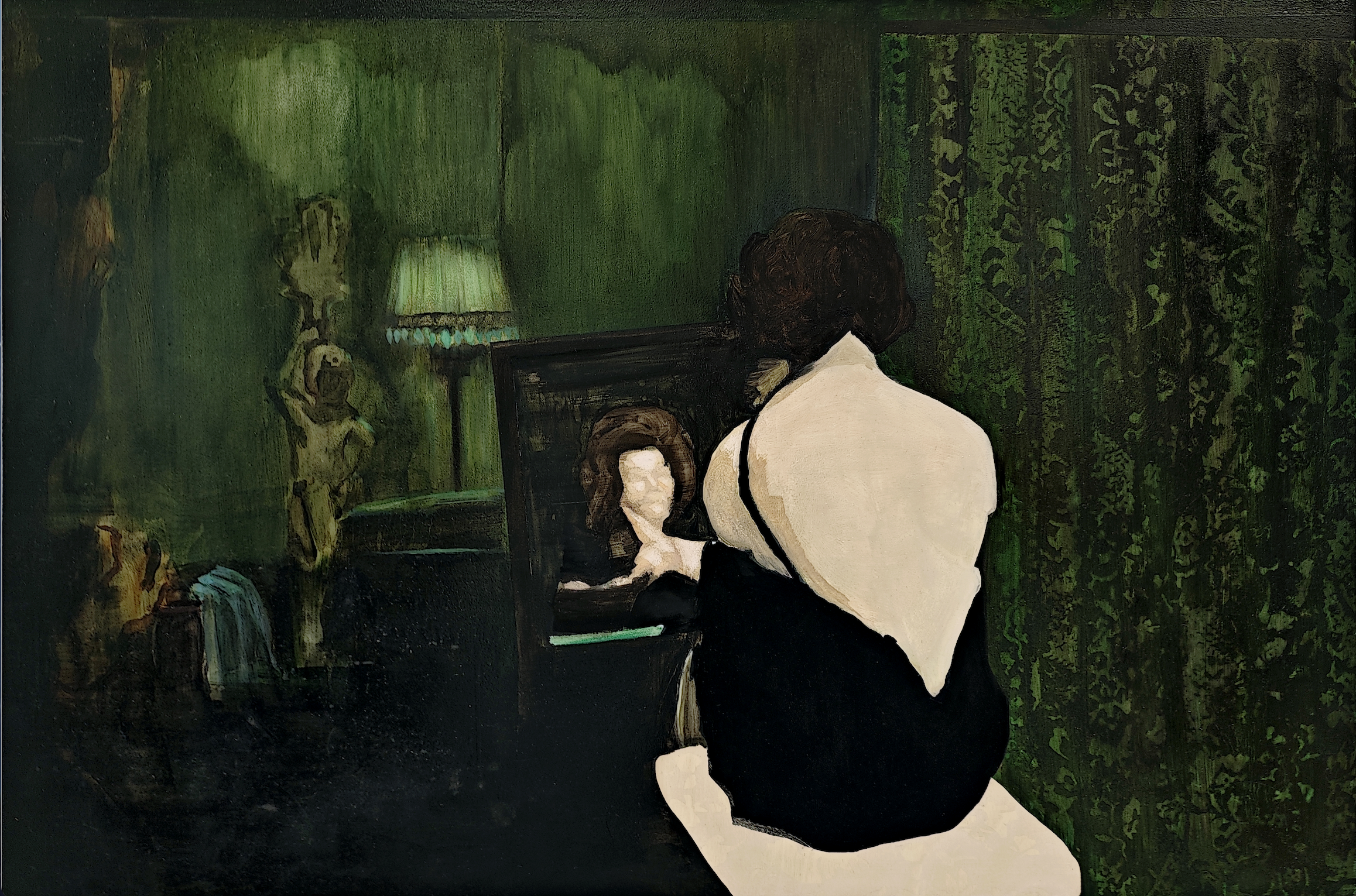
I Can't Fit Into This Dress Anymore, by Lucia Jones
Story scent: L’Amant, by L’Artisan Parfumer
Story flavour: chocolate mousse with olive oil and sea salt and a refreshing blueberry sorbet
Story sound: “don’t piss me off”, by Kelela
What do an Issey Miyake top, a Vivienne Westwood skirt, a Rick Owens jacket and a Burberry trench have in common? Apart from being highly regarded as staples in many a wardrobe, they don’t need to explain themselves. Let me clarify: when you see any of these pieces, you know who they belong to. For some particularly curious fashion lovers, the collection, season, and references are also clear, but even someone less versed in the language of fashion will immediately recognise the brand.
Why do we chase Tom Ford’s Gucci or Galliano’s Dior? Why do we go feral for OG McQueen? Of course, trends play a big part, but it might also have something to do with the distinct signatures these designers bring to their work. They create uniforms. They build a mythology. They craft a way for you to say something without saying a word.
This is what made watching the latest McQueen show so painful; it felt so far away from McQueen. The references felt like they were just there for reference’s sake, not improved upon, but shoved aggressively into the designs they did not belong to. The distinct and visceral storytelling of Lee McQueen sacrifised at the altar of spectacle and trend.
We got so obsessed with references and subtle nods that it’s not subtle anymore. I understand the flattery of someone saying “your brand is giving Dior”, but there already is a Dior; there is, however, no brand like yours: the one only you can create.
When I first began observing the designs as they descended down the runway, the colours and textures overwhelmed me. I judged the clothes by their beauty and, honestly, often by how well they fit my wardrobe or what I personally found stylish. But the more seasons go by, and the more I look, the more I wonder: is there a difference between just a good, solid collection and a collection that belongs to the brand?
As I turned those questions over in my head, my attention drifted to other things. The clothes can be absolutely great, but if they don’t have a strong identity, can they really make me feel? Can they really represent both the brand and the wearer? And is there really a point to designs that keep coming back under a different label, in slightly different format?
Like any creative industry that is also, and sometimes first and foremost, a business, there are many sides and nuances to this discussion. I completely understand that for brands, especially independent brands, lack of sales is a death sentence. It’s tough to create something unique when all people want is what TikTok told them is the next trend. But I feel like we are slowly waking up to personality in dressing again. Or maybe I just exist in an echo chamber where heartfelt design is discussed vigorously.
Among the recent shows I saw, the ones that stayed with me had a distinctive visual style. They played to their strengths and expanded on existing forms. Prada’s SS27 collection, for example, showed us over 60 different skirts, very specific Prada-esque skirts. They singled out a piece that works for them and happens to be on trend (I mean, when are midi skirts not on trend, but anyway). They followed the same strategy last season, when they built the show around layering, another calling card of the brand.
Blumarine leaned into their traditional soft pastel colours and a cute yet sexy vibe to give their take on the “sex sells” trend that has become increasingly prevalent this fashion month. Roberto Cavalli utilised their signature prints on more contemporary silhouettes. Matières Fécales brought their craftsmanship and crazy ideas to a whole new level with a collection of 99 looks. Dries Van Noten demonstrated what whimsical elegance really means.
And these are just the Paris and Milan players; brands like Harris Reed, Di Petsa, Dreaming Eli, Tolu Coker, Thom Browne, and Grace Ling (I can go on and on) have proven, season after season, that if you carve out a niche that aligns with your own ideas, the opportunities are endless.
And don’t get me wrong: these brands still pay attention to trends; some even set them. But they adjust to the changing tides of fashion and culture by expanding upon their own storytelling, not changing it based on The Lyst’s most recent index.
In a world where H&M is putting on runway shows, and COS has monopolised the minimalist market, you can let them chase trends and focus on what you do best. I know we all hate fast fashion- its effects on the environment, the increasingly wasteful approach and the constant need to overcharge for literal plastic- but the one upside to their terrifying reign is the freedom to be a little more crazy, knowing that authenticity is in high demand. Instead of trying to appease everyone, you can focus on the group that aligns with your style and create for them. I mean, that’s what Rick Owens has been doing for years.
I know there have been quite a few transitions in high fashion brands. They are changing their creative directors and, with that, shifting their identities. And the public is not kind or forgiving- perhaps the most unforgiving they have ever been when it comes to a new face taking over their favourite brand and trying to introduce some new ideas. So for the brand to have the freedom to create in its own niche, we also need to chill a little.
Keeping a legacy alive while shifting it to represent a new era isn’t easy, but we have seen it executed perfectly many times. The aforementioned Tom Ford and Galliano (no matter my beef with the guy at large, I can admit he did wonders at Dior) are some examples. Out of the recent ones, we also have Mattheu Blazy and Jonathan Anderson, obviously, and Sarah Burton, who has kept the soul of McQueen alive for years before moving to Givenchy and turning it into a masterclass in designs that accentuate the beauty of the female form.
This season, I think Stefano Gallici has struck a great balance at Ann Demeulemeester, using the archives for occasional guidance while relying on his own relationship with the brand as well. I have also been impressed by how Jack McCollough and Lazaro Hernandez have kept the play Anderson discovered at Loewe alive, shifting the conversation slightly to introduce their own textures and geometries.
Of course, the creative director thing is an intricate process. Like a high-stakes game of Jenga, you put the wrong piece on the wrong side at the wrong time, and the whole structure risks collapsing. And then there’s the commercial aspect of it all, looming from the sky, waiting for one bad sales quarter to pull the plug.
I wanted to say that these unions of creative director and brand work best with brands that have a strong identity and a creative director who matches their design freak, but now I am not so sure that is true. At least not in all cases.
If the pair is too similar, the push and pull disappears, and the collection stagnates in the design version of Peter Pan’s Neverland. And if the brand’s identity is so solid that any deviation from the course is met with immediate disdain, the trepidation of trying to preserve it can cause it to become a caricature of itself. I feel like that’s what happened to McQueen, and honestly, I can’t even blame the designer here. McQueen’s genius was so bright, so all-consuming; I am not sure who can match the standard he set for the brand.
Just to be clear, when I ask, “Is it yours?” I don’t mean a specific print or pattern; that’s just too simplistic. I mean a style, a tone of voice.
If you put all your energy into a print or pattern, you risk one-hit wondering your way into logo-mania territory. And God forbid your signature pattern becomes trending and you disappear into cultural obscurity after a two-week trend cycle. Then it turns into tacky and outdated; then, if you’re lucky, after ten/fifteen years it’s camp and vintage.
I think a signature piece is good, as long as it is a blueprint and not a carbon copy you pull out year after year to show you still got it (if you do that, you probably don’t got it). It also works way better when it is accompanied by a collection of fun, new, unique pieces.
As the fashion world turns, shifts, and changes, as it always does, I’d love for it to counter mainstream movements instead of just reacting to them. Or if you follow a trend, for the love of God, make it your own. I know not everything has to have a story; sometimes it can just look good, and that is enough. Especially in the time when we overcontextualise and overthink everything. But it still has to look like you.
*Even though I do think fashion is an art form and I am a big believer that art needs to be in constant conversation with the world around it, so do with that what you will.
Regardless, I think there is still an almost unspoken agreement between a brand and its audience. If a brand promises a certain set of ideas, visual identities, and even policies, it still needs to keep that promise at large, even if the execution changes over the years.
There is a big difference between designing for the sake of things looking like they’re supposed to, and doing it with your whole heart. And it shows (and it feels). Or it might just be a matter of way too many yes-men blissfully chirping around.